Sreekanth Gopi@sgopi
23
Events attended
11
Submissions made
United States
3+ years of experience
About me
I am a Prompt Engineer, AI researcher, data scientist, and entrepreneur with a deep passion for blending artificial intelligence with human well-being. My work spans AI-driven mental health solutions, physiological monitoring, and music generation, with a strong emphasis on biometric data analysis, real-time stress detection, and Retrieval-Augmented Generation (RAG). I’ve led and contributed to peer-reviewed research in AI, neuroscience, and education, and my projects have been recognized at top global conferences like FIE, ASEE, and ICNMC. As a hackathon winner and mentor, I thrive in fast-paced, problem-solving environments where AI can make a tangible impact.
🤝 Top Collaborators
.png&w=640&q=75)
.png&w=640&q=75)
.png&w=640&q=75)
🤓 Latest Submissions
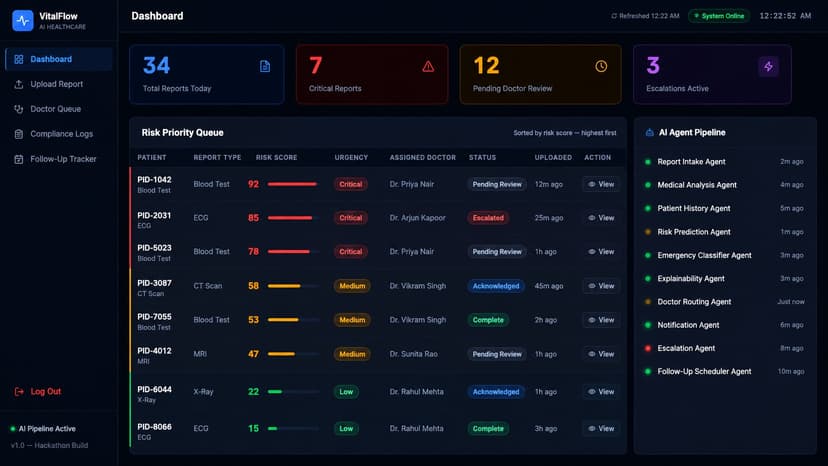
VitalFlow AI: Intelligent Care Coordination
VitalFlow AI is a Band-powered Multi-Agent Clinical Intelligence System designed to transform clinical reports into timely care decisions. Healthcare institutions often struggle with delayed identification of critical cases, manual report triaging, inefficient doctor assignment, missed follow-ups, and compliance tracking challenges. VitalFlow AI addresses these problems through a collaborative network of specialized AI agents that automate the entire report-to-care workflow. The platform processes diagnostic reports, extracts medical findings, evaluates patient risk, prioritizes urgent cases, routes patients to the most suitable specialists, generates explainable recommendations, schedules follow-ups, and tracks compliance activities. The system consists of 10 specialized AI agents: • Report Intake Agent • Medical Analysis Agent • Patient History Agent • Knowledge Retrieval Agent • Risk Prediction Agent • Emergency Classification Agent • Explainability Agent • Doctor Routing Agent • Notification Agent • Follow-Up Scheduler Agent Key Features: • AI Risk Assessment • Intelligent Doctor Routing • Explainable AI Decisions • Follow-Up Management • Compliance Monitoring • Escalation Management Technology Stack: Frontend: Next.js, TypeScript, Tailwind CSS Backend: FastAPI, Python Database: MongoDB Deployment: Vercel & Render AI Layer: Band Framework Multi-Agent Architecture Impact: • Faster report processing • Better prioritization of critical patients • Reduced manual workload • Improved care coordination • Enhanced compliance visibility VitalFlow AI enables hospitals, doctors, administrators, and patients to benefit from a smarter, faster, and more transparent healthcare workflow.
19 Jun 2026
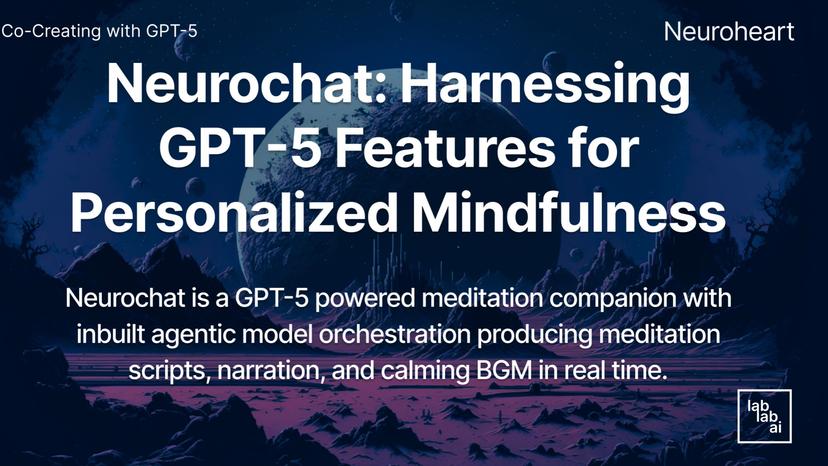
Neurochat - Personalized Mindfulness Using GPT-5
Neurochat is an AI-powered meditation companion built on GPT-5, designed to make mindfulness truly personalized and accessible. Today’s meditation apps are static, offering generic tracks that ignore user context. Neurochat solves this by leveraging GPT-5’s advanced reasoning, large context capacity, and dynamic tool orchestration. Users can engage via chat, voice, or file uploads—including PDFs or HRV smartwatch data—for stress-aware meditation tailored to their needs. GPT-5 enables verbosity control, reasoning effort tuning, and parallel orchestration of the given tools. Targeting wellness seekers, therapists, and enterprises, Neurochat taps into the $100B+ global wellness industry. Its competitive edge lies in GPT-5’s ability to process up to ~400k tokens, generate structured multimodal outputs, and adapt in real time—features not seen in GPT predecessors. Neurochat demonstrates how advanced AI can transform meditation from static recordings into dynamic, research-backed, user-specific experiences.
24 Aug 2025
QuizMasterVectara
This project explores the development of an AI-based quiz generation system using GPT-3.5 and Vectara to foster personalized and adaptive learning experience. Our methodology involved sourcing relevant structured dataset, data pre-processing, embeddings generation, vector database storage, hybrid-search retrieval, LLM feed, prompt engineering, and context-based response. The primary challenge addressed is the insufficient customization in quiz generation and overcoming the challenge of generating precise and contextually relevant quiz questions that minimize the risk of LLM generating incorrect or misleading information (hallucinations). We also have included an option for the user to upload their preferred document and let the app generate quiz. As the users answer the questions, the LLM will generate further questions adapting the difficulty level. The hallucination levels are found to be really low as per Vectara in-built evaluations. This is designed for interactive AI based user learning and is scalable to different arenas like education, online learning, and employee trainings.
19 Apr 2024
ResearchWriterGPT
ResearchWriterGPT is an Advanced Multimodal Research Paper Writing Assistant is a groundbreaking tool designed to transform academic writing. It harnesses the language and vision capabilities of GPT-4 to assist in crafting research papers, processing both textual and visual data to ensure thorough coverage from abstract to conclusion in APA format. The project showcases its multimodal capabilities, including image and chart scanning and analysis. It offers direct access to academic databases like Google Scholar, Semantic Scholar, Pubmed, etc., facilitating the literature review process by aggregating and filtering peer-reviewed information. Additionally, the tool enhances user experience through interactive dialogues, audio interaction, PDF analysis, and PPT downloading option. GPT-4 Vision expands the application's scope by enabling detailed image analysis, such as reading texts and interpreting charts from research photos and medical images. The integration of a Pinecone-based RAG system allows users to upload a collection of documents, which the system appends to for relevant response generation. This creates a vast knowledge base, potentially processing millions of articles for quick, contextually relevant responses, supporting efficient document management and advancing context-based AI LLM feed. TruLens further strengthens the tool by evaluating hallucinations in three key dimensions: context relevance, groundedness, and answer relevance. This ensures the LLM application is free from hallucinations, delivering accurate and relevant information. The Trulens leaderboard feature displays the relevancy score of the LLM responses giving realtime feedback. Future expansions aim to incorporate advanced models for face sentiment analysis and object detection, predictive bibliography features, and comprehensive writing support covering all aspects of a research paper.
23 Feb 2024
ResearchWriterGPT - AI Research Writing Assistant
ResearchWriterGPT: An Advanced Multimodal Research Paper Writing Assistant" is an innovative project designed to revolutionize academic writing. It combines the language and vision capabilities of GPT-4 with Clarifai's advanced AI tools to assist in drafting research papers. The tool is adept at processing both textual and visual data, ensuring comprehensive coverage from abstract creation to conclusion formulation, all in APA format. The project stands out for its integration of multimodal capabilities, including image and chart scanning, and analysis. It provides direct access to prominent academic databases like Google Scholar and Arxiv, streamlining the literature review process by aggregating and filtering relevant information. Furthermore, the tool enhances user experience by supporting interactive dialogues, including audio interaction, and allows for PDF analysis and conversion. Its innovative GPT-4 Vision feature broadens the application scope by enabling detailed image analysis, including reading texts and interpreting charts from various sources like research photos and medical images. In addition, the integration of Retrieval-Augmented Generation (RAG) with Clarifai creates a vast knowledge base, processing over 1.7 million STEM articles from ArXiv for quick, contextually relevant responses. This system not only supports efficient document management but also advances AI interaction for academic research. The technology backbone of ResearchWriterGPT includes GPT-4 Turbo for text generation, GPT-4 Vision for image processing, DALL-E API for image generation, and Clarifai’s RAG system for enriched data handling. Future expansions envision incorporating advanced Clarifai models for face sentiment analysis and object detection, predictive bibliography features, and comprehensive writing support covering all aspects of a research paper.
22 Jan 2024
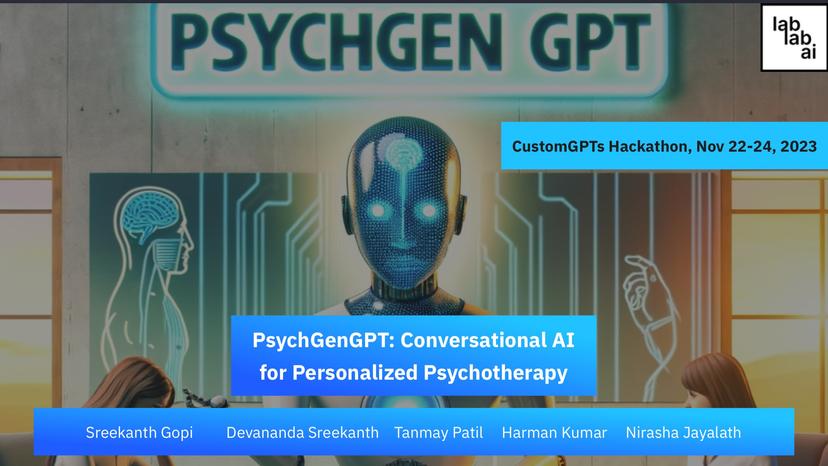
PsychGENGPT
PsychGenGPT is an innovative solution for mental health support, blending AI with proven psychological practices to provide accessible and tailored assistance. It addresses the significant global economic impact of mental illness, estimated at $2.5 trillion, and the potential productivity loss of $16.3 trillion by 2030. The AI mental health market is rapidly growing, with a projected value of $59.18 billion by 2030. This platform is grounded in scientific research, showing the effectiveness of meditation in reducing stress and depression. PsychGenGPT employs a three-stage therapy approach: Emotional Processing, which includes techniques like mindful observation; Mental Processing, using approaches such as present-moment awareness; and Future Visualization, focusing on positive future envisioning. Core functions include active listening, user profiling, therapy script generation, and real-time interactive support. It also offers advanced analytics for session feedback and is designed for accessibility and cost-effectiveness. A unique feature is its text-to-speech psychotherapy sessions, enhancing user engagement. In short, PsychGenGPT is an AI-based mental health platform offering personalized, accessible, and cost-effective psychological support, combining innovative technology with traditional therapeutic techniques. This is not a diagnosis or professional advice but a sheer support for mental health symptoms management. PsychGenGPT employs a comprehensive three-stage therapy approach for smooth transitioning from negative emotions to stress to productivity. It generates a detailed therapeutic advice, psychotherapy script and an audio guided psychotherapy session.
24 Nov 2023
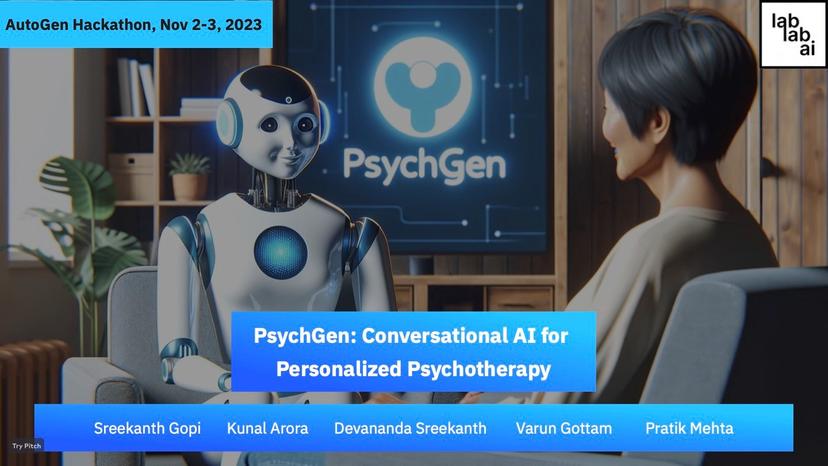
PsychGen - Conversational AI for Psychotherapy
With 15% of working-age adults facing mental disorders and an annual loss of US$ 1 trillion in the world due to impaired productivity from depression and anxiety, the necessity for real-time emotional and physiological monitoring is paramount. PsychGen, developed using AutoGen multi-agent platform, aims to democratize mental healthcare through AI-driven personalized psychotherapy sessions, addressing the global rise in mental health issues and the inaccessibility of traditional therapy. Utilizing a robust technology stack including AutoGen, Streamlit, OpenAI, AssemblyAI, Audiocraft, and DALL-E, PsychGen transitions seamlessly from text to audio, audio to music, and finally to video to enrich the therapeutic experience. The project encompasses multi-faceted agents such as a Psychological Chatbot for profiling and script generation, Speech and Music Generation for a meditative voice output and soothing soundtrack, Image and Video Generation for visual representation of therapy themes, and a Mixing agent for creating a comprehensive therapy session. PsychGen holds the promise of democratized access to psychotherapy, real-time personalized mental health support, and scalability for integration with other mental health resources, envisioning a future where quality mental healthcare transcends traditional barriers and is accessible to all.
3 Nov 2023
ChatmanGPT
ChatmanGPT revolutionizes development by automating code generation, aiding in rapid prototyping, and optimizing code based on AutoGPT. It's a comprehensive system builder with unique features like Prompt Matrix Innovation and real-time evaluation.
26 Oct 2023
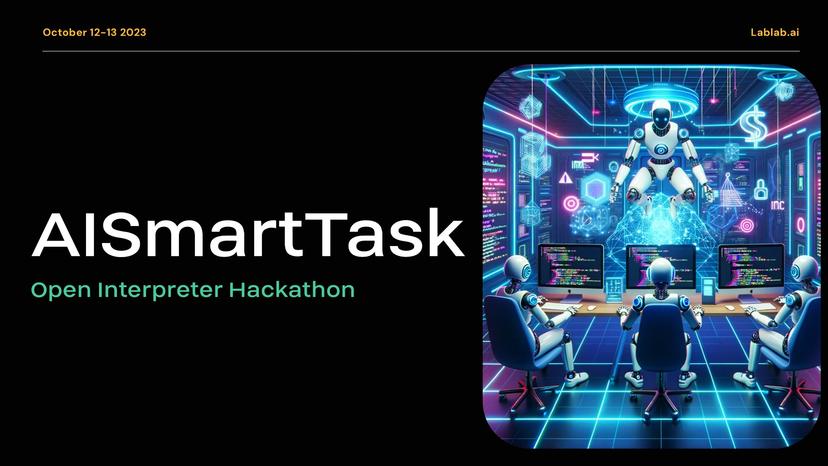
AISmartTask
AISmartTask: Coded using Open-interpreter, AISmartTask is an innovative AI-driven task management solution tailored for coders or anyone who likes to manage daily routines. Leveraging the power of OpenAI's text engines, this tool is integrated with a Telegram bot, offering an intuitive user experience. Key features include dynamic task management that allows for task addition, prioritization, and AI-powered suggestions. Its document parser extracts essential summaries and highlights critical keywords. Additionally, AISmartTask visualizes task priorities, enabling users to get a clearer view of their tasks at hand. One standout quality is the tool's learning modules, which web scrape for knowledge, encouraging continuous learning. Users can interact with the system via intuitive Telegram commands (vocal or text) and provide feedback for continuous system improvement. With a modular Python architecture, AISmartTask is not just a task manager; it's a revolutionary tool aiming to optimize and enhance the daily routines of coders. It is scalable to any user and other applications such as enterprise project management, academic tasks management (students and educators), task management in healthcare, in the freelance and gig economy, or to manage tasks in any use cases.
14 Oct 2023