
Carl Vincent Kho@Charvalton
3
Events attended
3
Submissions made
United States
3+ years of experience
About me
I’m Carl, a CS + Neuro student building AI tools that actually respect people. I work on privacy‑first health tech, like an on‑device Health Passport for medical records, and love shipping scrappy prototypes that solve real problems, not just win slides. Previously: Google APAC AI for Impact winner, Dell Technologies intern, improv/theater nerd, and lifelong tinkerer. Always down to jam on agents, HCI, and weird neuro/AI ideas.
🤝 Top Collaborators

.png&w=640&q=75)
.png&w=640&q=75)
.png&w=640&q=75)
🤓 Latest Submissions
Health Passport AMD
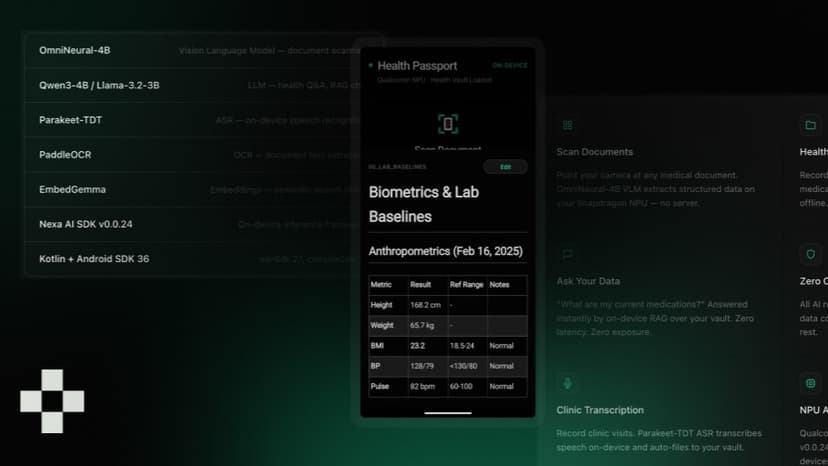
Health Passport AMD is a privacy-first digital medical record wallet for people whose health history is scattered across paper documents, hospital portals, and camera rolls. The system takes multimodal inputs like prescriptions, lab reports, and medical receipts, runs structured extraction on AMD cloud GPUs, and converts them into a normalized health record. Instead of stopping at OCR, it adds a lightweight agentic layer that reconciles medications, flags missing follow-ups, and writes timeline-ready summaries into a patient-owned health memory system. The goal is continuity, not diagnosis. Most health document tools can scan a file, but they do not help the user keep an accurate, usable record over time. Health Passport AMD focuses on the part that actually matters in real life: turning one more blurry medical document into a record that can be carried across doctors, clinics, and countries. This project builds on a prior version of Health Passport that was externally validated in the Qualcomm x Nexa on-device bounty, but this AMD version is a new build centered on multimodal throughput, structured reconciliation, and cloud GPU workflows on AMD infrastructure.
10 May 2026
The Gray Area
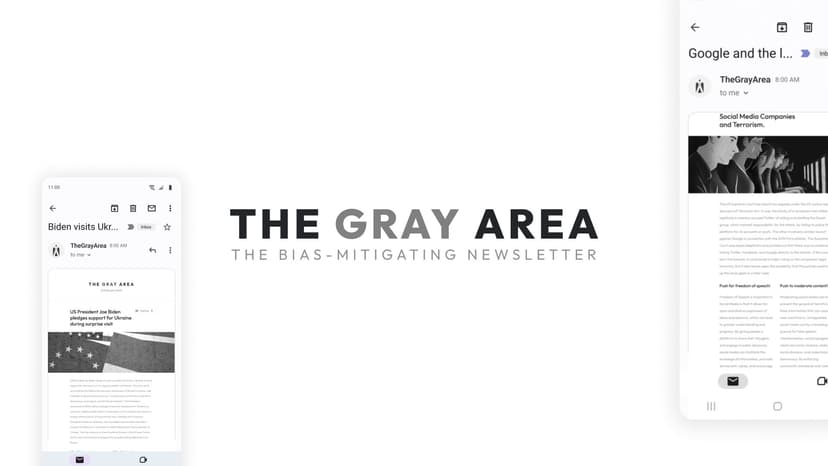
The decline of critical thinking has led to increased division in the world, and social media algorithms exacerbate this by limiting exposure to different perspectives in favor of sustained attention and increased revenue. Short-form content like TikTok encourages acceptance of information at face value and hinders the development of new leaders who require holistic information to make informed decisions. To address these issues, our approach focuses on three core features: objective summarization using AI, presenting points for and against each issue, and using custom thumbnails to grab reader attention. Our technical architecture comprises three parts: gathering news data using NewsAPI and sentiment analysis, using OpenAI's GPT-3 API to fine-tune a model for objective summary generation, and using Firebase and Heroku to store and host the content. We have validated our approach with PhD professors and high-performing international students, who find it The decline of critical thinking has led to increased division in the world, and social media algorithms exacerbate this by limiting exposure to different perspectives in favor of sustained attention and increased revenue. Short-form content like TikTok encourages acceptance of information at face value and hinders the development of new leaders who require holistic information to make informed decisions.
24 Feb 2023