
Mansoor Ahmad@mansoor17
3
Events attended
1
Submissions made
Pakistan
10+ years of experience
About me
Software Engineer passionate about AI, Machine Learning, and Mobile Development. Experienced in Android, Flutter, React Native, Kotlin, and AI-powered applications. I enjoy building innovative products, participating in hackathons, and collaborating with global teams to solve real-world problems through technology.
🤝 Top Collaborators


.png&w=640&q=75)
🤓 Latest Submissions
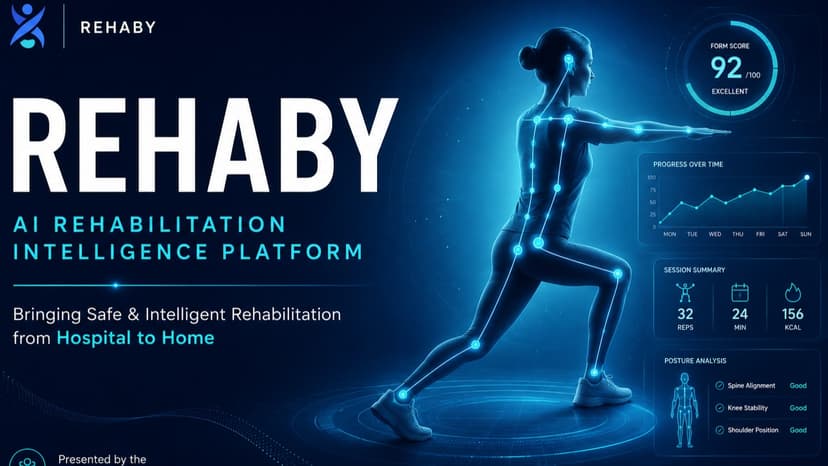
Rehaby
Rehaby is an AI-powered rehabilitation intelligence platform designed to bridge the gap between hospital-based physiotherapy and home recovery. Many patients receive proper monitoring and rehabilitation support while admitted in hospitals, but after discharge, rehabilitation often becomes unsupervised. Patients may perform exercises incorrectly, lose motivation, misunderstand instructions, or skip therapy sessions completely. This problem is especially common among elderly, post-surgical, orthopedic, neurological, and cardiovascular rehabilitation patients who may also face difficulties traveling long distances for short clinical follow-ups. Improper rehabilitation can increase recovery time, risk of re-injury, and workload on healthcare professionals. Rehaby addresses this challenge through an intelligent AI-driven rehabilitation ecosystem that enables patients to safely continue physiotherapy exercises from home while remaining connected with clinicians. The platform combines computer vision, real-time posture tracking, and adaptive rehabilitation intelligence to analyze patient movements and provide immediate corrective feedback. Using technologies such as MediaPipe Pose, OpenCV, TensorFlow Lite, and FastAPI, Rehaby performs live joint angle analysis, posture correction, repetition counting, and movement scoring directly through a web-based interface. The patient-side application offers real-time camera posture tracking, skeleton overlays, AI voice guidance, visual corrective feedback, and session summaries to improve exercise accuracy and adherence. On the clinician side, a mobile dashboard allows healthcare professionals to monitor patient progress remotely through analytics, form score trends, session histories, and recovery performance insights. The system also supports Urdu voice interaction and low-bandwidth accessibility to improve usability for diverse patient populations.
19 May 2026


