🤓 Latest Submissions
DepthGuard — Autonomous Supply Chain Threat Agent
Every DevSecOps team relies on OSV, GitHub Advisories, and npm audit — but supply chain attacks surface on security blogs, forums, and news sites hours or days before structured databases index them. The event-stream cryptominer, ua-parser-js hijack, and xz-utils backdoor all had live web chatter before official advisories. DepthGuard is an autonomous 5-agent threat swarm: OSV Scout → GitHub Sentinel → SERP Hunter (Bright Data) → Intel Analyst (AI/ML API) → Response Commander. It runs 10 live Google SERP queries per package, classifies web signals with AI, scores urgency with a Why-Now metric (0–100), and generates executive briefs + remediation plans in seconds. Target audience: CISOs, DevSecOps engineers, and security teams monitoring npm/PyPI dependencies. Unique edge: Early-warning layer — Bright Data SERP surfaces threats OSV cannot reach yet. Track: Security & Compliance · Bright Data: SERP API · Partner: AI/ML API
31 May 2026
ContractProof: AI-Powered API Contract Validation
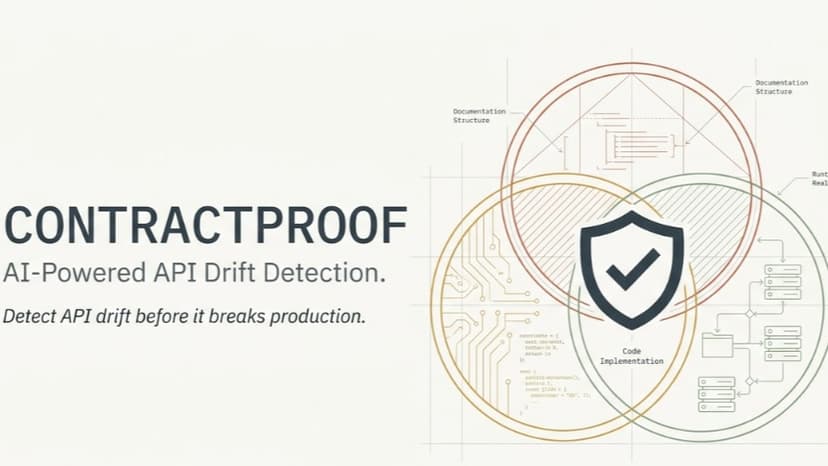
ContractProof is an AI-powered API contract validation platform that prevents API drift—when implementation diverges from documentation, causing nearly 40% of production bugs and costing companies an average of $127K per incident. Current tools only validate OpenAPI specs, missing real implementation and runtime mismatches. ContractProof solves this with intelligent 3-way drift detection powered by IBM Bob AI. Our platform simultaneously compares OpenAPI specifications, actual backend code, and real runtime behavior to detect inconsistencies before they reach production. Using IBM Bob’s advanced code analysis, ContractProof understands implementation intent rather than just syntax, enabling deeper validation and smarter recommendations. Key features include: 3-way API drift detection across spec, code, and runtime AI-powered code analysis using IBM Bob ML-based prediction of future breaking changes with 85% accuracy Auto-generated code fixes for detected drift issues Visual impact analysis showing severity and affected endpoints CI/CD integration with GitHub Actions Real-time monitoring and instant contract violation alerts ContractProof goes beyond traditional API testing tools like Postman or Swagger by validating the full API lifecycle. Our machine learning engine studies historical drift patterns to proactively predict future failures instead of only detecting current problems. Business impact: Reduce API-related production bugs by 70% Save 15+ hours weekly on manual contract reviews Prevent costly production incidents Accelerate API development cycles by 40% Improve developer productivity and deployment confidence The platform is designed for API-first startups, enterprise DevOps teams, microservices architectures, and organizations managing large-scale distributed systems.
17 May 2026
Claw Capital
Claw Capital is an autonomous capital allocation engine built natively on OpenClaw. It transforms capital deployment from a human-driven process into programmable intelligence. The agent continuously scans AI-native projects, evaluates them using Gemini 3.1 Pro across structured institutional criteria (autonomy, revenue potential, token utility, ecosystem alignment, and risk), and allocates treasury according to a dynamic strategy model. Capital execution is performed via the SURGE skill, enabling token launches and on-chain transactions directly from the agent runtime. Treasury state, portfolio memory, and investment history are persistently maintained within the local OpenClaw environment, ensuring sovereign and reproducible operation. The system publicly discloses investment actions through Moltbook, completing a fully autonomous capital loop. Claw Capital closes the gap between AI reasoning and on-chain execution, introducing a programmable capital layer for the emerging agent economy.
28 Feb 2026
ARCC The Universal AI Logistics OS
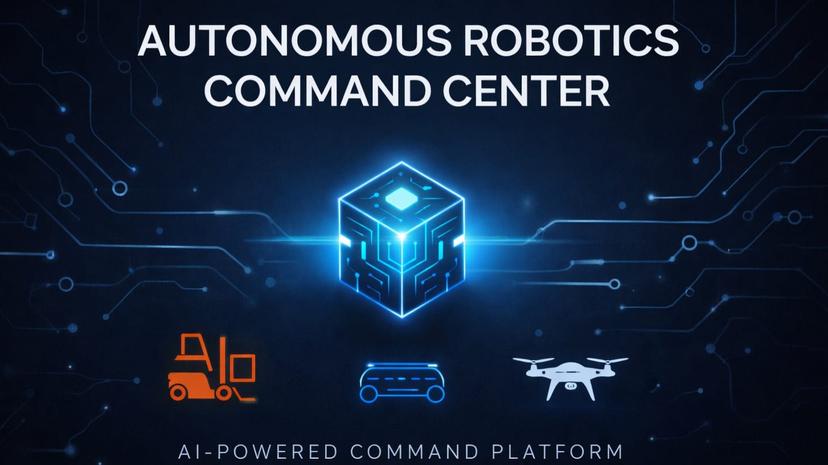
The Problem: Modern logistics is fragmented. Companies are locked into proprietary ecosystems (Kiva, Locus, etc.), making it impossible to orchestrate mixed fleets of robots from different vendors. Data is siloed, and "smart" fleets are often just running static, brittle rule-sets. The Solution: ARCC (Autonomous Robotics Command Center) is the first Universal Operating System for Logistics. We decoupled the intelligence from the hardware. By acting as a "Headless" Digital Twin, ARCC connects to ANY physics engine (Webots, Gazebo, Nvidia Isaac) or physical robot fleet via a standardized API. Key Innovations: Gemini Brain: We replaced hard-coded logic with a multimodal AI agent that understands context. It doesn't just route robots; it reasons about bottlenecks, battery health, and priority shifts in real-time. Chaos-Resilient: Our "God Mode" chaos engineering engine proves the system can self-heal during network failures, battery spikes, and demand surges. Self-Optimizing: The system learns. After every operational cycle, it analyzes throughput metrics and refines its own strategy weights, becoming more efficient every single day. ARCC isn't just a dashboard; it's the infrastructure layer for the next generation of autonomous supply chains.
15 Feb 2026
Economic Immune System
Economic Immune System introduces a new paradigm for agentic commerce: economic governance before autonomy. Instead of merely executing payments, the system acts as an intelligent economic governor for USDC wallets on Arc. It continuously analyzes spending behavior across time to detect subtle forms of economic decay—such as recurring micro-cost leakage, vendor concentration risk, convenience bias, and declining value efficiency—that traditional rule-based systems and humans often miss. Built with Gemini for advanced economic reasoning and Circle Developer-Controlled Wallets on Arc, the system evaluates each transaction in context of learned history, not just current balance. Every decision includes transparent explanations, confidence scores, detected economic patterns, and its impact on long-term financial resilience. After transactions execute on-chain, the system performs post-payment reflection, comparing predicted versus actual impact and adapting its future sensitivity—mirroring how biological immune systems learn from exposure. The result is a self-regulating, explainable, and adaptive financial intelligence layer that governs how agents spend money over time. This project demonstrates that true agentic commerce is not just automation—it is learned economic judgment.
24 Jan 2026


