
🤝 Top Collaborators


.png&w=640&q=75)
🤓 Latest Submissions
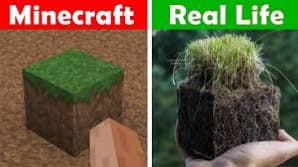
Minecraft in Real-Life: A Local AI Shelter Builder
So we have all played Minecraft right? For those who have not, Minecraft is a sandbox game where the player spawns with nothing and can ‘mine’ the environment for resources in order to build things like houses, castles, farms, etc. The limit is really your imagination. Now imagine yourself a poor farmer in a remote location, no-internet connectivity, no money to pay for help, and no prior knowledge of how to build a home and survive in the area. All you have is your empty land AND your smartphone (as we all do these days, even the most remote tribes in Africa often have access to a smartphone). So the problem becomes how do we leverage the technology available to us today, namely a Samsung S25 Ultra smartphone (Powered by a Qualcomm Snapdragon chip), with the on-device software and AI models to provide a step by step guide of how to build a solid shelter without accessing the internet and without a human expert to oversee the process. It’s Minecraft in real life. Why is that important? And beyond being a cool game you can play in real life why does it actually matter? Well for a moment again think back to when I asked you to imagine yourself as a poor farmer in a remote location without any resources or internet access. However instead of a farmer this time you are a robot. And instead of a remote location here on Earth you're on Mars or another planet in outerspace. The environment and setup is remarkably similar: You have no internet access since youre many miles away from that, there is no human expert present to guide you step by step (there couldnt even be if we wanted to send one since the conditions dont permit habitability) and communication latency makes expert remote operator control infeasible. You have just your computer vision via camera scan data and on-device software/models. Your task is the same: Construct shelters (or other infrastructure) for humans prior to their arrival. Its Minecraft in real life.
28 Jun 2026
Vertex Real Time Ad Verification
As many know, Digital Advertising is as billion dollar industry and there are huge corporations all with their own advertising tech built to take value at every step. If you want to put your ad online for your customers to see? You better be ready to pay Google, to pay Amazon, Pay Meta just for the opportunity say nothing of the effectiveness. And if you want your ad to be seen by someone who is actually relevant to your business? That costs extra. All advertisers want to ensure they are showing up on the right content and they want to be doubly sure they are not showing up on the wrong content. That’s why companies like DoubleVerify and IAS have built massive business models around this concept, largely driven by fear and the unknown. Vertex Verified Ads demystifies and simplifies this process making it accessible to all. So what makes us different than the other guys doing Ad verification? 1. We unify the stack on both the Buy Side and the Sell Side which mean no more extra fees, and no more double paying for the same verification. 2. We execute in Real-Time while charging as low of a fee as physically possible, peace of mind shouldnt be complicated or expensive. This means we are actually doing more than the traditional model with less resources, we are able to catch more bad actors and do it at a lower cost and are thus able to pass on those savings 3. With advanced automation and Bright Data tools we enable even basic users to access the same premium verification services at any scale as all major Advertisers and Publishers Because of this setup modern stacks like this can really blow legacy software out of the water; so much so that I see major companies desperately trying to modernize using some of the same tools you see here in this demo, except they want to charge even more for it on top of the current fees. Vertex verified ads is really about democratizing ad verification and bringing access to safe and scalable programmatic advertising to all.
31 May 2026
Vertex Verifed Ads Platform
Digital Advertising is as billion dollar industry and there are huge corporations all with their own advertising tech built to take value at every step. If you want to put your ad online for your customers to see? You better be ready to pay Google, to pay Amazon, Pay Meta just for the opportunity say nothing of the effectiveness. And if you want your ad to be seen by someone who is actually relevant to your business? That costs extra. All advertisers want to ensure they are showing up on the right content and they want to be doubly sure they are not showing up on the wrong content. That’s why companies like DoubleVerify and IAS have built massive business models around this concept, largely driven by fear and the unknown. Vertex Verified Ads demystifies and simplifies this process making it accessible to all. So what makes us different than the other guys doing Ad verification? 1. We unify the stack on both the Buy Side and the Sell Side which mean no more extra fees, and no more double paying for the same verification. 2. We execute in Real-Time while charging as low of a fee as physically possible, peace of mind shouldnt be complicated or expensive. This means we are actually doing more than the traditional model with less resources, we are able to catch more bad actors and do it at a lower cost and are thus able to pass on those savings 3. With Automation we enable even basic users to access the same premium verification services at any scale as all major Advertisers and Publishers Because of this setup and the tools we have available to us today, modern stacks can really blow legacy software out of the water. So much so that I see these companies desperately trying to modernize using some of the same tools you see here in this demo, except they want to charge even more for it on top of the current fees. Vertex verified ads is really about democratizing ad verification and bringing access to safe and scalable programmatic advertising to anyone.
19 May 2026

Vertex Dynamic Ad Exchange
There are 3 main components of any Ad you see online: the buyer, the seller, and the exchange. Amazon, Meta, Google and more all have billion dollar tech stacks built to serve this transaction and they work really well for the top 20% of users. For the rest of the normal buyers and sellers, the majority, we’re left to fight for the scraps Vertex essentially uses the same components: a buyer, a seller and an exchange as everyone else with a few key differences: 1. We unify the Ad stack for both Buy and Sell Side Current billion dollar platforms like Google, Meta, etc. all extract value at every step and truly advanced ad tech adds even more costs. As mentioned this works pretty well for the top 20% of advertisers and publishers but maybe not so well for the rest of us. Vertex unifies the stack and with nanopayments we are able to charge fees that are a fraction of current models. 2. We execute Sub-Cent Settlement in Real-Time with no Gas Fees Nanopayments are executed in real-time once the auction is won and the ad served. This solution would fail with traditional gas costs because though small in absolute terms gas costs would be a large percentage of each transaction as the winning bids in Programmatic Ad auctions are at the sub-cent level already and thus at scale gas fees would be prohibitively expensive. 3. With Automation we enable even basic users to access the same RTB auction pricing/scale for digital ads as major Advertisers and Publishers. Another major barrier to entry in running Digital Ads is the complexity. DSPs, SSPs, Exchanges, DMPs, Ad servers, Tagging, etc. the whole process can be a lot for even the expert user. With AI technology we are able to simplify this process to a point where any user can explain in real terms what ads they want to run or what ad space they want to sell and with a few prompts to fill in any missing information they can have agents buying or selling ads in real time on our exchange across the entire Open Internet.
26 Apr 2026


