.png&w=256&q=75)
🤓 Latest Submissions
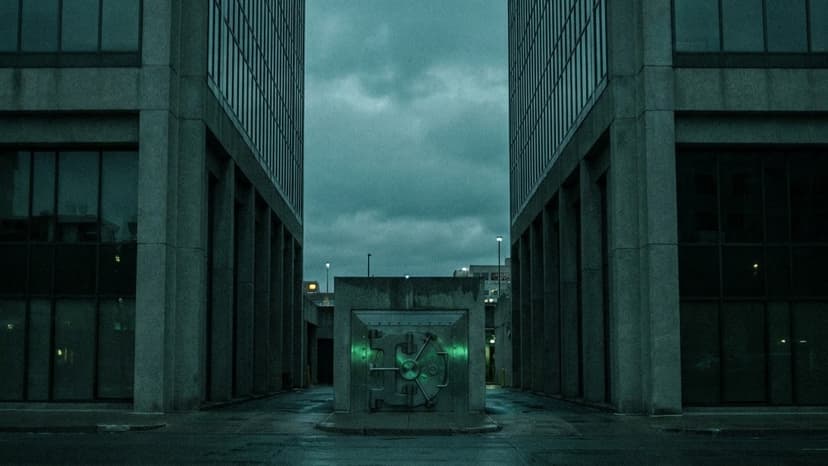
Parley - the agent that can say no
Parley is the trust primitive missing from cross-org agent collaboration: an agent you can be turned down for. Regulated collaborations stall when raw data legally can't move - two hospitals sharing cohort analytics under HIPAA, or a bank and a fintech exchanging KYC/AML aggregates. Today those deals take weeks of legal/DPO review, or die. Parley fixes this with a recruited agent from the OTHER organization. Across two real orgs in one Band room (four agents - coordinator, modeler, checker on the requester side; a vault on the owner side), the owner's vault uses its own model to: consent-to-join (it can refuse the job), counter-offer a safe alternative ("no raw rows - I'll run it in place and return only k-anonymous aggregates"), and release nothing until a first-party human at the data owner approves. An agent's APPROVE is rejected by construction. Governance is structural code, not prompts, so a hijacked or swapped model can't disable it: every capability exports zero raw rows; a composing differential-privacy budget (Rényi-DP accountant) mechanically forces a decline when exhausted; consent is purpose-bound (GDPR Art. 5(1)(b)); the owner's policy can only tighten the LLM; and every step is Ed25519-signed and hash-chained, so a third party re-attests nine invariants against a pinned key with zero trust — uv run python -m parley.verify exits 0, or 1 if a single byte is flipped. It's heterogeneous by design: any agent in either org can run on any provider (Claude, Groq, OpenRouter, OpenAI, or any /v1) - Claude is the default, not a requirement; the refusal was demonstrated live on Groq and OpenRouter. One kernel ships four domains (clinical/HIPAA, customer data, code review, HR) - deploy your own by editing one scenario file. 124 tests; real runs in proof/.
19 Jun 2026
StudioMI300 - cinematic reel from one prompt
StudioMI300 turns one English sentence into a 30-second cinematic reel, end-to-end, on a single AMD Instinct MI300X. The pipeline runs eight stages sequentially on the same GPU: a Qwen3.5-35B Director Agent plans six shots with character portraits, music brief, and per-shot voice-over script; FLUX.2 [klein] 4B paints character master keyframes with reference editing for identity preservation; Wan2.2-I2V-A14B animates each shot using First-Last-Frame conditioning for cut:false continuation arcs; the same Qwen3.5-35B re-loads as a vision critic, scoring four sampled frames per clip on character_match / scene_match / composition / artifact_free axes, with structured failure labels (STYLIZED_AI_LOOK, CHARACTER_DRIFT, EXTRAS_INVADE_FRAME, CAMERA_IGNORED) that drive a re-render loop with bumped seeds; ACE-Step v1 generates the instrumental music; Kokoro-82M narrates per-shot voice-over in nine languages (Director picks the language to match the setting); ffmpeg concatenates and mixes the final mp4. 192 GB HBM3 lets all four model architectures share the same card, loaded and unloaded between phases. ParaAttention FBCache (lossless 2x) and selective torch.compile on Wan2.2's transformer_2 give a cumulative 2.5x speedup vs unoptimised baseline. Every model is Apache 2.0 / MIT - outputs are commercially usable. The pipeline ships as a Python CLI plus a FastAPI server that streams stage events (plan, masters, keyframes, clip rendering, critic verdicts, music, VO chunks, final mp4) over Server-Sent Events for live demos. Multi-GPU routing scaffolding is in place via STUDIOMI_GPU_* env vars.
10 May 2026


