.png&w=256&q=75)
🤝 Top Collaborators

🤓 Latest Submissions
Video captioner agent
A Dockerized agent that automatically generates styled captions for video clips using Fireworks AI's vision and language models. The agent processes video files through a multi-stage pipeline combining audio transcription, frame sampling, and multi-modal AI inference. How it works: The agent reads a tasks.json file from the /input directory containing video URLs and metadata. For each task, it downloads the video clip, extracts audio using ffmpeg, and transcribes speech with Fireworks' Whisper model (whisper-v3-turbo). It then samples evenly-spaced JPEG frames from the video (adaptive count, capped at 16), and feeds both the frames and the transcript to a Fireworks vision-language model (kimi-k2p6) for grounded observations. Finally, a Fireworks text model (qwen3p7-plus) generates captions in four distinct styles: formal, sarcastic, humorous_tech, and humorous_non_tech. Output: All results are saved to /output/results.json with structured captions for each task, including timestamps and styled variations. The agent exits with code 0 on success or non-zero if any task fails. Key Features: Multi-modal AI pipeline: Combines visual frame analysis with audio transcription for contextually accurate captions Four caption styles: Formal, sarcastic, humorous_tech, and humorous_non_tech for versatile use cases Dockerized deployment: Self-contained container with all dependencies (Python, ffmpeg, AI models) Parallel processing: Handles up to 3 tasks concurrently within a 10-minute runtime budget Configurable: Environment variables for models, frame limits, and transcription toggle Lightweight: Optimized Docker image under 10GB with slim Python and ffmpeg
12 Jul 2026
Incident Room
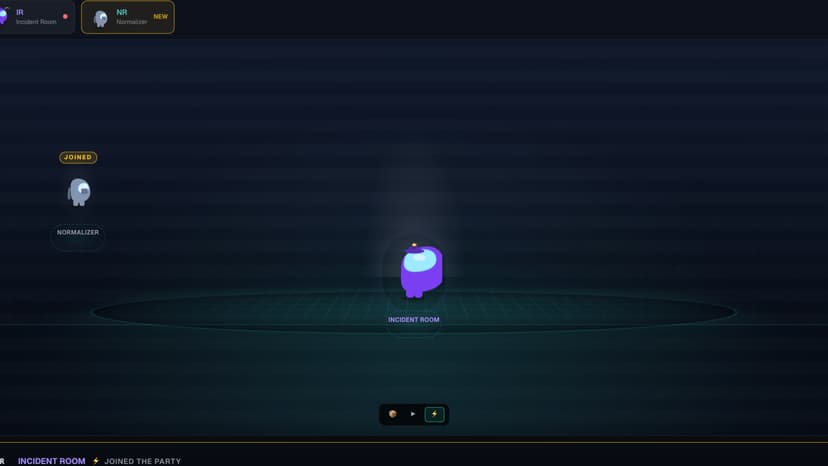
Incident Room investigates the gap between what a customer-facing AI agent says and what actually happened in backend execution. In customer support and voice AI, an agent may confidently tell a customer that an order was placed, a refund was opened, or an appointment was rescheduled, while the underlying tool call failed or produced no real side effect. Incident Room turns those mismatches into structured incidents. The system includes a ReplyChat support workflow with Supervisor, Doer, and Tool Executor agents. These agents coordinate through Band rooms, posting assignments, intent analysis, policy decisions, tool requests, and execution results. A key demo flow intentionally makes the assistant say an order was placed while the placeOrder tool records orderPlaced: false and sideEffectCreated: false. That failed chat is saved to MongoDB, appears on the dashboard, and can be investigated. Incident review agents then analyze separate evidence layers: conversation, tool execution, CRM context, and customer belief. The app highlights contradictions such as “the customer believed the issue was resolved” versus “the backend outcome failed.” It produces a live investigation view, Band audit trail, and PDF-style incident report explaining what happened, why it matters, and what should be fixed. Incident Room is production-ready for Vercel/Netlify with MongoDB persistence, Band integration, safe fallbacks, and no local runtime file dependency.
19 Jun 2026


