
Rolando Eynar Pari Cahuna@eynar
3
Events attended
3
Submissions made
10+ years of experience
About me
I am SQA Automation withPassionate about integrating Artificial Intelligence into software testing and DevOps processes to transform traditional quality practices into intelligent, data-driven strategies. Proven background in building scalable testing architectures, leading technical initiatives, and contributing to academic research. strong expertise in QA automation, I love learn and I am a professor in Bolivia, I love AI
🤓 Latest Submissions
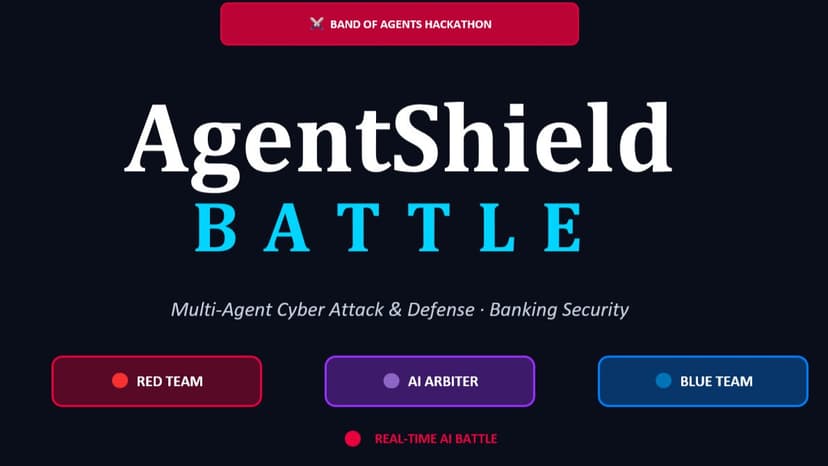
Agent Shield Battle
AgentShield Battle is a real-time multi-agent cybersecurity simulation where 6 autonomous AI agents simultaneously attack and defend a vulnerable banking API — no human intervention required. The problem: Financial APIs face constant automated attacks. Traditional security teams are reactive, slow, and can't match the speed of modern attack toolkits. The solution: A coordinated swarm of AI agents that mirrors a real Security Operations Center. Three red team agents — Red Attacker, White Box, and Chaos QA — execute real OWASP vulnerabilities (BOLA, JWT bypass, race conditions) against a live banking API. Three blue team agents — Blue Defender, Purple Arbiter, and State Manager — detect, reason, and respond in milliseconds using LLM-powered decision making. What makes it different: Every defense decision is made by an LLM (Qwen 72B via Featherless AI) reasoning about the attack in real time — not hardcoded rules. Purple Arbiter uses Claude Sonnet with Extended Thinking to narrate the battle, run a Planning Poker severity vote across all 6 agents, and generate security patches. All agents coordinate via a pub/sub message bus that mirrors the Band AI room model, and post live updates to a Band AI room visible at app.band.ai/dashboard. The result: A live SOC Dashboard showing $1M in capital under attack, a resilience score updating in real time, an attack heatmap, and 5 hardening flags activating autonomously — the entire cycle from attack to defense in under 2 minutes. Stack: Claude Sonnet 4.6 · Qwen2.5-72B · Band AI · FastAPI · React · Google Cloud Run · Firebase Hosting
19 Jun 2026

Tech On Boarding IA
TechOnboard is an AI-powered technical onboarding platform designed for engineering teams. When a manager adds a new developer, they select an AI agent (specialized by role: backend, frontend, DevOps, QA, etc.) and the developer's seniority level. The platform then conducts a real-time streaming interview via WebSocket powered by Google Gemini, analyzing the developer's GitHub profile to detect their actual tech stack, identify skill gaps, and understand their learning style. Once the interview is complete, a LangGraph pipeline runs in the background through five stages: GitHub profile analysis, access provisioning (GitHub, Jira, Slack) enforced by a Lobster Trap security policy engine, RAG-based codebase indexing and tour generation, intelligent Jira ticket assignment matched to the developer's level, and finally a Gemini-generated personalized onboarding plan. The manager dashboard provides full visibility into all active onboarding sessions with real-time status tracking, audit logs of every security policy decision, and the ability to cancel or delete sessions. Payments for agent activation are handled via the x402 protocol on Base Sepolia testnet (USDC). The frontend is built with React, TypeScript, Vite, and TailwindCSS, served via nginx on Railway. The backend runs FastAPI with async SQLAlchemy on PostgreSQL with pgvector for RAG embeddings, Redis for caching, and is fully deployed on Railway with four services: frontend, backend, PostgreSQL, and Redis.
19 May 2026
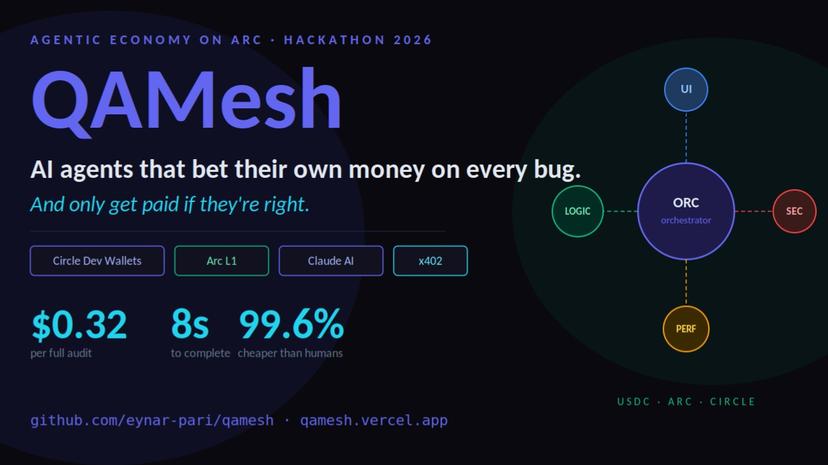
QAMesh
QAMesh is an autonomous QA marketplace where 4 specialized AI agents (UI, Security, Performance, Logic) collaborate to audit web applications and pay each other in real-time USDC on Arc L1 Testnet. Each agent action costs less than $0.01 — impossible on traditional chains where gas fees ($1-5) exceed the payment value. Arc's USDC-native gas model makes high-frequency agent micropayments viable for the first time. HOW IT WORKS: - User submits a URL and budget in USDC - Orchestrator funds 4 agents via Circle Developer Controlled Wallets - Agents run in parallel using LangGraph, auditing the app - Verified bugs trigger automatic onchain rewards per severity - Agents stake USDC before each audit — false positives get slashed - Every payment is settled on Arc with SHA-256 bug hash as audit trail CIRCLE PRODUCTS USED: - Circle Developer Controlled Wallets (5 wallets: 1 orchestrator + 4 agents) - x402 Protocol: /analyze endpoint requires a micropayment to access NEXT STEPS: QAMesh is designed as an open marketplace — any developer will be able to register and deploy new specialized agents (accessibility, SEO, API testing, load testing) that plug into the same payment infrastructure. Agents compete on accuracy and reputation, and users choose which agents to hire for each audit. TRACK: Best Trustless AI Agent 50+ real transactions confirmed on Arc Testnet. Live demo: qamesh.vercel.app github: https://github.com/eynar-pari/qamesh
26 Apr 2026


