.png&w=256&q=75)
🤝 Top Collaborators
.png&w=640&q=75)

.png&w=640&q=75)

🤓 Latest Submissions

Kūpuna Care
Each year, over 55 million people worldwide struggle with cognitive decline, emotional distress, and physical inactivity caused by progressive neurodegeneration. Dementia solutions like memory care, medications, and cognitive therapies offer symptom management but often lack accessibility, affordability, and holistic personalization. These gaps leave many without adequate support for their social, emotional, and physical needs. Our solution combines mind-body exercises like tai chi and yoga with therapeutic music to help people with dementia stay active and improve mood. These low-cost, adaptable routines work for all mobility levels and can be personalized to enhance care. With the potential to serve millions globally, we are seeking partnerships for pilot trials and collaboration with experts to create tailored routines. Interested parties can contact [email protected] to get involved.
11 Dec 2024

Bloom
Individuals often face complex life decisions, such as choosing a career path, committing to a relationship, or making significant purchases, without fully understanding how these decisions align with their core values. This misalignment can lead to dissatisfaction, stress, and a lack of fulfillment. We address the problem by providing a tool called Bloom that allows users to explore different life scenarios and assess how well each scenario aligns with their personal values. By using synthetic data and value alignment metrics, the simulator offers insights into potential outcomes, helping users make more informed, value-consistent decisions that enhance their overall well-being and life satisfaction.
23 Aug 2024

TaijiFlow
TaijiFlow is an app designed to increase human healthspan by offering personalized exercise plans based on traditional Chinese medicine principles. The global population of people over 60 years old is expected to nearly double by 2050. In the U.S., there is a 12-year gap between life expectancy and healthy life expectancy, meaning people are living longer but not necessarily healthier in their later years. Current healthcare systems primarily treat symptoms rather than proactively improving health. TaijiFlow addresses this issue by recommending exercises and postures from traditional Chinese medicine practices such as tai chi and medical qigong. These exercises have been shown to act as natural anti-aging medicine and can be more effective than some conventional physical exercises. The app includes example video clips tailored to specific medical conditions or vital functions.
4 Jul 2024

Cerebra
Alzheimer’s disease is the sixth leading cause of death in the United States. Number of people living with the disease is expected to reach 14 million by 2060. To combat Alzheimer's, a risk assessment tool called Cerebra was developed to identify individuals at higher risk early, enabling targeted interventions and lifestyle modifications for prevention and early detection. It works by asking users to anonymously input factors such as age, gender, lifestyle factors, and medical conditions, which are then utilized to generate a risk assessment request submitted to Gemini generative AI service provided by Google.
7 Mar 2024

LexaScan
According to a study by McKinsey, employees spend almost 2 hours per day searching and gathering information. Manual extraction processes cannot scale to handle large volumes of data. Automated data extraction solves the inefficiencies of manual information gathering. LexaScan is an AI solution that extracts data from text and images, delivering structured JSON format. We used GPT-4 Vision from OpenAI to extract data from text and images. We also used TruLens to ensure that the output is relevant and harmless. The total addressable market for data extraction software was estimated at $1.4 billion US dollars in 2022 and is expected to reach $3.8 billion dollars by 2028. Conservatively, we estimate the serviceable addressable market to be $140 million and the serviceable obtainable market to be $42 million.
23 Feb 2024

PhireBlast
Innovative companies struggle to create healthcare solutions due to limited access to test data and environments, as health data is sensitive and cannot be easily shared. Non-personally identifiable datasets are urgently needed for testing and developing technical solutions. Our solution is a software tool for generating synthetic test patient data that adheres to standards such as FHIR. It overcomes limitations in accessing real patient data and promotes innovation by simulating various scenarios, thereby refining healthcare solutions. Our solution is a software tool for generating synthetic test patient data that adheres to standards such as FHIR. It overcomes limitations in accessing real patient data and promotes innovation by simulating various scenarios, thereby refining healthcare solutions.
2 Feb 2024
GPDoc
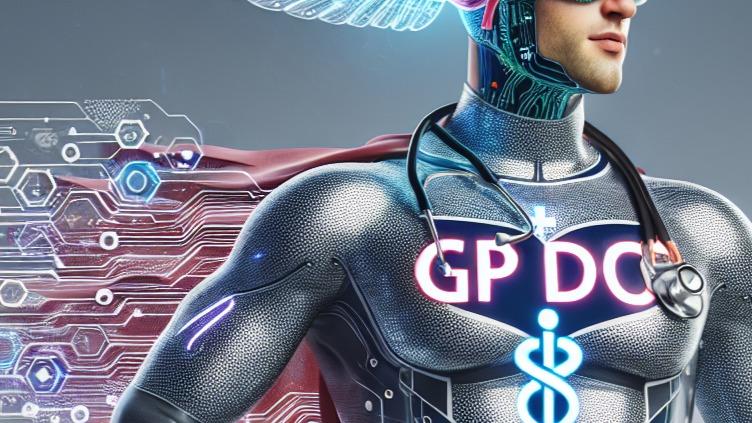
Doctors spend a significant amount of time reading doctors' notes as part of their workflow. A study published in the Journal of General Internal Medicine in 2016 found that primary care physicians spent an average of 18.4 minutes per patient encounter reading and writing electronic health record notes. This includes reviewing previous notes, writing new notes, and reviewing test results. To mitigate this problem, we developed an AI assistant that can answer questions from doctors’ notes. Questions may be related to patient history, follow-ups, medication adjustments, treatment, diagnosis, procedures, and other categories.
26 Jan 2024

Multimodal Moderator
Current content moderators can process either text or images, but not both. Separate applications are needed to moderate multiple content types. Also, the moderators produce binary output that doesn’t explain why certain content is not appropriate. Our solution is the multimodal moderator. One application that can check if text or image is appropriate or not. It can “understand” the message and explain why certain content is not appropriate. The technology we used is Zapier with Discord as the front end. Zapier is a no-code solution to connect with an AI model, and does not require a constantly running program to connect with Discord. GPT-4 Vision hosted on Clarifai platform is the engine that can check if text or image is appropriate. It sends back a narrative to explain the reasoning.
22 Jan 2024