Top Builders

Explore the top contributors showcasing the highest number of app submissions within our community.

PaLM 2: Google's Revolutionary Large Language Model

PaLM 2 is a groundbreaking large language model developed by Google, setting extraordinary standards in the realm of artificial intelligence. Outperforming its predecessors and other LLMs in various aspects, PaLM 2 showcases unparalleled capabilities in complex reasoning, multilingual translation, and coding expertise.

General
Release dateTBA
AuthorGoogle
TypeLarge Language Model

Experience PaLM 2: Where Unparalleled Performance Meets Responsible Innovation

We have collected the best PaLM 2 resources to help you explore the capabilities and potential applications of Google's cutting-edge large language model. Unleash the power of PaLM 2 with these valuable resources and see for yourself the future of artificial intelligence.


Explore curated libraries and resources to help you build outstanding projects with PaLM 2, Google's transformative large language model.

  • PaLM 2 Documentation - Dive into the in-depth technical report of PaLM 2, providing valuable insights into its development and capabilities.

  • PaLM 2 Overview - Discover the key features, capabilities, and evolution of PaLM 2, Google's groundbreaking large language model.

  • PaLM 2 Developer Guide - Access a comprehensive guide to using Google's generative AI models like PaLM 2, offering a plethora of support and resources for developers.

Google PaLM AI technology Hackathon projects

Discover innovative solutions crafted with Google PaLM AI technology, developed by our community members during our engaging hackathons.

RoboGripAI

RoboGripAI

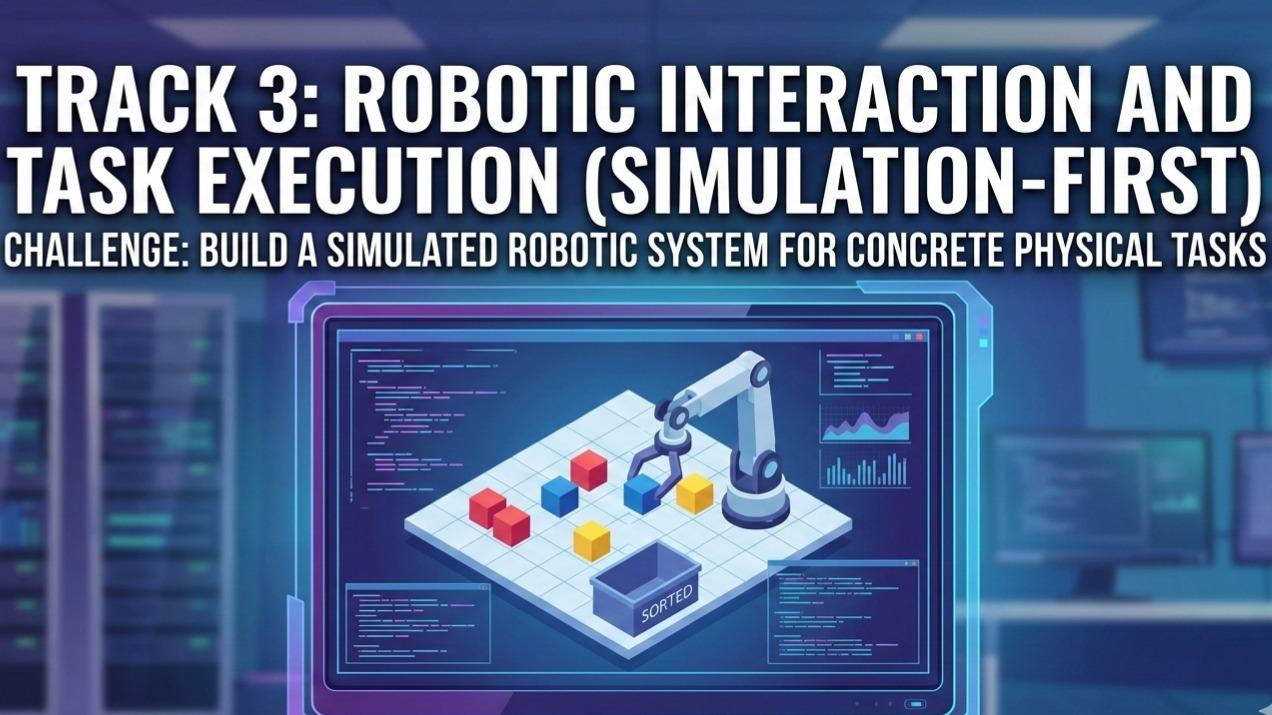
This project presents a simulation-first robotic system designed to perform structured physical tasks through reliable interaction with objects and its environment. The system focuses on practical task execution rather than complex physics modeling, ensuring repeatability, robustness, and measurable performance across varied simulated conditions. Simulation-first robotic system performing structured physical tasks such as pick-and-place, sorting, and simple assembly. Designed for repeatable execution under varied conditions, with basic failure handling, environmental interaction, and measurable performance metrics. A key emphasis of the system is reliability under dynamic conditions. The simulation introduces variations such as object position changes, minor environmental disturbances, and task sequence modifications. The robot is designed to adapt to these variations while maintaining consistent task success rates. Basic failure handling mechanisms are implemented, including reattempt strategies for failed grasps, collision avoidance corrections, and task state recovery protocols. The framework incorporates structured task sequencing and state-based control logic to ensure deterministic and repeatable behavior. Performance is evaluated using clear metrics such as task completion rate, execution time, grasp accuracy, recovery success rate, and system stability across multiple trials. The modular system design allows scalability for additional tasks or integration with advanced planning algorithms. By prioritizing repeatability, robustness, and measurable outcomes, this solution demonstrates practical robotic task automation in a controlled simulated environment, aligning with real-world industrial and research use cases. Overall, the project showcases a dependable robotic manipulation framework that bridges perception, decision-making, and action in a simulation-first setting, delivering consistent and benchmark-driven task execution.

SupplyGenius Pro

SupplyGenius Pro

Core Features 1. Document Processing & Analysis - Automated analysis of supply chain documents - Extraction of key information (parties, dates, terms) - Compliance status verification - Confidence scoring for extracted data 2. Demand Forecasting & Planning - AI-powered demand prediction - Time series analysis with confidence intervals - Seasonal pattern recognition - Multi-model ensemble forecasting (LSTM, Random Forest) 3.Inventory Optimization - Real-time inventory level monitoring - Dynamic reorder point calculation - Holding cost optimization - Stockout risk prevention 4. Risk Management - Supply chain disruption simulation - Real-time risk monitoring - Automated mitigation strategy generation - Risk score calculation 5. Supplier Management - Supplier performance tracking - Lead time optimization - Pricing analysis - Automated purchase order generation 6. Financial Analytics - ROI calculation - Cost optimization analysis - Financial impact assessment - Budget forecasting 7. Real-time Monitoring - Live metrics dashboard - WebSocket-based alerts - Performance monitoring - System health tracking 8. Security Features - JWT-based authentication - Role-based access control - Rate limiting - Secure API endpoints -- Technical Capabilities 1. AI Integration - IBM Granite 13B model integration - RAG (Retrieval Augmented Generation) - Custom AI toolchains - Machine learning pipelines 2. Data Processing - Real-time data processing - Time series analysis - Statistical modeling - Data visualization 3. Performance Optimization - Redis caching - Async operations - Rate limiting - Load balancing 4. Monitoring & Logging - Prometheus metrics - Detailed logging - Performance tracking - Error handling