Top Builders

Explore the top contributors showcasing the highest number of app submissions within our community.

GAN

GAN (Generative Adversarial Network) machine learning models used to generate realistic data that resembles the data it was train on. These models consist in two components, a generator and a discriminator, both being neural networks. During the training process the generator takes a random input and tries to produce data that is realistic enough to fool the discriminator, while the discriminator tries to identify the fake dat genrated by the generator. In this way both networks ae trained in a feedback loop, where the generator tries to produce more realistic data to fool the discriminator and the discriminator becomes better at clasifying real data from fake data. This process is what give GANs its name, its name, they are adversarial because the two networks are competing against each other. As the two networks continue to improve, the generated data becomes more and more similar to the training data, resulting in highly realistic and diverse output. GANs have been used in a variety of applications, including image and video generation, music synthesis, and natural language processing.

General
Relese date2014
TypeMachine Learning Framework

Discover GAN

  • GAN Paper Original Generative Adversarial Network Paper

GAN AI technology page Hackathon projects

Discover innovative solutions crafted with GAN AI technology page, developed by our community members during our engaging hackathons.

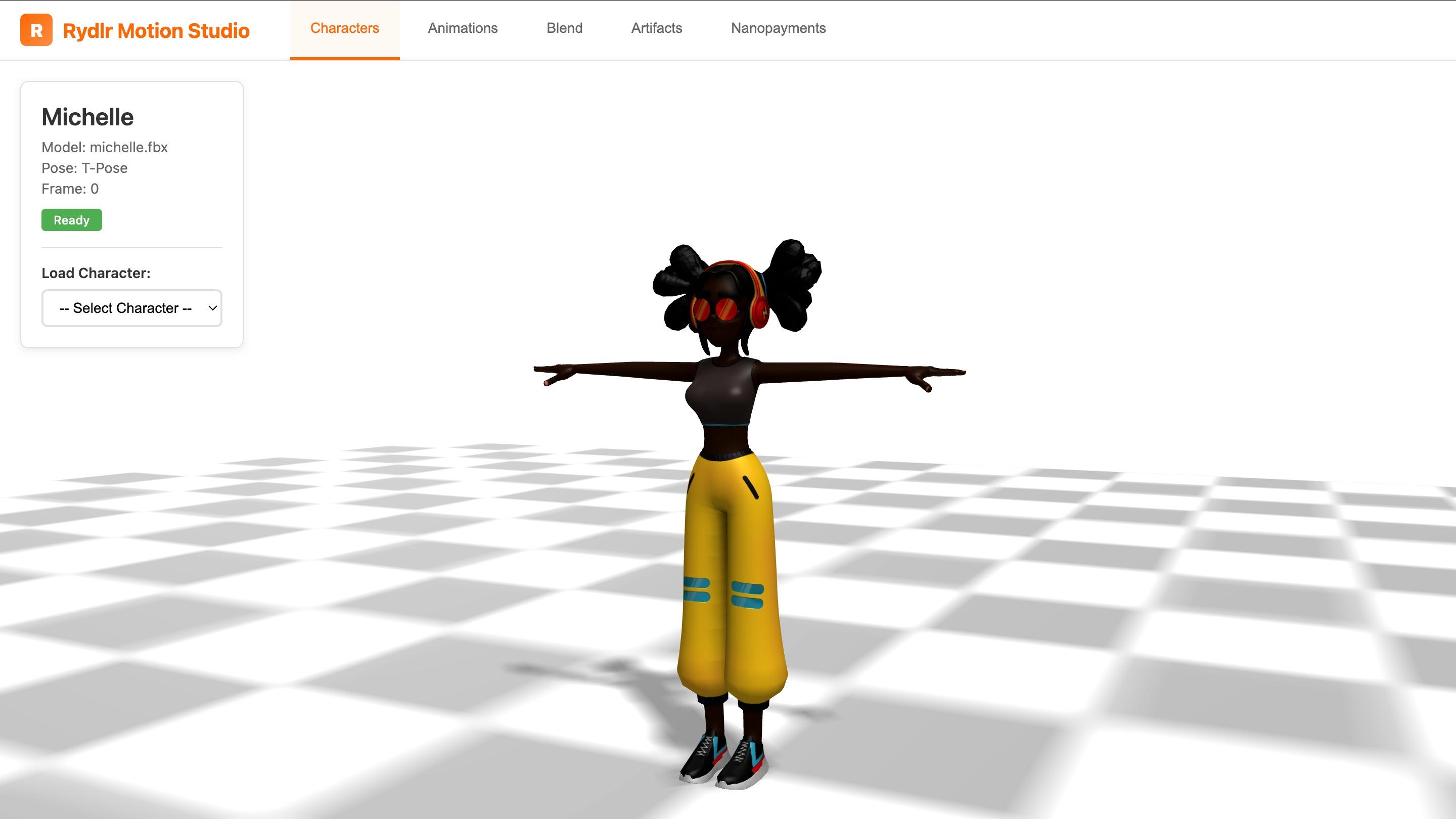
Rydlr Motion Studio (Movimento)

Rydlr Motion Studio (Movimento)

Rydlr Motion Studio (Movimento) is a trust-less motion-commerce platform for AI-generated character animation. We turn every blend, validation, and runtime usage event into an economically viable transaction so creators can monetize motion assets at internet scale, not through slow licensing cycles. Our system uses Gemini for multimodal motion understanding and reasoning, then applies an oracle-based novelty pipeline to score whether a generated blend is meaningfully new. If approved, the motion pack is attested and registered on Arc, where settlement is handled in USDC with predictable, sub-cent costs. The core innovation is per-action pricing with real-time settlement: developers can charge per blend request, per animation second, or per downstream usage event, and route revenue instantly to creator, platform, and service participants. This makes high-frequency micro-commerce practical for AI and game workflows where traditional gas economics would destroy margin. Instead of batching or off-chain trust assumptions, transactions can be settled continuously with deterministic finality and clean auditability. Movimento is designed for the Agentic Economy: autonomous systems can request motion generation, pay for analysis, receive attestations, and trigger follow-on usage billing without manual reconciliation. In our demo flow, users submit motion inputs, receive an AI-generated explanation of style transitions, get a novelty decision, and then execute on-chain authorisation and usage settlement in one continuous loop. We also provide transparent economic reporting that shows why this model is viable on Arc for <$0.01 actions and why it is not viable under traditional gas-heavy networks. The result is a production-oriented foundation for machine-to-machine creative commerce powered by Gemini intelligence and Arc-native USDC settlement.