🤓 Latest Submissions
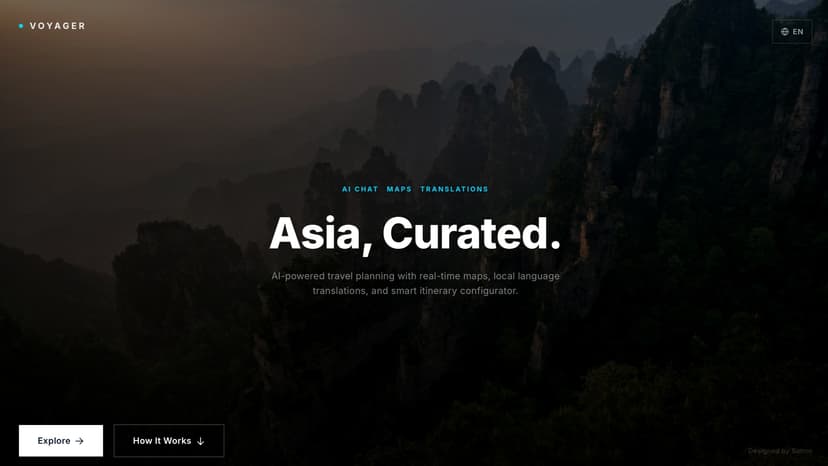
VOYAGERAI - Je voyagerai without hassle
VOYAGERAI is an AI travel concierge built for real-world travel, where plans change and connectivity often fails at the worst moment. The web app helps travelers discover places through streaming AI chat, collect ideas into a trip cart, and compile them into structured day-by-day itineraries with routes, maps, taxi cards, calendar export, email sharing, and cloud sync. The mobile app extends this into a cloud-edge experience: saved trips are cached on-device, local authentication fallback lets users open the app offline, and on-device Gemma-2-2B via LiteRT-LM powers offline translation for survival travel moments. When weather, delays, or closures disrupt a trip, Plan-B repair previews changes for a selected day and applies them only after user confirmation. A shared TypeScript SDK keeps trip schemas, normalization, validation, API access, translation cleanup, and local AI prompts consistent across web, mobile, and edge AI workflows.
31 May 2026
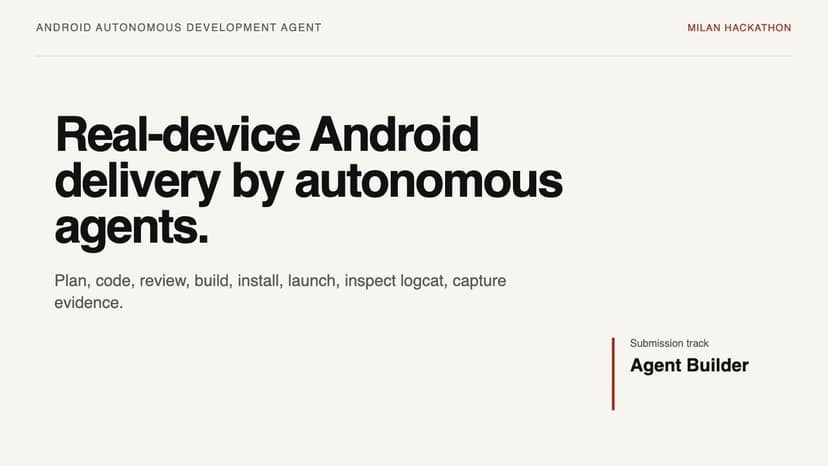
Android Autonomous Agent for Real-Device Delivery
Android Autonomous Development Agent is a delivery-focused AI agent runtime for Android development. Instead of stopping at code generation, it runs an auditable workflow from requirement intake to planning, implementation, independent review, testing, build, APK installation, cold launch, logcat inspection, screenshot verification, and reusable memory. The project is built around a simple standard: code exists is not done, and build success is not done. A task is complete only when the running artifact has been verified on a real device when available. The core thesis is architecture over model size. The real value is not making Opus stronger, but making affordable models good enough. By combining fresh task contexts, bounded compile-fix loops, review gates, device verification, and field-tested Android patterns, the system aims to make scalable AI-assisted development more reliable and cost-effective.
19 May 2026

