.png&w=256&q=75)
🤝 Top Collaborators

🤓 Latest Submissions
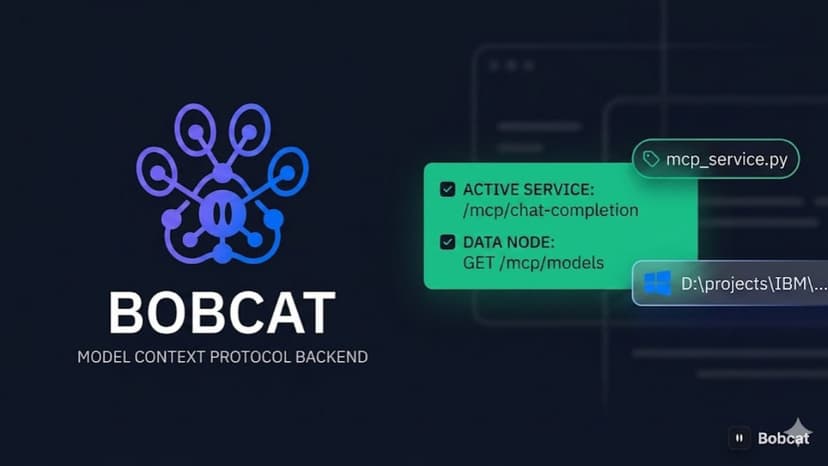
Bobcat: An Interactive code canvas with Bob
Bobcat rethinks how developers understand unfamiliar codebases. Most AI code analysis tools follow the same workflow: paste a GitHub URL, wait for an LLM-generated summary, then scroll through walls of text. Bobcat takes the opposite approach. Instead of treating a repository like a document, it transforms it into an interactive architectural graph developers can explore visually. When a Python backend is loaded from a local path or public GitHub repository, Bobcat parses every file using a deterministic AST walker and builds a clustered module graph with dagre routing. Developers can click modules to drill into endpoints, handlers, and functions through cinematic transitions. Hovering over a function reveals semantic risk analysis, incoming callers, outgoing calls, and contextual insights. Connected components softly pulse to trace execution and data flow. IBM Bob powers four workflows directly inside the graph: 1. **Chat with Bob** – Answers repository questions using real code structure as context. 2. **Ask Bob AI** – Replaces meaningless risk scores with semantic explanations like: “Signs and broadcasts transactions without replay protection.” 3. **Refactor with Bob** – Generates GitHub-style inline diffs for changes like validation or error handling improvements. 4. **Simulate Change** – Predicts architectural blast radius for planned edits and animates affected nodes across the graph. Bobcat turns architecture comprehension into an interactive experience instead of a passive reading task. Developers can inspect, refactor, and reason about large repositories in minutes instead of spending hours manually tracing relationships across files.
17 May 2026
