
Rohan Singh@rohansingh
1
Events attended
1
Submissions made
India
1 year of experience
About me
takes one to know six.
Socials
🤝 Top Collaborators


🤓 Latest Submissions
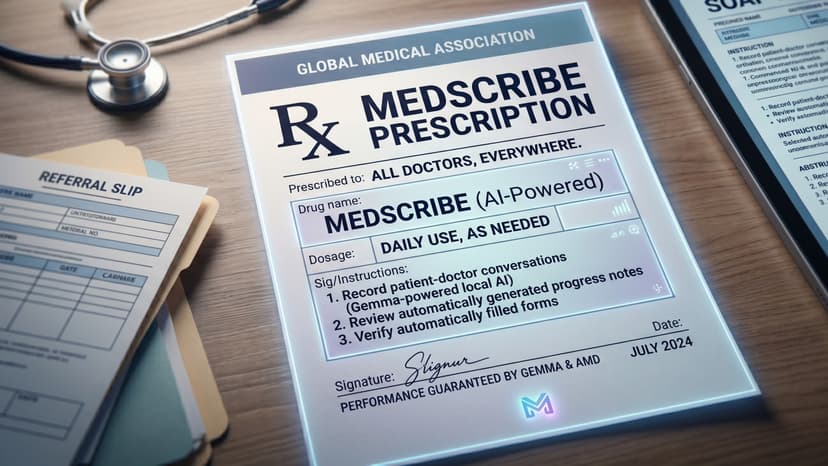
MedScribe
In India, a typical OPD physician sees 80–100 patients a day. More than 50% of their time vanishes into paperwork — writing notes, re-reading prescriptions, copying between forms. Existing AI scribes solve this in the West, but they: - Send patient audio to the cloud (privacy nightmare under DPDP Act) - Charge per-minute API fees that don't fit a ₹200 OPD visit - Don't speak Hindi, Tamil, Telugu, Bengali, or Hinglish - Force a single rigid note format - MedScribe AI is different. Everything runs on the device. No audio ever leaves the hospital premises. Hindi, Tamil, Bengali, and 9 other languages are first-class. The clinical schema is configurable per hospital. We solve this by building a multilingual AI-powered clinical documentation assistant that automatically converts natural doctor–patient conversations into structured medical notes in real time. Doctors and patients can communicate freely in Hindi, English, Tamil, or other regional languages without changing their normal consultation process. The conversation audio is first processed locally using Whisper, which performs on-device speech recognition and generates an accurate English transcript while preserving important medical context. The transcript is then passed to Gemma running through LM Studio, where the AI transforms the conversation into structured clinical documentation including patient history, symptoms, diagnoses, medications, and follow-up recommendations. The generated notes are then presented to the doctor for quick review, editing, and approval before being saved. Since the complete pipeline runs locally on-device, the system ensures patient privacy, works reliably even with limited internet connectivity, and significantly reduces the time doctors spend on manual documentation, allowing them to focus more on patient care.
10 May 2026
