.png&w=256&q=75)
🤝 Top Collaborators




🤓 Latest Submissions
Aleph-Tav Healthcare Safety Agentic
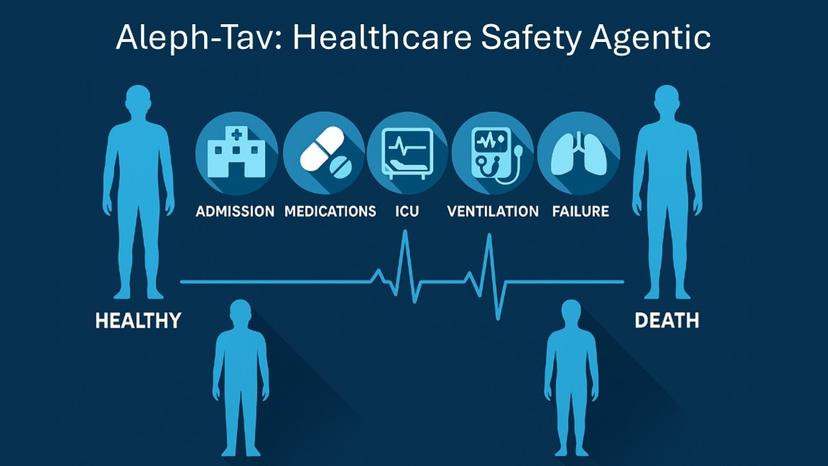
Our team built an agent-driven Healthcare Safety Platform designed to arrest James Regen’s “Swiss-cheese” iatrogenic cascades by unifying disparate hospital data into a Databricks Lakehouse and surfacing real-time risk insights. We began by defining the problem scope—10 percent of inpatients suffer preventable harm when latent system flaws align with active errors—then organized our work around four specialized personas. Agentic Maya Thompson led a strategic analysis of EHR admission/discharge records, incident and near-miss logs, and staffing schedules to prioritize the failure modes that most undermine patient safety and throughput. Carlos Reyes ingested data streams from EHRs, medical devices, wearables, and clinical protocols via Auto Loader into Bronze, Silver, and Gold Delta tables, codified transformation logic in Delta Live Tables, and enforced data governance with Unity Catalog to ensure compliance and lineage traceability. Dr. Priya Singh developed and rigorously validated predictive models—combining lab values, time-series vitals, protocol deviation flags, and staffing ratios—to flag patients at highest risk of cascading harm, audited model fairness across units, and registered top-performing versions in MLflow. Finally, Olivia Chen translated complex risk scores and incident trends into an intuitive dashboard using Databricks SQL and an embedded React interface, designing sliding-scale gauges, alert workflows tied to staff schedules, and drill-down incident timelines that guide timely, targeted interventions. Over multiple iterations, the team tagged each other on data-readiness checks, schema clarifications, feature requests, and prototype refinements in our integrated chat system, converging on a production-ready solution that continuously monitors care pathways, predicts misalignment in advance, and closes the “holes” in our clinical defenses—turning fragmented hospital data into life-saving insights.
1 May 2025
DeepSeek Business Creator
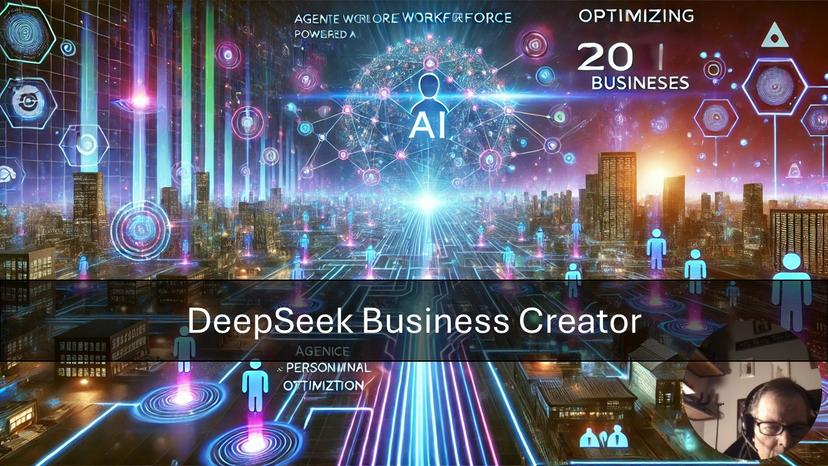
The DeepSeek Business Creator demonstrates how to leverage DeepSeek's latent reasoning space to emulate three-agent interaction for multi-business creation on the web. This system integrates a simple Markov chain optimization process with browser automation, allowing businesses to emerge dynamically in an optimized sequence. The approach enables AI-driven enterprises to launch and scale efficiently, simulating real-world economic expansion with minimal human intervention. From an initial dataset of 200 business ideas, 20 were selected based on predefined success factors. Each of these businesses was assigned three AI agents, each specializing in different aspects of business creation: market research, operational strategy, and adaptive growth. The sequence of business creation was optimized using a Markov chain model, ensuring that dependencies between business types and market readiness were accounted for. This optimization increased the likelihood of success by structuring the order in which AI-driven businesses launched and scaled. AI agents interacted within DeepSeek’s latent space to generate business plans dynamically. These plans emerged from the interplay of three AI agents, refining concepts based on strategic reasoning. Once validated, browser automation was used to execute the launch of these businesses, coordinating their deployment across different online markets. As AI-driven businesses launched, they began to emerge in various markets worldwide. The system's ability to simulate economic scaling in a decentralized manner demonstrated the potential of AI agents to drive real-world business success autonomously. As businesses evolved, AI agents adapted and absorbed the most successful strategies. The agent absorption rule ensured that underperforming agents were phased out, while the most effective decision-making patterns were integrated into the next generation of business iterations.
16 Feb 2025
Attached Spin AIstronauts
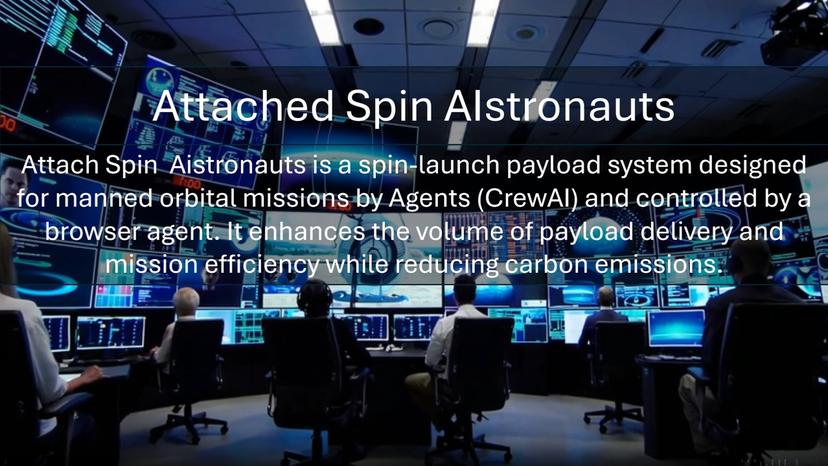
Attach Spin Astronauts: A Spin-Launch Payload System Attach Spin Astronauts is a spin-launch payload system for manned orbital missions, using CrewAI and a browser-controlled agent to enhance efficiency and reduce carbon emissions. Five-Stage Mission Framework Spin Acceleration: A ground-based launcher propels the payload to high velocity, minimizing onboard propulsion needs. Orbital Insertion: The payload is guided into orbit with small thruster corrections. On-Orbit Stabilization: Attitude correction ensures readiness for docking. Rendezvous: A separately launched manned vehicle docks with the payload. Mission Execution: The payload is integrated into mission objectives. Supporting Programs Browser-Based Control: Real-time mission oversight and adjustments. Spin Launcher Optimization: AI-driven launch efficiency improvements. Orbital Navigation AI: Ensures stability and collision avoidance. Autonomous Docking: CrewAI agents enable seamless payload integration. Payload Utilization System: Manages deployment and mission execution. Development Process The project was designed using ChatGPT, followed by two CrewAI programs: one for Design Review and another for a Launch Press Release. Sora and Suno generated a video demo, and a Python Orbit Simulation was developed based on CrewAI’s redesign. Finally, Browser Use was assigned as the Launch Control Engineer, overseeing all programs. Advantages Cost-Efficient: Reduces reliance on chemical rockets. Eco-Friendly: Minimizes emissions for sustainable space exploration. Scalable: Adaptable for research and logistics missions. This innovative approach provides a lower-cost alternative to traditional launches, optimizing efficiency while supporting manned missions in space.
9 Feb 2025

Smart Network Infrastructure Planner
The Smart Network Infrastructure Planner builds on the findings of the PASQAL Hackathon on Quantum Computing, which revealed the significant risks that climate change poses to telecommunications infrastructure, with disruptions expected to escalate in underserved regions by 2047. Using these insights, the planner integrates AI, quantum computing, and dynamic datasets to optimize telecommunications deployment, focusing on climate resilience and improving connectivity in vulnerable communities. Key innovations envisioned for the planner include: Dynamic AI-Driven Analysis: Predicts vulnerabilities and recommends climate-resilient strategies, enhancing operational efficiency, reducing downtime, and minimizing risk. Integration of Hugging Face Datasets: Provides real-time, adaptive planning by leveraging environmental and demographic data to identify and prioritize high-need areas. Interactive Streamlit Application: Empowers stakeholders to simulate deployment scenarios, visualize complex data, and collaborate effectively, fostering alignment and better decision-making. Budget Optimization: Prioritizes resource allocation for underserved regions, ensuring cost efficiency and maximizing ROI while addressing connectivity gaps. Sustainability Metrics: Embeds long-term resilience and environmental standards into planning to support sustainable development goals and enhance corporate social responsibility. These features deliver measurable business outcomes, including enhanced network reliability, optimized resource utilization, cost savings, and improved service in underserved regions. By addressing both current and future challenges, the planner empowers organizations to bridge the digital divide, mitigate climate risks, and unlock new opportunities in emerging markets. It transforms research findings from the PASQAL Hackathon into actionable strategies that support sustainable and equitable connectivity while creating competitive advantages in uncertain environments.
26 Jan 2025

DOGE MakeAI Educate
Our philosophy is to fix and add, not cut. We approach DOGE with abundance, leveraging AI as a one-to-many solution that addresses problems with innovative, unexpected solutions. Reimagining Learning with AI By incorporating agentics—autonomous AI agents—learning evolves into interactive and immersive experiences: Enhanced Learning: Fictitious companies come to life, engaging learners in dynamic discussions. Software Integration: Agentics assist in creating functional software, enabling learners to produce real-world products. Addressing Education’s Challenges Education is broken: costly, impractical, and uncreative. AI-driven agentic scrum teams offer solutions by emphasizing collaboration, practical skills, and real-world impact. Project Workflow The project workflow consisted of three main steps: Building a JavaScript Course Player: The foundation for an interactive course experience. Creating the Grok Agentic System: A configuration file informed Grok where agentics were located within the course. This included a Grok Agentic Dialog Team, represented by the agentic agents: Zoe Kim, Software Engineer Alex Patel, DevOps Engineer Jack Dawson, Cloud Architect Designing the Grok Query System: This system accompanies the learner throughout the course, providing rich, interactive conversations and coding examples. Transformative Approach Agentic teams foster hands-on learning where students actively solve challenges, such as designing efficient housing. They empower learners to leave the classroom with deployable skills and creative solutions. Acknowledgments Special thanks to the team: Jaweria, Amanullah, ALI, Abeera, and Davy.
15 Dec 2024
Lokahi Precision Care Portal
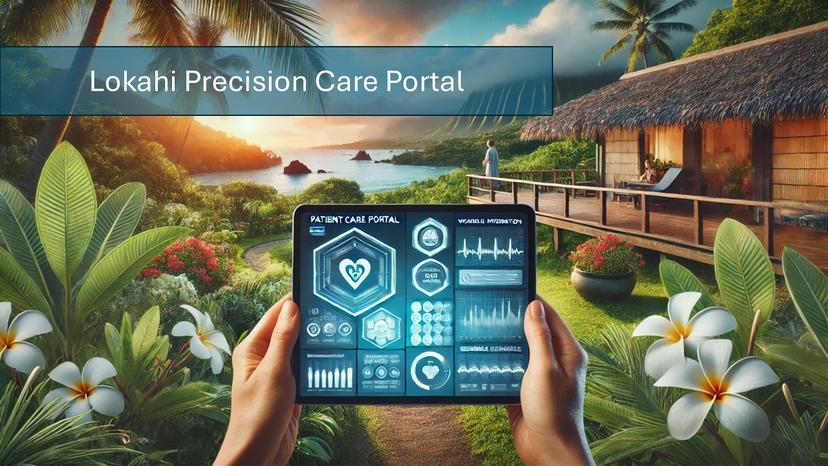
The Lokahi Precision Care Portal unifies patient care, monitoring, and billing by leveraging synthetic data, wearables, and agentic technology. This innovative solution delivers personalized insights and remote care management, with a specific focus on the breast cancer use case. The initiative aims to modernize medical insurance programs and provide seamless, patient-centered solutions by ensuring new technologies are fully integrated rather than treated as add-ons. Using Power B I we analyzed the Lokahi insurance database to facilitate this seamless integration, laying the foundation for a holistic approach to precision care. The project emphasizes addressing challenges unique to breast cancer patients, such as cognitive conditions like "Chemo Brain." It incorporates several data streams—Wearable Data, Breast Cancer Data, and a comprehensive Treatment Model—to deliver tailored insights. These tools work in harmony with the Patient Talk feature, which enhances engagement by providing real-time, personalized guidance, fostering trust, and enabling timely interventions through an agentic Clinical Decision Support System (CDSS). Together, these elements improve patient outcomes and optimize healthcare delivery. By combining cutting-edge technology and accessibility, the Lokahi Precision Care Portal redefines healthcare with an integrated solution that unifies care and billing while alleviating the strain on Hawaii's medical system. Special thanks to the team: Ahmad, Bilal, Amanullah, Reema, and Anjalee.
11 Dec 2024
ASPIR Strawberry FinStart
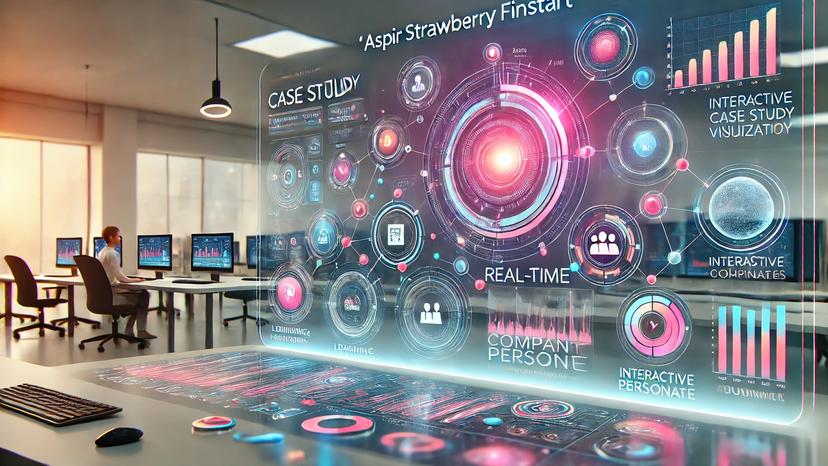
ASPIR Strawberry FinStart is the first interactive case study of its kind, designed to enhance both learning and engagement by tracking course progress through a cutting-edge vector database. Created by Strawberry, this innovative case study simulates the journey of the startup FinStart as it grows and adopts new materials. Participants experience the dynamic challenges of scaling a business while engaging in real-time, personalized dialogue that reflects the startup's evolving persona. FinStart provides real-world examples, with the course adapting to the business’s needs and actions as new concepts are introduced. The interactive dialogue keeps the learning fresh, allowing users to receive instant company feedback and explore strategies in real-time. This model offers multiple business advantages, including: Real-time progress tracking that allows participants to visualize their learning journey. Personalized learning paths based on individual progress and interactions. Simulated business growth, which helps participants understand how decisions impact scaling a startup. By integrating advanced database technologies and an interactive approach, FinStart livens up learning, transforming passive materials into dynamic, engaging conversations and real-world simulations.
11 Oct 2024
FlagShip Precsion Care
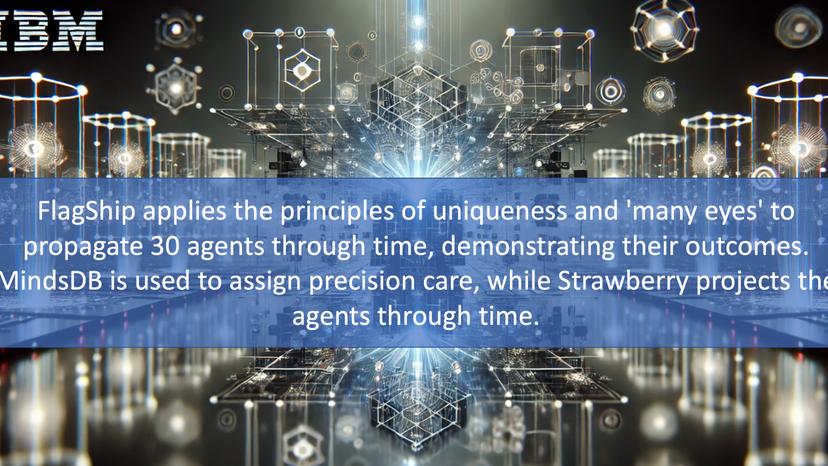
Through this exercise, we gained key insights into how propagating systems can improve patient care management, particularly with the FlagShip framework. FlagShip applies the principles of Uniqueness and Many Eyes to propagate 30 agents through time, enabling us to observe treatment outcomes. With MindsDB assigning precision care and Strawberry projecting outcomes, we can evaluate treatment effectiveness with high accuracy. The Principle of Uniqueness suggests that spatial points can be arranged in any configuration as long as each remains unique. Using this, we reduced our problem to a 90-vertex hypercube. MindsDB set the initial states, while Strawberry projected them to the final state across the vertices. This allowed us to simplify complex scenarios while maintaining the agents' unique characteristics. The Principle of Many Eyes asserts that knowing one aspect of a system allows insight into the entire system, thanks to symmetries in MD-space. Unlike traditional functions, which have one input and output, MD-systems generate multiple outputs from a single input. This enabled us to predict all 30 agents' outcomes simultaneously, making the care projection more efficient. As a result, Strawberry reliably indicated treatment effectiveness. In cases where the treatment was predicted to fail due to medication intolerance, this insight helped physicians avoid ineffective therapies and explore better alternatives or focus on improving the patient’s quality of life through traditional means. Conversely, when treatments were predicted to succeed, they could be confidently applied, ensuring favorable outcomes. This approach not only improves patient care but also reduces unnecessary costs from ineffective treatments. By using FlagShip’s predictive systems, we are advancing more personalized, cost-effective, and precise healthcare strategies.
16 Sep 2024
Granite Gurus Many Eyes
Granite Gurus Many Eyes is an extension of three previous Hackathons: Build Your AI Startup, Codestral, and Edge Runners. This Hackathon introduced two powerful principles: (1) Uniqueness and (2) Many Eyes, both of which were crucial in advancing the exploration of Multidimensional (MD) space. These principles were effectively demonstrated through a custom search engine built on top of IBM Granite, highlighting their transformative potential. The Principle of Uniqueness asserts that spatial points can be arranged in any configuration as long as the number of points remains constant and each point is unique. This principle underpins the 2D Infinite Plane, which aids in visualizing interactions in higher dimensions and emphasizes representing numeric values as symbols rather than numbers to reduce computational costs. The Principle of Many Eyes posits that knowing one aspect of a system allows for understanding the entire system, thanks to the symmetries in MD-space. Unlike traditional programming, where functions have a single input and output, MD-systems can yield multiple outputs from a single input by leveraging these symmetries. This was illustrated in our use of IBM Granite for pattern search, which returned multiple results due to MD-space symmetries, and then predicted the next pattern, showcasing the system's adaptability. Integrating IBM Granite with the 2D Infinite Mathematical solution creates a powerful combination that enhances search engine performance by reducing computational overhead, improving accuracy, and accelerating processing times. This approach not only offers a superior user experience but also aligns with sustainability and cost-saving goals, positioning the search engine as a leader in the AI-driven market. By optimizing resources and delivering faster, more accurate results, this project demonstrates the potential to revolutionize search technology, making it a valuable asset for businesses aiming to lead in the AI space.
26 Aug 2024