Pranisha Karki@pranisha_karki05
1
Events attended
1
Submissions made
Nepal
1 year of experience
About me
Pranisha is a BIT student with a strong interest in software development, frontend engineering, and modern technology-driven solutions. I enjoy learning by building practical projects and experimenting with real-world systems rather than focusing only on theory. My experience includes working on inventory systems, web applications, dashboards, testing documentation, and frontend projects using technologies such as Java, JavaScript, React, and Python. I am actively exploring the MERN stack and UI/UX-focused development to strengthen her full-stack development skills. Alongside academic coursework, Pranisha frequently uses AI-powered tools such as GitHub Copilot, OpenAI Codex, and ChatGPT to assist with coding, debugging, brainstorming, rapid prototyping, and project planning. My learning style is creative, project-oriented, and highly curiosity-driven, with a strong focus on building interactive and user-friendly applications. I approach development with a builder mindset, always looking for ways to turn ideas into functional digital products while continuously improving my technical and problem-solving abilities.
🤝 Top Collaborators

.png&w=640&q=75)
🤓 Latest Submissions
OpsDNA
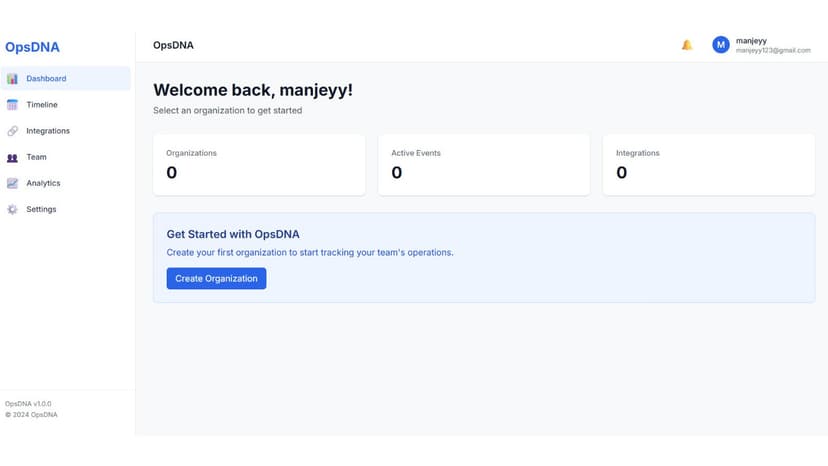
OpsDNA is an enterprise-ready operational intelligence platform designed to unify fragmented work signals across technical and non-technical teams into one actionable workspace. It connects core tools like GitHub, Jira, and Slack, then converts scattered events into a clear, time-ordered project narrative that managers and developers can both understand. Teams can create or import projects, invite members, assign roles, and monitor cross-tool execution from a single dashboard. The platform includes a chat-based AI assistant powered by Gemini Flash that answers operational questions in plain language, explains bottlenecks, and provides context-aware recommendations with source-backed insights. OpsDNA follows a freemium model, offering a practical entry point for growing teams while reserving deeper analytics and advanced intelligence for premium usage. The architecture combines a Next.js frontend and BFF layer with a dedicated NestJS backend for integrations, webhooks, and orchestration, enabling scalability and clean separation of concerns. Built with Supabase for authentication and data services, the product emphasizes secure metadata-driven intelligence, role-based access, and enterprise-grade usability. In short, OpsDNA reduces context switching, improves decision speed, and helps organizations move from reactive status tracking to proactive operational control.
17 May 2026

