
Nevil Shah@nevilshah235
6
Events attended
3
Submissions made
6+ years of experience
About me
I am a Senior AI and MLOps Engineer with six years of experience building production-grade AI systems across large language models, computer vision, and deep learning. My work spans LLM platforms, RAG systems, and GPU-backed inference infrastructure, as well as vision models deployed under real-world constraints. My work focuses on taking AI systems from research and experimentation to reliable, scalable production. I work extensively on optimizing latency, infrastructure cost, and hallucination risk under real-world traffic, and on making deep learning models robust enough for continuous operation in production environments. I enjoy solving the unglamorous but critical problems that make AI systems actually usable. I have designed and deployed end-to-end AI pipelines across startups and enterprise environments, including computer vision and deep learning workflows, LLM evaluation frameworks, retrieval and reranking systems, inference serving stacks, and autoscaling infrastructure. I care deeply about maintainability, observability, and operating AI systems that remain stable at scale. On lablab.ai, I am interested in collaborating on practical AI projects, especially around agentic systems, evaluation, safety, computer vision, and AI infrastructure that bridges research and real-world constraints.
🤝 Top Collaborators
.png&w=640&q=75)
.png&w=640&q=75)
🤓 Latest Submissions
SystemQuest
SystemQuest is a hands-on, gamified learning platform that transforms how engineers learn system design. Instead of passively reading blogs or memorizing patterns, users actively build real-world system architectures on a visual drag-and-drop canvas using components like load balancers, caches, databases, queues, and services. Each design is evaluated in real time by a simulation engine across core system metrics such as latency, throughput, availability, scalability, and cost. Users receive transparent, rubric-based feedback that highlights architectural gaps and trade-offs. An integrated AI assistant understands both the current mission and the user’s architecture, providing contextual explanations, hints, and design guidance at multiple levels of depth. SystemQuest offers structured learning paths and missions inspired by real engineering problems—ranging from high-read systems and asynchronous processing to distributed consistency and large-scale streaming. By combining simulation, AI feedback, and gamification, SystemQuest helps learners build true system design intuition through practice and iteration.
2 Mar 2026

InsightX - Turn Trades Into Learning Moments
Most trading education platforms focus on teaching strategies and indicators. InsightX focuses on teaching *the trader*. InsightX is an AI-powered personalised trading education system that uses a trader’s own past trades as the primary learning material. Instead of generic lessons, the system analyses completed trades, market context, and behavioural patterns to generate clear, non-judgmental explanations such as: “The market did X, and in similar situations, you tend to do Y.” Each completed trade becomes a single “learning moment.” Before showing the explanation, InsightX prompts the trader to reflect on their decision, encouraging engagement and reducing defensiveness. Based on recurring patterns, the system adapts its explanations and recommends what the trader should learn next, effectively creating a personalised curriculum shaped by real trading behaviour. InsightX transforms trading education from passive information into active, reflective learning grounded in real experience.
7 Feb 2026
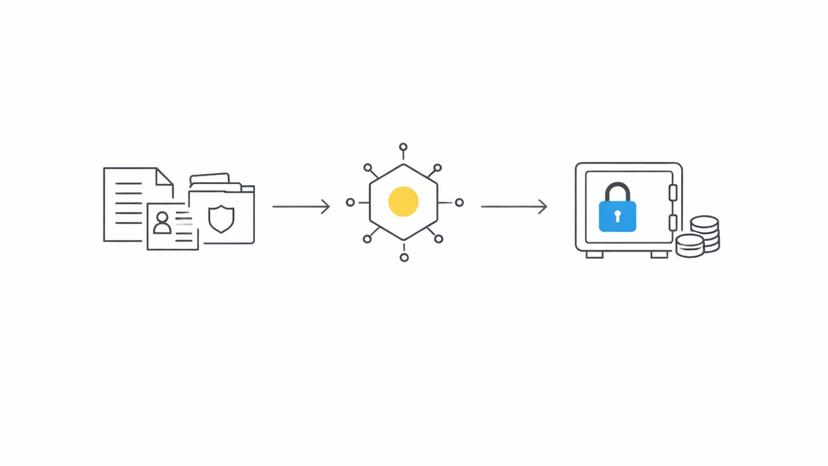
UClaim
UClaim is an AI-agent-driven insurance claims platform that demonstrates how trustless execution can be embedded into agentic commerce workflows. In traditional insurance systems, claims processing is slow, manual, and opaque. Even when AI is introduced, most workflows still rely on human verification and post-hoc audits, resulting in delays, higher operational costs, and limited scalability. The core challenge is not just making decisions with AI, but executing those decisions safely, predictably, and in compliance with defined rules. UClaim introduces an agentic claims workflow where AI agents, powered by Gemini, ingest claim documents, extract relevant information, and reason over policy conditions to determine eligibility. These decisions are not treated as final authority. Instead, they are validated against deterministic, auditable policy rules that exist outside the model, ensuring transparency and control. Once all conditions are satisfied, UClaim triggers a conditional payout using Circle’s programmable payment infrastructure. The AI agent never has direct access to funds. Payment execution is guarded by explicit constraints, limits, and rule checks, ensuring funds are released only when eligibility criteria are met. This clear separation between intelligence and execution prevents over-delegation of financial authority to AI. Arc Blockchain is used to anchor claim decisions and execution state, providing verifiable records and auditability across the workflow. This enables insurers, regulators, and auditors to trace how a decision was made and how a payout was executed without relying on opaque internal systems. The current implementation is a proof-of-concept that demonstrates end-to-end claim verification, eligibility determination, and guarded payout execution. UClaim serves as a practical example of how agentic AI systems can safely participate in real financial workflows when paired with programmable payments and verifiable execution layers.
24 Jan 2026


