🤓 Latest Submissions
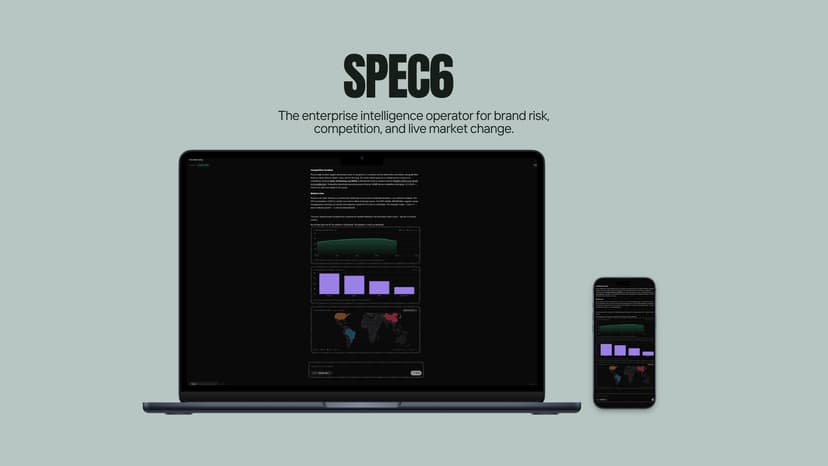
Spec6: The enterprise intelligence operator
Spec6 uses Speechmatics in two distinct but connected ways: first as the live speech interface for the product, and second as a transcription engine for “spoken web” intelligence. That split is important, because this is not just “we added voice chat.” In the code, Speechmatics sits both at the front door of the system, where a user talks to Spec6 in real time, and deeper in the intelligence pipeline, where audio and video from the web can be converted into analyzable evidence. The live voice side starts in the frontend voice assistant at [/Users/nadhi/Desktop/win-win/src/frontend/react/chat/voice-assistant.tsx](/Users/nadhi/Desktop/win-win/src/frontend/react/chat/voice-assistant.tsx). The browser captures microphone input with `getUserMedia`, then converts the audio into the format Speechmatics expects: 16kHz mono PCM16. That matters because the browser does not just upload a blob after the user is done. It streams audio continuously in small chunks, which makes the experience feel like an actual assistant instead of a push-to-record form. The comment in that file describes the full loop clearly: mic input becomes PCM16, that stream goes to `/api/voice/transcribe/ws`, partial and final transcripts come back, and the final transcript is fed into the normal Spec6 agent loop. So the voice layer is not a separate AI product. It is an alternate input mode into the same reasoning engine that powers the rest of the app.
31 May 2026
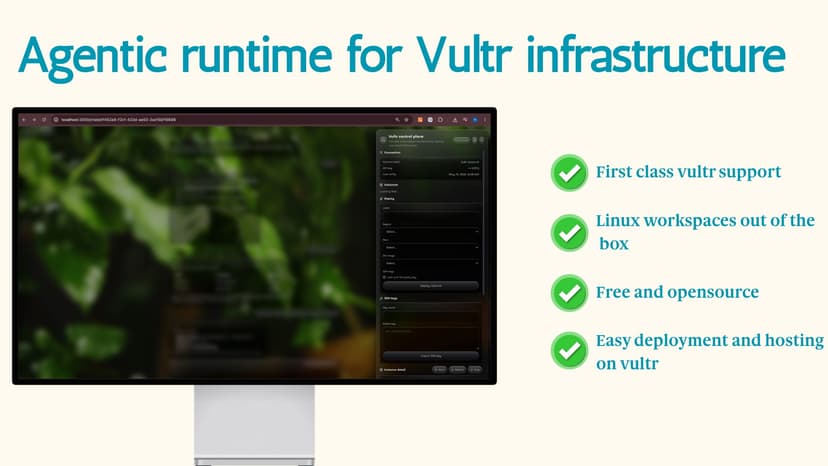
Mixer: AI Vultr Infrastructure management & Devops
Mixer is a Vultr-hosted enterprise AI agent workspace built around one core idea: turning natural-language goals into real, auditable execution across cloud infrastructure and enterprise operations. Its strongest workflow is Vultr infrastructure control, where users can connect their Vultr account, inspect live instances, deploy new machines, attach SSH access, run remote checks, diagnose issues, and generate manager-ready audit reports from one web interface. Unlike a basic chatbot, Mixer does not stop at answering questions. It can plan multi-step work, create and manage workspaces, edit files, run commands, inspect results, retry intelligently, and produce final artifacts such as reports, previews, and operational summaries. Every step is streamed into the interface so teams can see what the agent is doing, which tools it is using, what changed, and where failures happened. Mixer is designed to feel practical for enterprise teams. In this hackathon version, the product is centered on Vultr operations: infrastructure health audits, deployment workflows, SSH-based investigation, safe remediation, and shareable reports. Beyond that core, the same agent workspace can also support adjacent enterprise tasks like customer support triage, HR planning, sales research, and internal documentation. The goal of Mixer is to move AI beyond passive conversation and into reliable execution. By combining planning, infrastructure access, workspace tooling, approvals, previews, and reporting in one product, Mixer turns Vultr cloud operations into a conversational, transparent, and enterprise-ready control plane.
19 May 2026


