
🤝 Top Collaborators


🤓 Latest Submissions
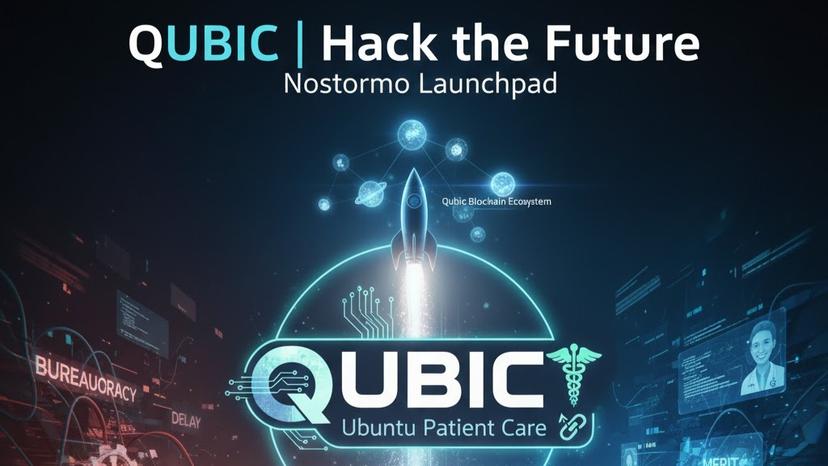
Quantified Ubuntu Contribution Integrity Crucible
The Problem: Moral Failure and Stagnation (Focus: Relatable) Open-source healthcare innovation is crippled by subjective recognition, slow development, and the moral failure of systems prioritizing profit over patient care. Developers lack objective metrics for contribution quality, leading to burnout and talent exclusion based on static credentials, not real-world impact (e.g., the 900x faster MCP Server). The Solution: QUBIC's Meritocratic Architecture (Focus: Mechanics) QUBIC is the solution. It is a hybrid, autonomous governance protocol built for the Nostromo Launchpad. Off-Chain AI Analysis: Our AI Judge (LLM-Powered) scores every contribution (code quality, documentation, clinical utility, security compliance) against a public, weighted rubric. On-Chain Integrity: A secure Oracle posts the composite score to the Qubic C++ Smart Contract DAO. Trustless Rewards: The Smart Contract registers the contributor with a Platinum, Gold, or Silver tier and automatically distributes UC tokens and weighted voting power. The Qubic Advantage (Focus: Technical Edge) QUBIC leverages Qubic's high-performance C++ architecture for fast, deterministic execution, essential for mission-critical healthcare governance. This ensures that the DAO remains a Meritocratic Democracy—where governance power is based on proven, life-saving contributions, not token wealth. QUBIC is the trust layer that funds and sustains the Ubuntu Patient Care Rebellion.
7 Dec 2025
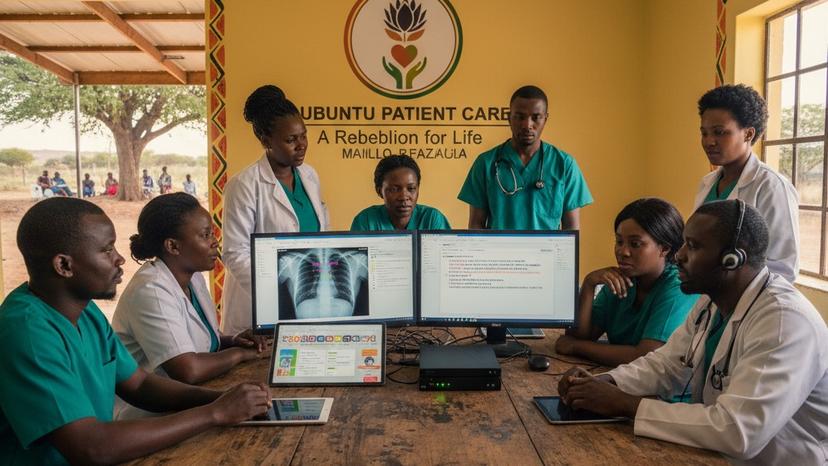
Ubuntu-Patient-Care IBM agent core
THE UBUNTU REBELLION: Fighting a Moral Failure with Agentic AI The Problem: A Moral Failure in Healthcare Judges, we are here today not just to showcase code, but to challenge a fundamental injustice. The current healthcare system, dominated by corporate oligopolies, is built on planned obsolescence and vendor lock-in. We witness perfectly functional medical equipment deemed "end of life" and scrapped as e-waste, while millions of our loved ones in remote or underserved clinics go without care. This is not a business problem—it is a moral failure. Beyond the hardware, administrative overhead is crippling. In South Africa, billions are wasted annually as dedicated doctors and nurses spend countless hours performing soul-crushing administrative tasks—logging into dozens of disparate medical scheme portals, manually transcribing data, and battling complex claims forms. Every minute spent on paperwork is a minute stolen from patient care. The Ubuntu Patient Care movement exists to say: Enough. We are building a free, open-source medical system that puts humanity first. Our solution, powered by the intelligence of Granite and the orchestration of IBM watsonx Orchestrate, is the force multiplier that makes this rebellion sustainable. The Strategy: Offline-First Agentic Supremacy Our core competitive advantage, the feature that no oligopoly system can replicate, is our Offline-First, Zero-Barrier-to-Entry design. We use Agentic AI to eliminate the three largest frictions in medical system adoption: Administration, Security, and Deployment.
23 Nov 2025
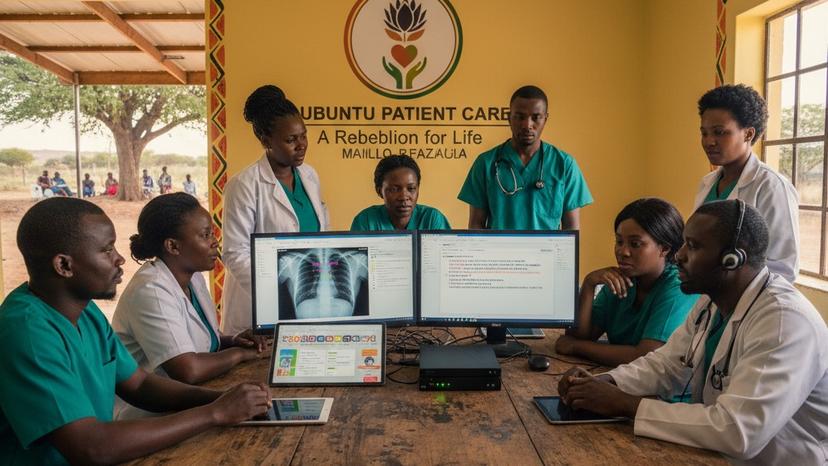
Ubuntu patient care MCP server
💚 Ubuntu Patient Care: Ending Admin Burnout Ubuntu Patient Care radically solves the \mathbf{20+} weekly hours medical staff lose fighting \mathbf{71} disparate SA medical scheme portals. This admin waste delays patient care and causes burnout. Our \mathbf{MCP} \mathbf{Server} automates complex tasks, transforming \mathbf{10}-\mathbf{minute} checks into \mathbf{30}-\mathbf{second} results via deep partner integration: 🔵 Google AI (\mathbf{Gemini} / \mathbf{Vertex} \mathbf{AI}): \mathbf{Gemini} acts as the intelligent assistant, handling complex requests ("Check Mrs. Ndlovu's MRI benefits"). \mathbf{Vertex} \mathbf{AI} provides \mathbf{TPU}-accelerated fine-tuning for our \mathbf{Whisper} \mathbf{STT} model on \mathbf{SA} medical jargon, guaranteeing \mathbf{+8.5\%} accuracy improvement over the base. 🟣 Opus (\mathbf{AppliedAI}): \mathbf{Opus} defines the \mathbf{auditable}, \mathbf{compliant} \mathbf{workflow} for \mathbf{AI} \mathbf{model} \mathbf{updates}. Data is synced via clinic-friendly Google Drive (not GCS buckets), which triggers the traceable \mathbf{Opus} pipeline for training and deployment—addressing the \mathbf{Auditable} \mathbf{Workflow} challenge. 🔷 Qdrant: Powers a local \mathbf{RAG} (\mathbf{Retrieval}-\mathbf{Augmented} \mathbf{Generation}) system, indexing \mathbf{SA} \mathbf{medical} \mathbf{protocols} and \mathbf{POPIA} \mathbf{documents}. This provides doctors with instant, context-aware compliance and treatment advice, complete with source document IDs. Local Automation: Uses \text{Puppeteer} and \text{Selenium} to reliably execute \text{Gemini}'s commands across the fragmented \mathbf{71} portals. Impact: By minimizing friction, we save significant staff time (R1 Billion annually in lost productivity) and enable healthcare workers to focus on patients. Our architecture is \mathbf{Offline}-\mathbf{First} but \mathbf{Cloud}-\mathbf{Intelligent}, making enterprise \text{AI} accessible to the most remote clinics
19 Nov 2025


