.png&w=256&q=75)
Gowshik Sekar@gowshik
2
Events attended
1
Submissions made
2+ years of experience
About me
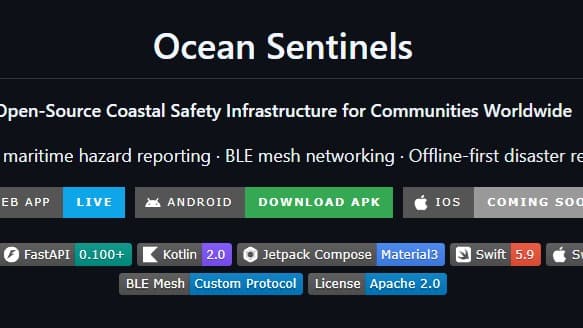
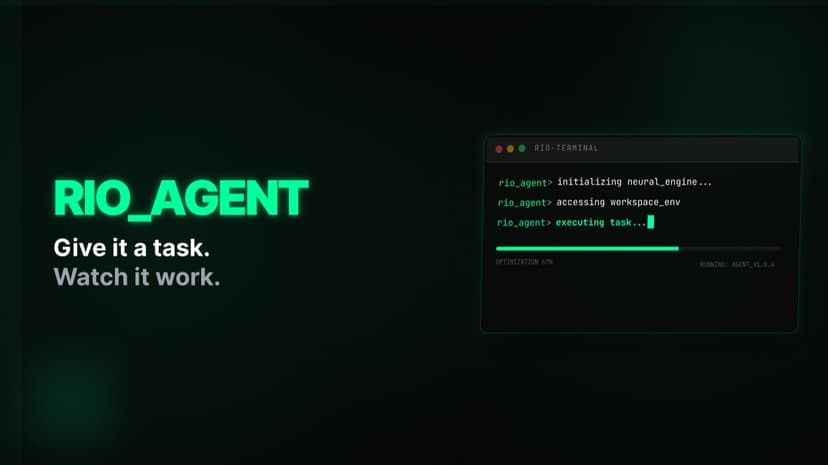
I am a third-year B.Tech student in AI & Data Science at Sri Manakula Vinayagar Engineering College, Pondicherry, focused on building autonomous AI agent systems. He designs and ships full-stack agentic platforms spanning FastAPI backends, PostgreSQL/Redis data layers, AWS infrastructure, and real-time WebSocket pipelines and runs a self-hosted home server on headless Ubuntu with Tailscale and Cloudflare Tunnel as a hands-on infrastructure lab. His recent work includes Ocean Sentinels, a coastal safety platform with BLE mesh offline relay and multi-role incident reporting, and Rio Agent, an autonomous super-agent with native audio I/O, multi-model escalation, and a 20-tool ToolBridge architecture. He is enrolled in the AWS AI & ML Scholars program on the Agentic Engineer track and is an active member of his college's Google Developer Group chapter. His goal is to be a production-grade Agentic AI Engineer by 2027.
🤝 Top Collaborators
🔥 Own Projects
🤓 Latest Submissions
PHRAXIS - Voice to Production Quantum Opt System
Every software team knows the pattern: a 10-minute meeting where everyone agrees on a feature, then nothing ships for weeks. PHRAXIS removes that gap entirely. A developer speaks a feature request out loud, and PHRAXIS delivers a production-ready, quantum-optimized GitHub pull request in under 4 minutes. PIPELINE: 1. SPEAK - Developers describe features naturally through browser voice input, with optional text fallback. 2. TRANSCRIBE - IBM Watson Speech-to-Text converts audio into structured text with timestamps and confidence scoring. 3. EXTRACT - IBM Natural Language Understanding identifies developer intent, target modules, parameters, and constraints. Structured output is stored in IBM Cloudant. 4. QUANTUM OPTIMIZE - IBM Quantum QAOA calculates the optimal subset of files to modify before generation begins. Classical evaluation across N candidate files requires 2^N combinations. At enterprise scale (N=50), that exceeds 1 quadrillion possibilities. IBM Quantum evaluates the solution space simultaneously and returns the conflict-free optimal change set, directly guiding IBM Bob’s planning workflow. 5. GENERATE - IBM Bob reads the full repository in Architect mode, receives the quantum-selected files, plans implementation in Plan mode, and writes production-ready code in Code mode that matches existing repository patterns instead of generating generic boilerplate. IBM Granite via watsonx.ai pre-analyzes the codebase, while watsonx Orchestrate coordinates the pipeline. 6. SHIP - Bob Shell executes /review on generated code, and the GitHub API opens a pull request containing the transcript, optimization result, and Bob session IDs. IBM Bob is the execution engine behind PHRAXIS. IBM Quantum determines exactly which files Bob modifies, producing mathematically conflict-free pull requests at enterprise scale.
17 May 2026


