.png&w=256&q=75)
🤝 Top Collaborators
.png&w=640&q=75)
.png&w=640&q=75)
.png&w=640&q=75)

🤓 Latest Submissions
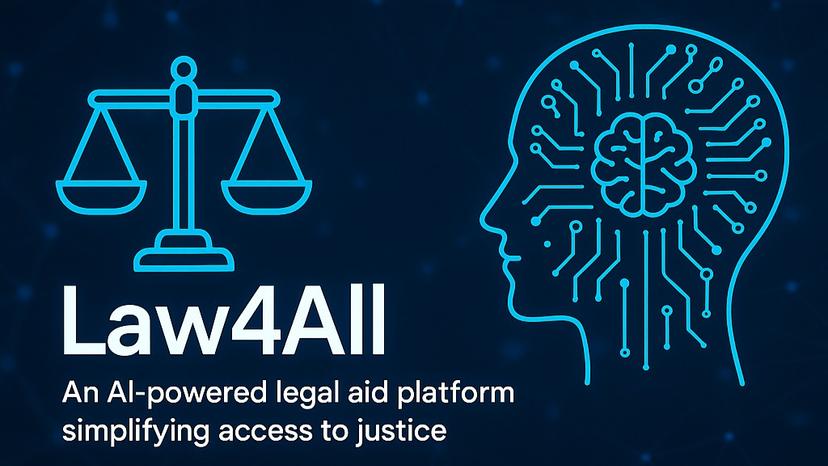
Law4all
Law4All is an AI-driven legal aid ecosystem aimed at democratizing access to justice, particularly for marginalized and underserved communities. Legal systems are often expensive, complex, and difficult to navigate—especially for those unfamiliar with legal terminology or unable to afford professional help. Law4All simplifies this journey through an intelligent, multilingual chatbot that explains legal rights, documents, and procedures in plain language. It offers real-time case tracking via eCourts, retrieves relevant case laws and statutes using Retrieval-Augmented Generation (RAG), and generates personalized legal roadmaps based on case complexity and jurisdiction. To ensure ethical AI usage, Law4All includes a bias and hallucination detection module that flags inaccuracies and ensures fairness in responses. The platform also helps users locate nearby legal clinics and connect with pro bono lawyers, effectively bridging the gap between AI support and real human counsel. Data privacy is a top priority, secured with AES-256 encryption and anonymization protocols. By integrating accessibility, transparency, and ethical safeguards, Law4All aims to empower individuals with the tools they need to understand and assert their legal rights—confidently and safely.
1 May 2025
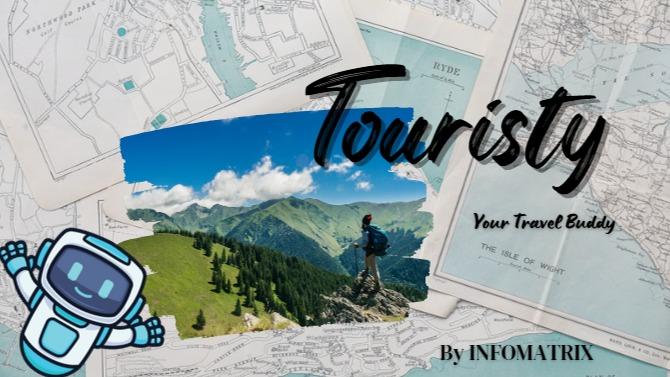
Touristy
Touristy is an innovative product designed to enhance the travel experience by leveraging advanced AI technologies. It integrates three powerful models to cater to diverse tourist needs. 1. Video Translation and Subtitling: Touristy takes videos and automatically generates subtitles, translating spoken English into the local language of the destination. This feature ensures that tourists can fully understand and appreciate video content, making it more accessible and engaging for non-English speakers. 2. Image Generation from Audio: The second model in Touristy's suite converts audio descriptions in the local language into vivid, high-quality images. Tourists can simply speak into the app, and Touristy will create visual representations of landmarks, activities, or cultural elements they describe, providing a rich, immersive experience that bridges language barriers. 3. Text-to-Image Generation: The third model allows users to input text descriptions in the local language and receive corresponding images. This tool is particularly useful for generating visual content on-the-go, whether it’s for social media, personal keepsakes, or informational purposes. Tourists can describe scenes, objects, or activities, and instantly receive custom images that enhance their travel narratives.
16 May 2024