
Yadidya Medepalli@Yadidya
10
Events attended
6
Submissions made
United Kingdom
2+ years of experience
About me
I am an AI Developer, Full Stack Engineer, and Data Engineer with a passion for creating smart solutions to real-world problems. I build AI-driven systems that automate tasks, improve decision-making, and enhance user experiences. With skills in both front-end and back-end development, I connect data insights with easy-to-use interfaces. I also design secure, scalable cloud systems and data pipelines to help businesses get the most out of their data. I love solving complex problems using the latest technology, and I’m dedicated to delivering solutions that make a real impact.
🤝 Top Collaborators


.png&w=640&q=75)
.png&w=640&q=75)
🤓 Latest Submissions
.png&w=828&q=75)
Nebulav2
Nebula Protocol is a decentralized Earth observation platform that combines AI agents, real satellite physics, and blockchain technology to monitor and protect our planet. The platform uses Google's Gemini AI for intelligent decision-making, LangGraph for state machine-based agent orchestration, and real astrophysics libraries (SGP4, Poliastro, Skyfield, Pyorbital) to simulate accurate satellite orbital mechanics. The system features nine specialized AI agents—Forest Guardian, Ice Sentinel, Storm Tracker, Urban Monitor, Water Watcher, Security Sentinel, Land Surveyor, Disaster Responder, and an Orchestrator, each powered by Gemini AI for intelligent analysis, anomaly detection, and mission planning. These agents coordinate through LangGraph workflows that manage mission planning, agent selection, execution coordination, and result aggregation. The platform integrates with the Solana blockchain for transparent, immutable storage of environmental data, NFT-based agent representation, and token economics. Real-time satellite telemetry is visualized, showing live satellite positions, orbital passes, and ecological risk heatmaps. Nebula Protocol enables organizations, researchers, and governments to access comprehensive Earth observation data through a decentralized network, making environmental monitoring more accessible, transparent, and actionable for addressing climate change and environmental challenges.
19 Nov 2025
.png&w=828&q=75)
Mandla MRV Blockchain System
Mandla Rice MRV System is a blockchain-powered platform enabling tribal farmers in rural India to access global carbon credit markets through transparent, low-cost tokenization of their environmental contributions. By leveraging Soroban smart contracts on the Stellar blockchain, the system eliminates traditional barriers that have historically excluded small-scale farmers from climate finance. The platform integrates AI-driven Measurement, Reporting, and Verification (MRV) using GPT-5 to assess sustainable farming practices. Verified outcomes are converted into fungible carbon credit tokens, which farmers can directly list and sell on a decentralized marketplace—bypassing costly intermediaries and verification fees that typically consume 30–40% of revenue. Soroban smart contracts provide a transparent, immutable infrastructure where every credit is recorded on-chain, preventing double counting and enabling real-time settlement in under 5 seconds. Key achievements include: A comprehensive Rust-based smart contract architecture managing carbon credit minting, marketplace operations, and retirement tracking. A TypeScript service layer for seamless blockchain integration. A farmer-facing mobile application designed for accessibility and usability in low-connectivity rural environments. This approach has delivered 40–60% income increases for participating farmers while enabling verified reductions of 50,000+ tons CO₂e annually. By combining equitable finance with measurable climate impact, Mandla Rice MRV System demonstrates how blockchain and AI can democratize access to environmental markets, turning sustainable agriculture into a profitable enterprise for marginalized communities. Built for the Soroban Bounty, the platform offers a scalable blueprint that can be replicated globally—showing how emerging technologies can simultaneously address climate change and economic inequality.
24 Aug 2025
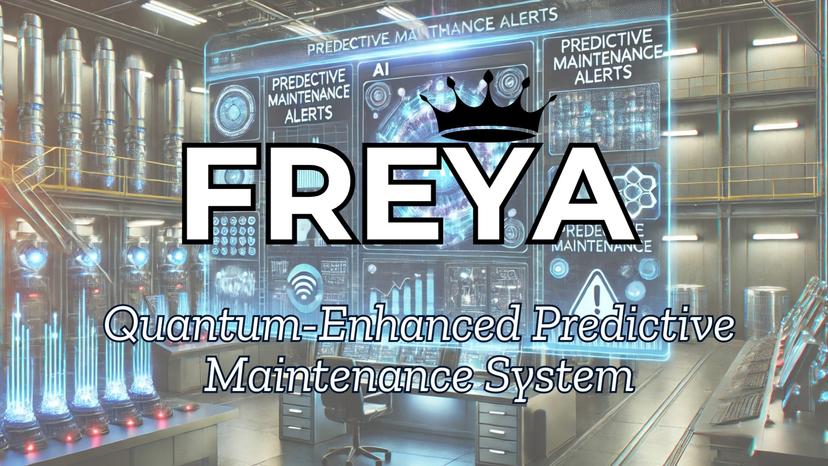
Freya-Quantum Predictive Maintenance System
Industrial sectors face $864 billion in annual losses due to unexpected equipment failures, with 80% of breakdowns occurring due to undetected anomalies. Traditional AI models struggle with multi-dimensional failure detection, leading to inefficiencies and costly downtime. So, our team developed Freya—a quantum-enhanced predictive maintenance system that combines Quantum State Analysis, AI-driven scheduling, and IBM’s Granite 3.1-8b-instruct AI to predict and prevent failures before they happen. Freya analyzes sensor data in real time, detecting anomalies 48 hours in advance, optimizing maintenance schedules, and reducing downtime by 30%. Key Features: 🔹 Quantum-Enhanced Anomaly Detection – Detects failures invisible to traditional AI 🔹AI-Driven Maintenance Planning – Optimizes scheduling and resource allocation 🔹 IBM Granite AI Core – Industry-trained with 95% prediction accuracy 🔹 SaaS Model for Enterprises – Scalable solution for manufacturing, aerospace, energy, and smart cities By leveraging quantum computing principles and advanced AI, Freya transforms industrial maintenance from a reactive process into a proactive and cost-efficient strategy, ensuring maximum uptime and efficiency.
23 Feb 2025

Kaiju-Explore and Chat
KaijuMaps and KaijuChat is a revolutionary AI-powered navigation and travel planning platform with an interactive chatbot designed to enhance decision-making and personalization. Using DeepSeek AI, it interprets user queries semantically, generating highly relevant, context-aware responses. Additionally, Camel-AI's multi-agent collaboration refines results by leveraging task-specific agents, such as travel planners or itinerary optimizers, to provide detailed, actionable insights. The system features a React-based interactive dashboard with real-time response updates, enabling users to plan trips, explore local attractions, and receive customized recommendations. With its robust architecture combining cutting-edge AI technologies, KaijuMaps is scalable across multiple domains like travel, leisure, solo-travelling, healthcare, business, and education. It's designed to save time, reduce complexity, and deliver unparalleled user experiences.
16 Feb 2025
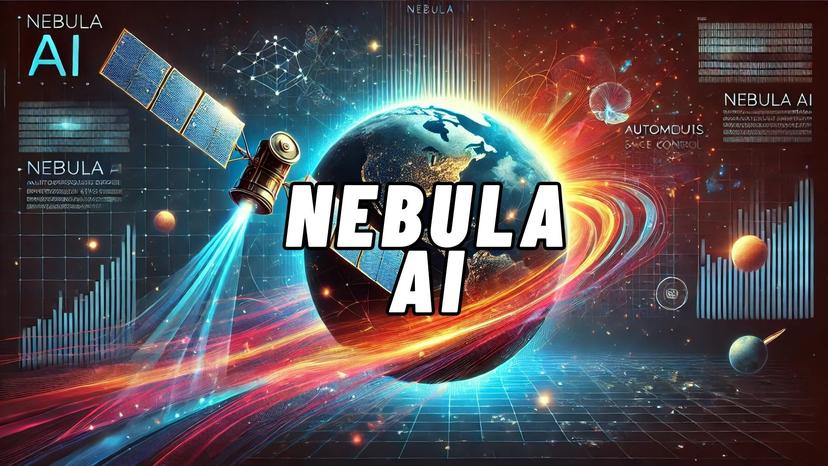
Nebula AI- Autonomous Space Mission Control System
Nebula AI is an autonomous space mission control system designed to optimize satellite operations through cutting-edge artificial intelligence. It integrates advanced AI agents that proactively detect anomalies, dynamically allocate resources, and make real-time decisions to ensure mission success. By leveraging real-time telemetry data and predictive analytics, Nebula AI enhances system reliability, reduces operational risks, and minimizes human intervention. The system features real-time dashboards, simulation modules, and task scheduling agents to support complex missions like Saturn Orbit Insertion and Titan Flybys. Its adaptable architecture supports multi-satellite coordination, making it a future-ready solution for space exploration and commercial satellite management.
9 Feb 2025

Agentic Protocol
The rapid advancement of AI and machine learning has introduced autonomous agents capable of independent thought and action, revolutionizing various industries. As their numbers grow, a robust framework is essential to govern their interactions and ensure effective operation. Agentic Protocol provides such a framework, offering principles for secure, efficient, and trusted collaboration. Key principles include purposefulness, accountability, trustworthiness, independence, intelligence, and collaboration for agents, along with discoverability, observability, interoperability, certifiability, operability, and economic vitality for the ecosystem. Agentic Protocol's components include a marketplace, registry, and DNS, ensuring a stable and reliable infrastructure for agent operations. Agentic protocol can democratize AI agents by enabling decentralized control, fostering transparency, and ensuring equitable access. This empowers individuals and communities to harness AI's potential, promoting innovation and inclusivity. Additionally, agent collaborations enhance problem-solving capabilities, while the system is protected by Shield Gemma guard rail, ensuring robust security and ethical compliance.
1 Dec 2024


