.png&w=256&q=75)
🤓 Latest Submissions
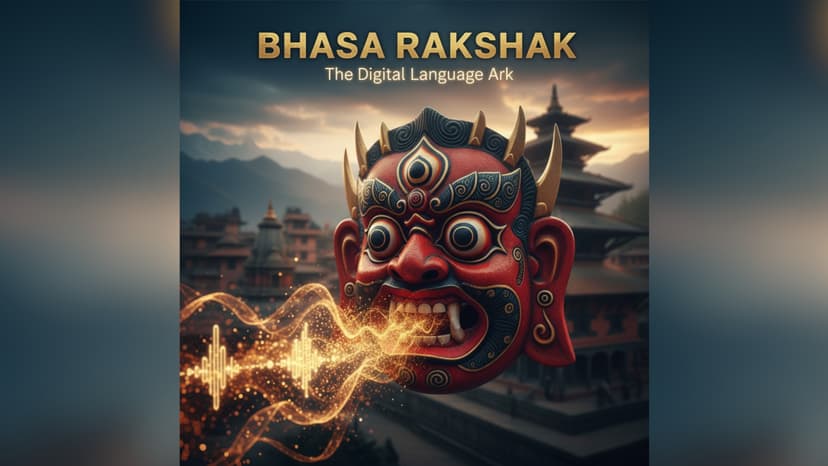
Bhasa Rakshak - The Digital Language Ark
The Silent Extinction Every two weeks, a language dies somewhere in the world. In Nepal, over 20 indigenous languages—including dialects of Newari, Tamang, and Tharu—are on the brink of extinction. When an elder passes away, their stories, accent, and cultural wisdom disappear with them. We are losing our identity. The Solution: Bhasa Rakshak (Language Guardian) Bhasa Rakshak is an interactive "Digital Museum" that uses Multimodal AI to immortalize these voices. We don't just record audio; we capture the soul of the language. How It Works (The Tech Stack) Multimodal Preservation (Gemini 1.5 Flash): We use Google's Gemini model to analyze raw video footage of tribal elders. Gemini listens to the phonetics, understands the cultural context (e.g., identifying a "Lakhe Mask" as a deity, not a prop), and extracts the moral of the folklore. The Living Memory (Qdrant): Traditional databases can't understand culture. We use Qdrant Vector Search to store these stories as semantic embeddings. This allows a user to search for abstract concepts like "Protection" or "Harvest" in English, and instantly retrieve relevant stories from Newari or Tharu history. The Governor (Opus Workflow): Cultural data must be accurate. We built an Opus Agentic Workflow to act as the "Curator." It automates the ingestion of new audio, runs the Gemini analysis, and crucially, triggers a Human-in-the-Loop review step. Only verified, authentic stories are allowed into the Qdrant Ark. Voice Cloning: To make these stories accessible to the world, we use AI voice cloning to generate translations that speak in the original elder's accent, preserving the tone color of the language while making it understandable to English speakers. Impact We are building a bridge between the past and the future. Bhasa Rakshak ensures that a child in Kathmandu—or a researcher in London—can interact with the wisdom of Nepal's ancestors, keeping these languages alive forever.
19 Nov 2025
Memoria - Your Living Legacy
Every day, priceless libraries of human experience are lost when our elders pass away. Photos and videos are relics; they are monologues that can't answer a child's question. Memoria transforms these passive recordings into active dialogues. Our platform allows a user to record or upload a family story. This is where the magic begins. Our AI pipeline, powered by GPT-5's deep nuanced understanding, acts as a "cultural anthropologist." It doesn't just transcribe words; it deconstructs the story's core components: the underlying values, the speaker's unique personality, the key themes, and the cultural references a younger generation wouldn't understand. This rich data creates a "semantic fingerprint" of the storyteller, which we store in a vector database. This powers an interactive AI persona that can recall memories and answer new questions in-character. The result is a profound new way to connect with the past. A child can now ask their great-grandmother's legacy, "What was it like when you were my age?" and get a new, contextually accurate answer based on her actual stories and personality. For this hackathon, we built the complete end-to-end experience, from audio capture to a fully interactive conversational AI. Memoria isn't just an archive; it's a bridge across time. We are creating a new form of family heirloom: a living legacy that grows with every story told.
24 Aug 2025


