.png&w=256&q=75)
Anshumaan Singh@Anshumaan
1
Events attended
1
Submissions made
India
2+ years of experience
About me
I am a Computer Science undergraduate at Indian Institute of Information Technology Nagpur with a strong focus on artificial intelligence, computer vision, and scalable software systems. He combines deep technical expertise with leadership experience to build impactful, real-world solutions. He is a National Winner of Smart India Hackathon 2025, where he led backend and deep learning development and presented the winning solution among 70,000+ teams. He is also a Global Finalist in the IEEE IES Generative AI Challenge 2026, contributing as a core computer vision developer. I had worked extensively on cutting-edge AI systems, including fault-tolerant industrial vision platforms leveraging 3D Gaussian splatting and diffusion models, and multimodal AI assistants integrating vision, speech, and language models. His research work on industrial vision systems is currently under review at IEEE IECON 2026, where he contributed as a first author in designing novel computer vision architectures. With strong proficiency in Python, C++, and modern AI frameworks like PyTorch and TensorFlow, he has built and deployed scalable systems using React, Node.js, and cloud platforms. He is also an active competitive programmer, with a LeetCode rating of 1800+ and a 3★ rating on CodeChef, reflecting his strong problem-solving abilities. Driven by a vision to push the boundaries of AI and real-world applications, Anshumaan is focused on building intelligent, scalable systems and contributing to cutting-edge research and global technology initiatives.
🤝 Top Collaborators
.png&w=640&q=75)

.png&w=640&q=75)
.png&w=640&q=75)
🤓 Latest Submissions
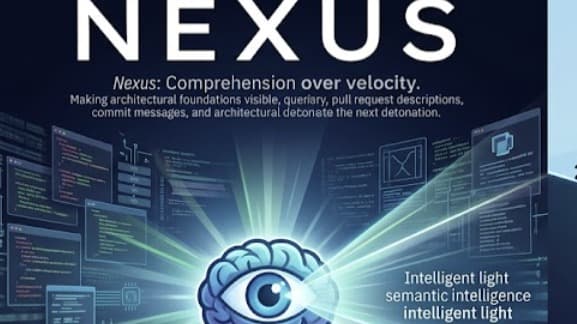
Nexus
Every software organization is bleeding from decisions made years ago by engineers who are no longer around. A constraint baked into a 2019 architecture silently shapes every system built in 2026. Nobody documented it. The person who understood it left. One day it detonates a multimillion-dollar outage blamed on “architectural debt” without revealing where the next failure hides. Nexus solves this using IBM Bob as its foundation. Bob is the only AI capable of reading an entire repository simultaneously full git history, PRs, commit messages, and architecture docs together. That full-repository semantic context enables causal tracing across components built years apart by different teams. Bob extracts Decision Provenance Records: structured captures of architectural choices, rejected alternatives, assumptions, constraints, and involved engineers. These become nodes in a Neo4j Causal Temporal Graph, where edges encode relationships between decisions across time. Bob queries this graph in plain English, surfacing answers no search tool can find. Nexus continuously runs an Assumption Decay Monitor, evaluating whether assumptions still hold and ranking risks by blast radius how many downstream decisions fail if an assumption breaks. Demonstrated on PostgreSQL: Bob analyzed the full repository, extracted 15 Decision Provenance Records, built a graph of 162 nodes and 202 relationships, and identified four assumptions actively breaking today. Knowledge concentration analysis exposed engineers whose departure creates critical single points of failure. The result is a living organizational risk forecast: assumption decay trajectories, knowledge concentration scores, and prioritized remediation. Every AI tool in 2026 competes on velocity. Nexus competes on comprehension.
17 May 2026

