
🤝 Top Collaborators


🤓 Latest Submissions
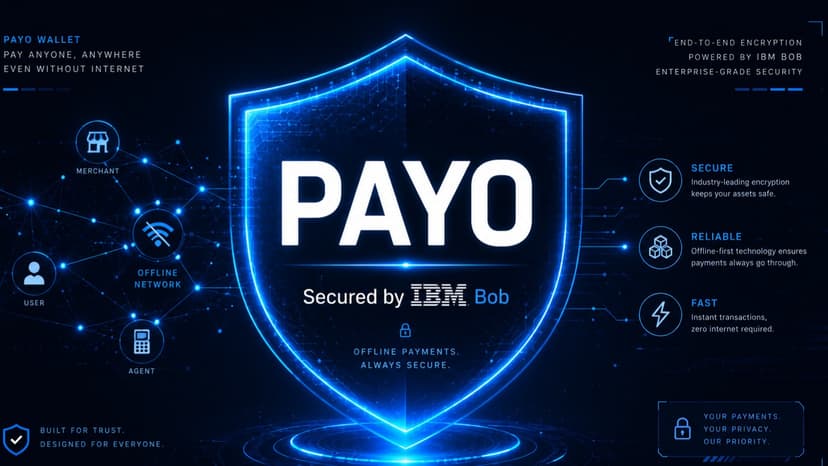
PAYO Chaos Engineering & Resilience via IBM Bob
Every early-stage development team carries the same blind spot: the vulnerabilities you cannot see are the ones that will break you in production. As a team building PAYO, an offline-first USDT payment wallet on Tron blockchain with SQLite local ledger, Holepunch P2P, and QVAC Edge AI, we knew our codebase carried risks we could not fully see. Over 1.3 billion adults globally remain unbanked not because they lack devices, but because every existing payment solution requires internet. Building for zero-connectivity financial infrastructure means correctness is non-negotiable, and that is where IBM Bob became the most critical member of our team. We integrated IBM Bob as a full-context Chaos Auditor across three phases. Bob ingested our entire repository, reconstructed our offline transaction lifecycle, then in Attacker Mode identified a race condition in sync.js that could cause SQLite and Tron state to diverge, and exposed a double-spending vulnerability in our Holepunch handshake. These were invisible to us because we built for the happy path. Bob has no happy path bias. Bob then generated the remediation directly: idempotency guards, deterministic transaction hashing, and retry mechanisms with exponential backoff. Every vulnerability patched within the same session. Zero manual rewriting required. IBM Bob, given full repository context and adversarial prompting, functions as a senior security engineer at zero marginal cost. For early-stage teams without budget for senior security engineers, Bob democratizes the kind of rigorous code review that separates prototypes from production-ready systems. We did not just build PAYO with IBM Bob. We let Bob try to break it. Bob did. And then Bob fixed it.
17 May 2026
