Top Builders

Explore the top contributors showcasing the highest number of app submissions within our community.

AutoGen

AutoGen is an advanced open-source framework developed by Chi Wang designed to simplify the creation of multi-agent systems powered by large language models (LLMs). The platform allows developers to build conversational AI agents that can interact with each other, humans, and various tools in a coordinated manner. AutoGen is highly modular and supports a wide range of applications, making it an essential tool for developers looking to implement complex, automated workflows with minimal manual intervention.

General
AuthorChi Wang
Release DateSeptember 2023
Websitehttps://microsoft.github.io/autogen/
Repositoryhttps://github.com/microsoft/autogen
Documentationhttps://microsoft.github.io/autogen/docs/Getting-Started
Discordhttps://discord.com/invite/pAbnFJrkgZ
Technology TypeAI/ML Framework

Key Features

  • Multi-Agent Framework: Facilitates the design of agents with specialized roles, enabling them to communicate and collaborate efficiently.

  • Enhanced LLM Inference: Provides advanced APIs for improving LLM performance, reducing inference costs.

  • Customizable Workflows: Supports complex, dynamic workflows by allowing agents to interact through conversational patterns, enabling seamless automation.

  • Tool Integration: Agents can be configured to use external tools, adding flexibility and enhancing their problem-solving capabilities.

  • Human-in-the-Loop: Integrates human feedback into the workflow, allowing for oversight and intervention when necessary.

Start Building with AutoGen

AutoGen simplifies the development of complex AI applications by providing a robust framework for creating multi-agent systems. With its modular design, developers can quickly build and customize AI workflows that combine LLMs, human intelligence, and various tools to tackle intricate tasks. Whether you are looking to automate customer support, enhance software development processes, or optimize supply chains, AutoGen offers the flexibility and power needed to create sophisticated AI-driven solutions. Explore the community-built use cases and applications to see the full potential of what AutoGen can do.

πŸ‘‰ Start building with AutoGen

πŸ‘‰ Examples

AutoGen AI technology page Hackathon projects

Discover innovative solutions crafted with AutoGen AI technology page, developed by our community members during our engaging hackathons.

AITinerary

AITinerary

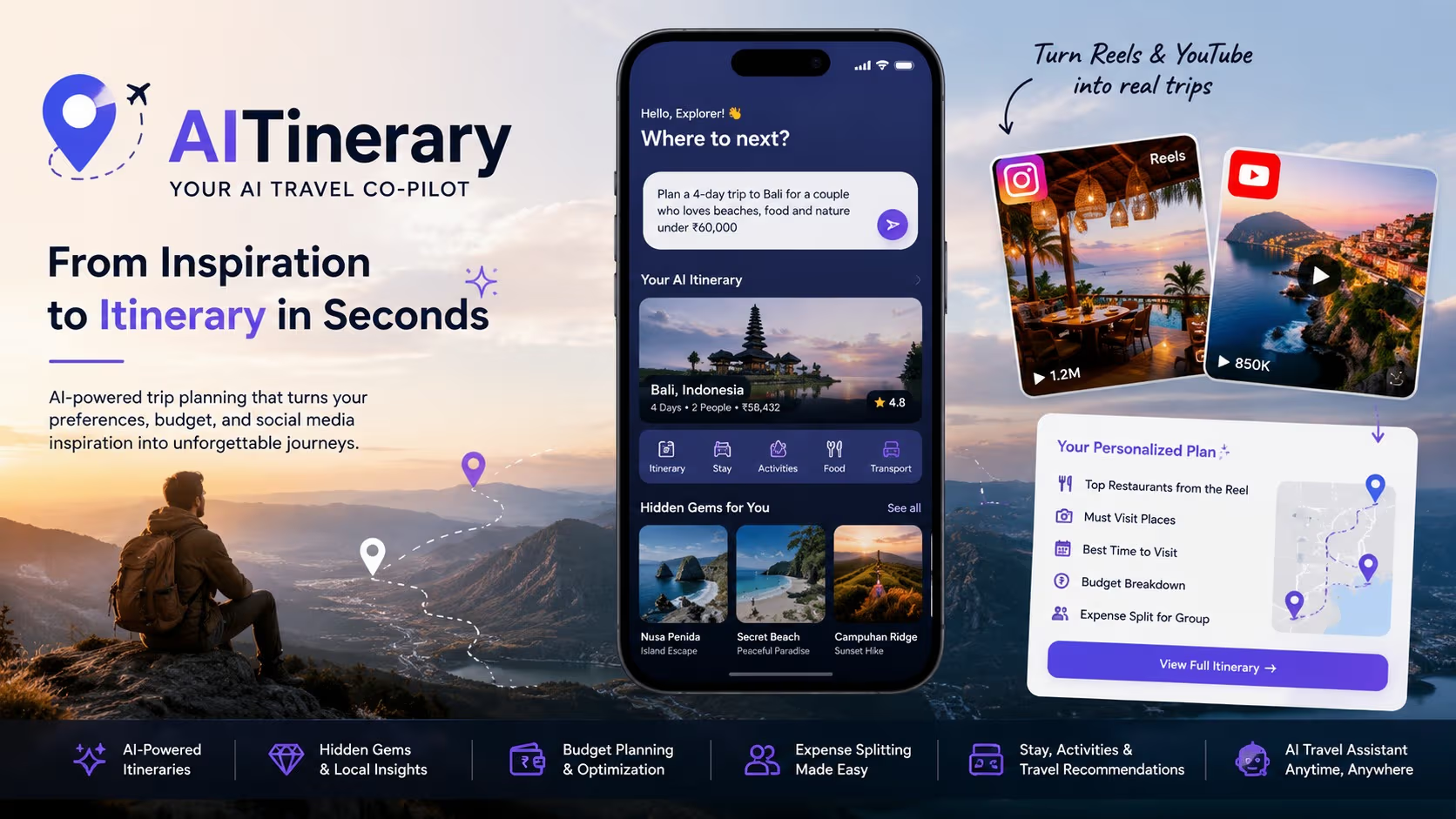
AITinerary – Your AI Travel Co-Pilot AITinerary is an AI-powered travel planning platform designed to simplify every stage of a tripβ€”from discovering destinations to creating personalized itineraries and exploring hidden gems. Instead of spending hours researching across multiple websites, users simply describe their travel preferences, budget, trip duration, and interests, and AITinerary generates a complete travel plan tailored to them. One of the core ideas behind AITinerary is bridging the gap between travel inspiration and actual trip planning. Today, many people discover amazing destinations, restaurants, and experiences through Instagram Reels and YouTube videos, but planning a trip around that content is still a manual process. AITinerary aims to let users provide a Reel or YouTube link and transform that inspiration into a practical itinerary with recommended attractions, restaurants, accommodations, transportation, and nearby experiences. The platform also acts as an intelligent travel companion throughout the journey. It recommends hidden gems beyond popular tourist attractions not to miss, adapts plans based on user preferences, provides contextual information about places, helps optimize travel budgets, and enables expense tracking and bill splitting for groups. For the MVP, the focus is on AI-generated itineraries, social media-inspired trip planning, personalized recommendations, and intelligent travel assistance. The architecture is designed to integrate with travel providers and booking platforms in the future, allowing users to seamlessly transition from planning to booking within a single experience all at one place. By combining generative AI, travel data, and personalization, AITinerary aims to become an all-in-one travel assistant that helps users spend less time planning and more time experiencing memorable journeys. "From inspiration to itinerary in seconds. See it. Plan it. Experience it."

ByteRoute

ByteRoute

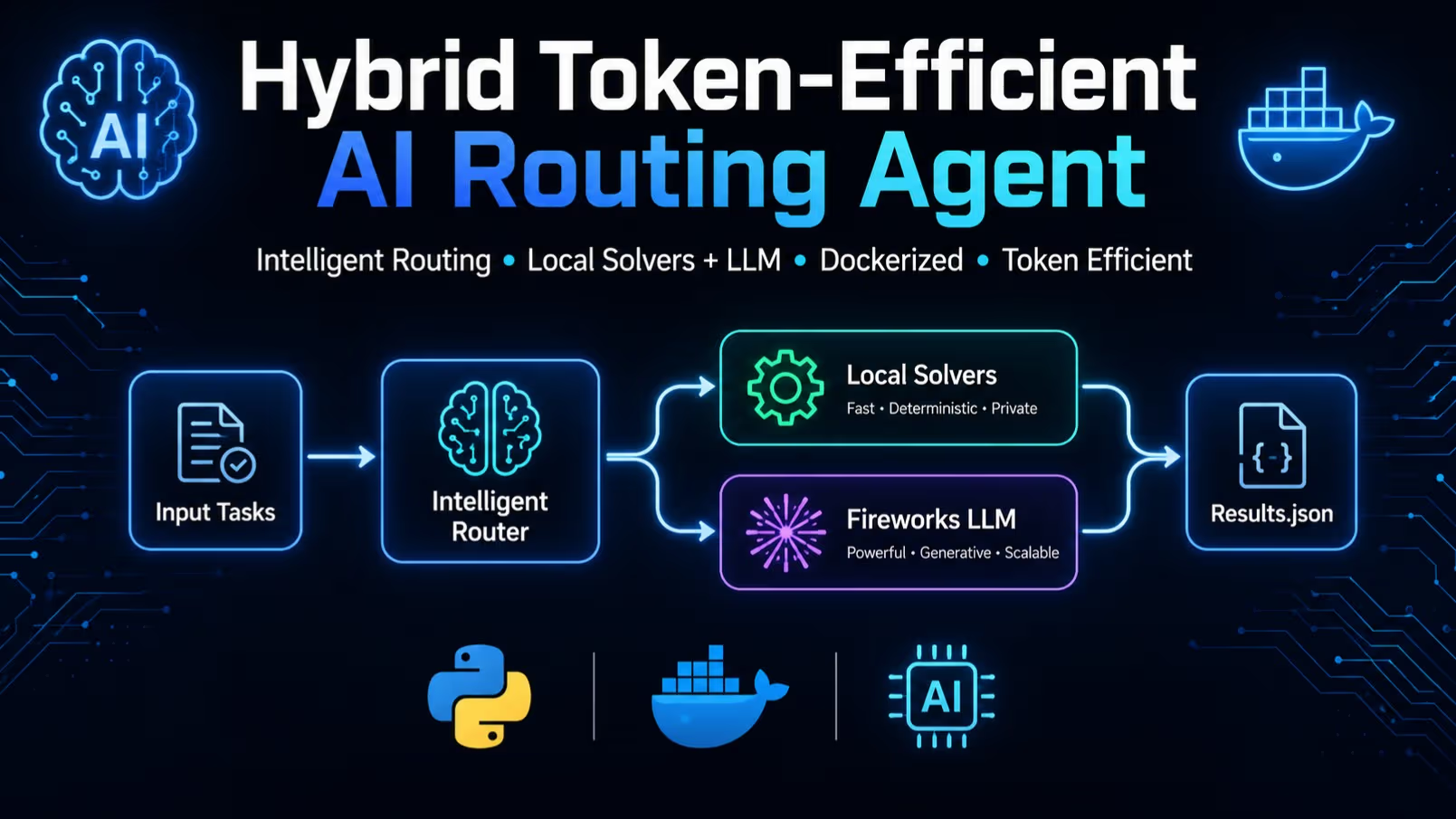
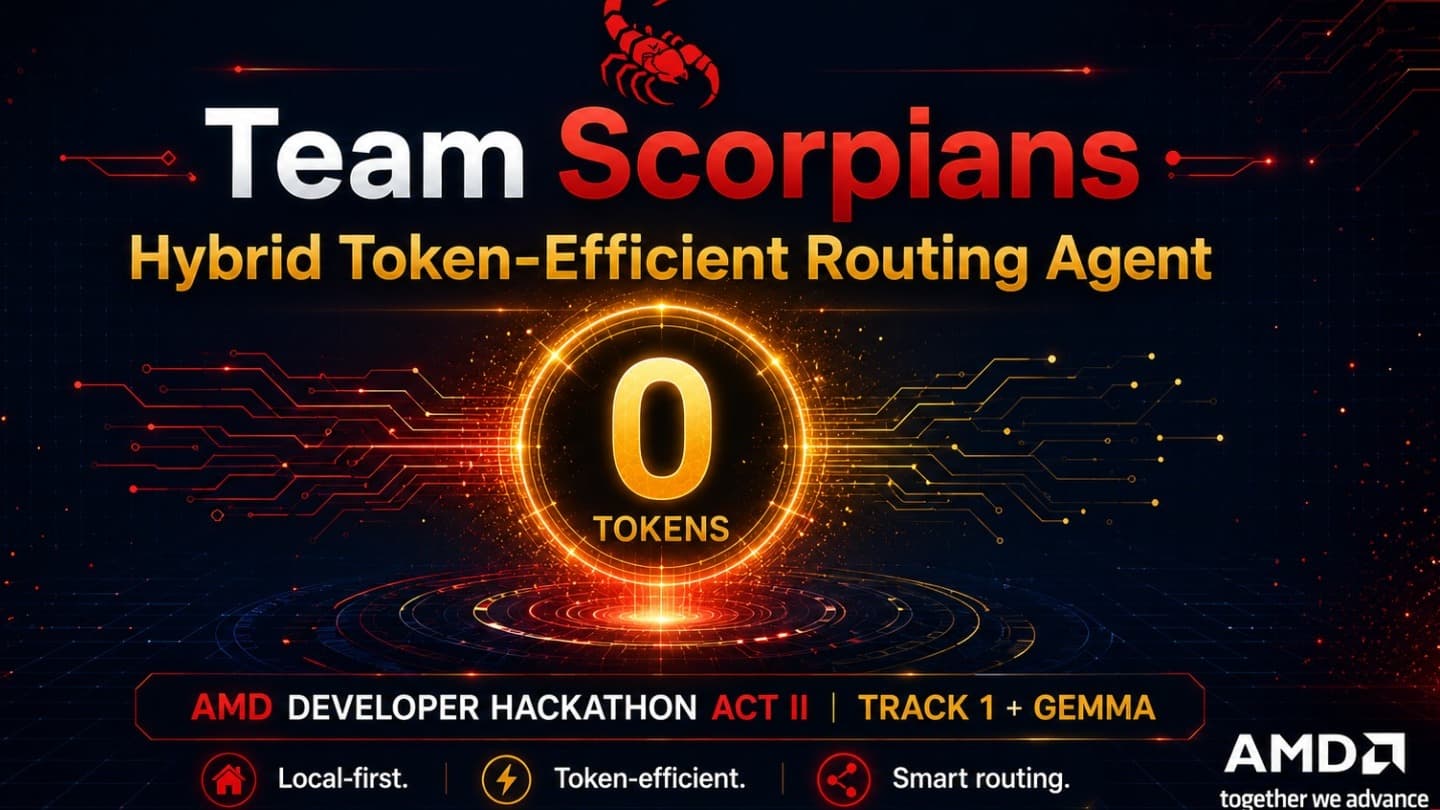
ByteRoute is a token-efficient AI routing agent built for the AMD Developer Hackathon Act II, Track 1. The core idea is simple: not every task needs an expensive API call. ByteRoute implements a two-layer routing architecture that dramatically reduces token consumption while maintaining high accuracy across all eight evaluation categories. The first layer is a local interception framework built entirely in Python using regex and keyword heuristics. For mathematical expressions with explicit operators and numbers, ByteRoute solves them instantly at zero token cost. For sentiment classification with unambiguous positive or negative signals and no contrast words, it resolves locally without touching the API. This zero-token layer handles the easiest tasks with deterministic accuracy. The second layer routes all remaining tasks to the Fireworks AI API using GLM 5.2, but with a critical optimization: each category gets a tailored system prompt that constrains the model to produce concise, judge-friendly output. Summarization tasks get a 25-word sentence limit. Named entity recognition tasks get a compact Entity (Type) format. Code generation and debugging tasks get markdown code fence constraints. Mathematical word problems get a single-line answer format. Logical reasoning tasks get a direct conclusion-first format. The agent reads tasks from /input/tasks.json, processes them concurrently using asyncio with a semaphore-controlled concurrency limit of 5 to prevent rate limiting, and writes results to /output/results.json. The entire pipeline exits with code 0 and completes well within the 10-minute runtime limit. All API calls route exclusively through the injected FIREWORKS_BASE_URL with models read dynamically from ALLOWED_MODELS at runtime.