Qubic's Ecosystem Growth Through LabLab Partnership: From Hybrid Activation to Dedicated Hackathon Success
Qubic's Ecosystem Growth Through LabLab Partnership: From Hybrid Activation to Dedicated Hackathon Success
Introduction
Qubic is a high-performance blockchain built for speed, scalability, and real-world integrations. Its unique computational model allows developers to run decentralized applications and smart contracts with deterministic execution and efficient consensus - bringing scalable computation to Web3.
Qubic partnered with LabLab for a hackathon to attract builders, validate use cases, and drive adoption, starting with an initial track and scaling to a full event.
Phase 1 – Raise Your Hack (Hybrid Hackathon)
Raise Your Hack was a hybrid event blending online and on-site participation, held in Paris in 2025. It featured multiple partner tracks, including Qubic's dedicated focus on smart contract security and development tools.
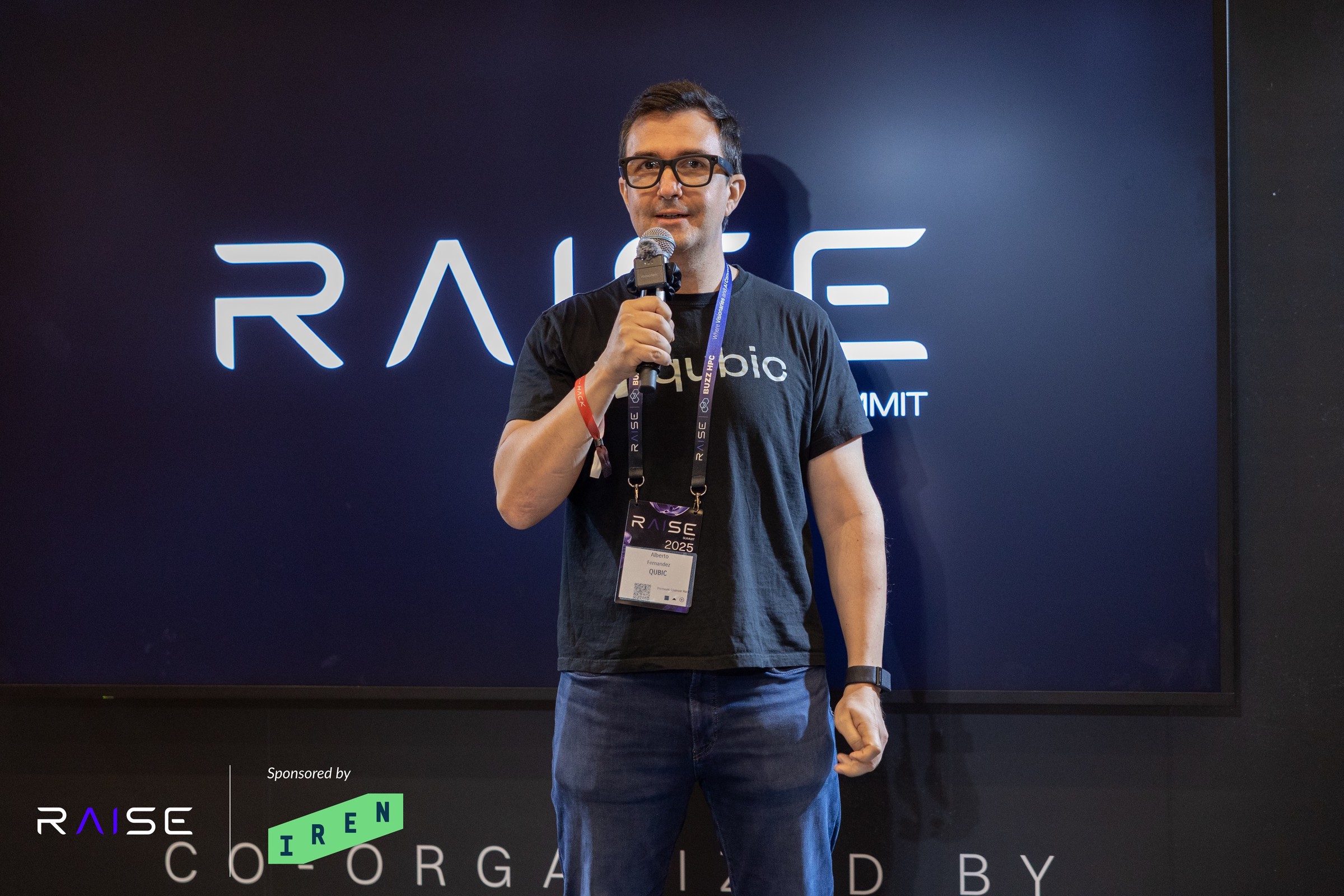
In the Qubic track, builders explored the network's smart contracts, creating auditing platforms, decentralized marketplaces, and integration tools. The track saw several submissions, with projects addressing vulnerabilities, testing, and ecosystem accessibility.
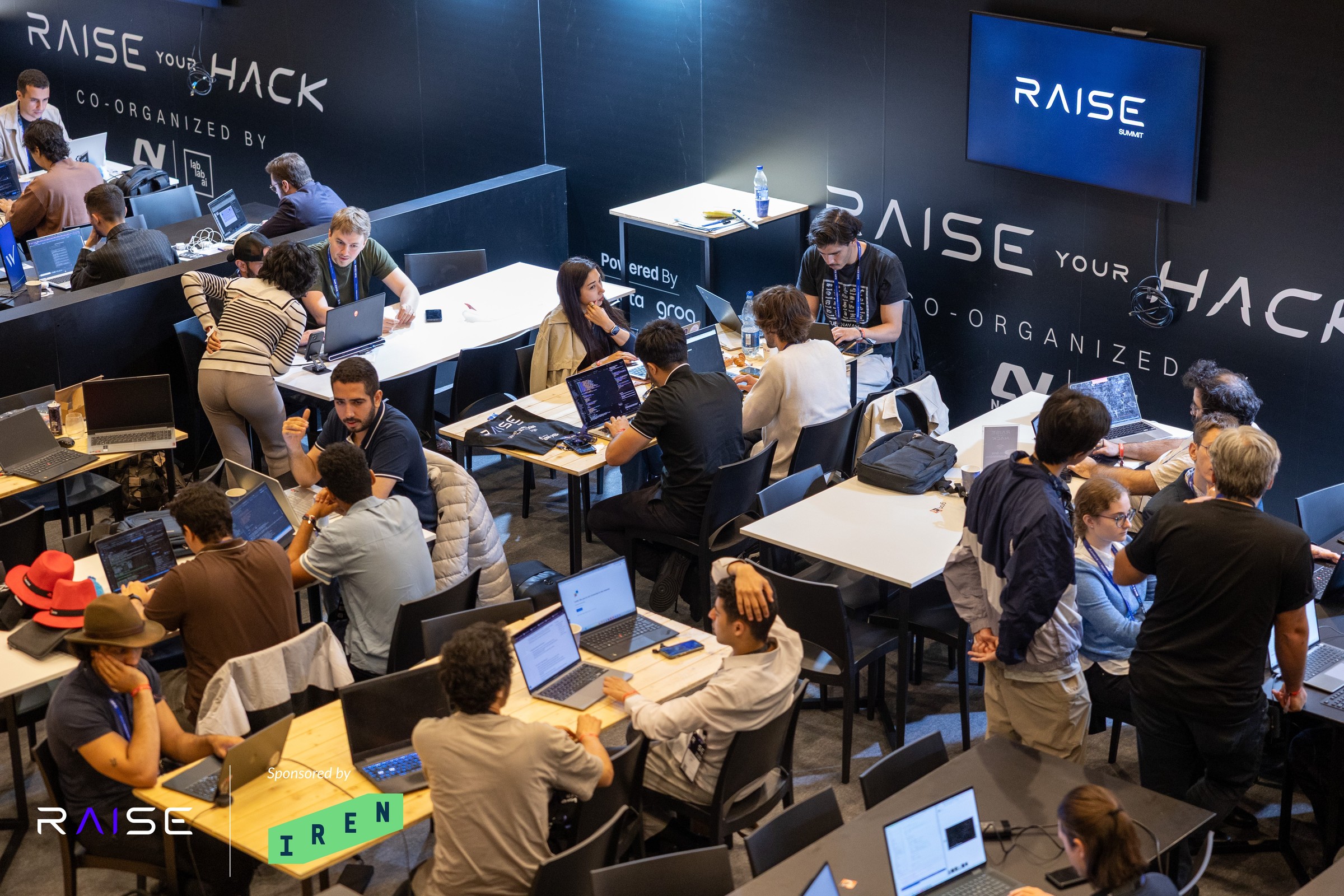
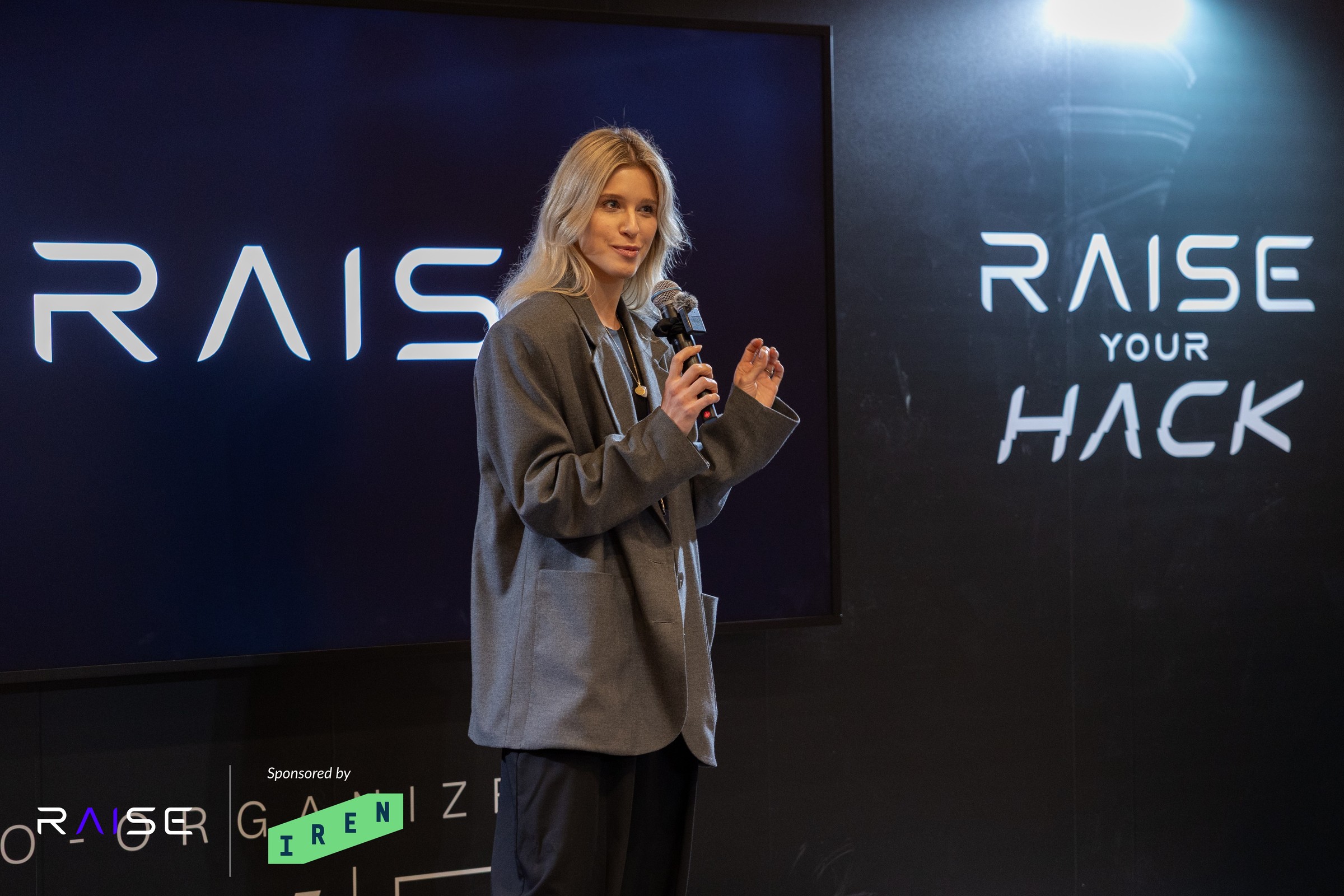
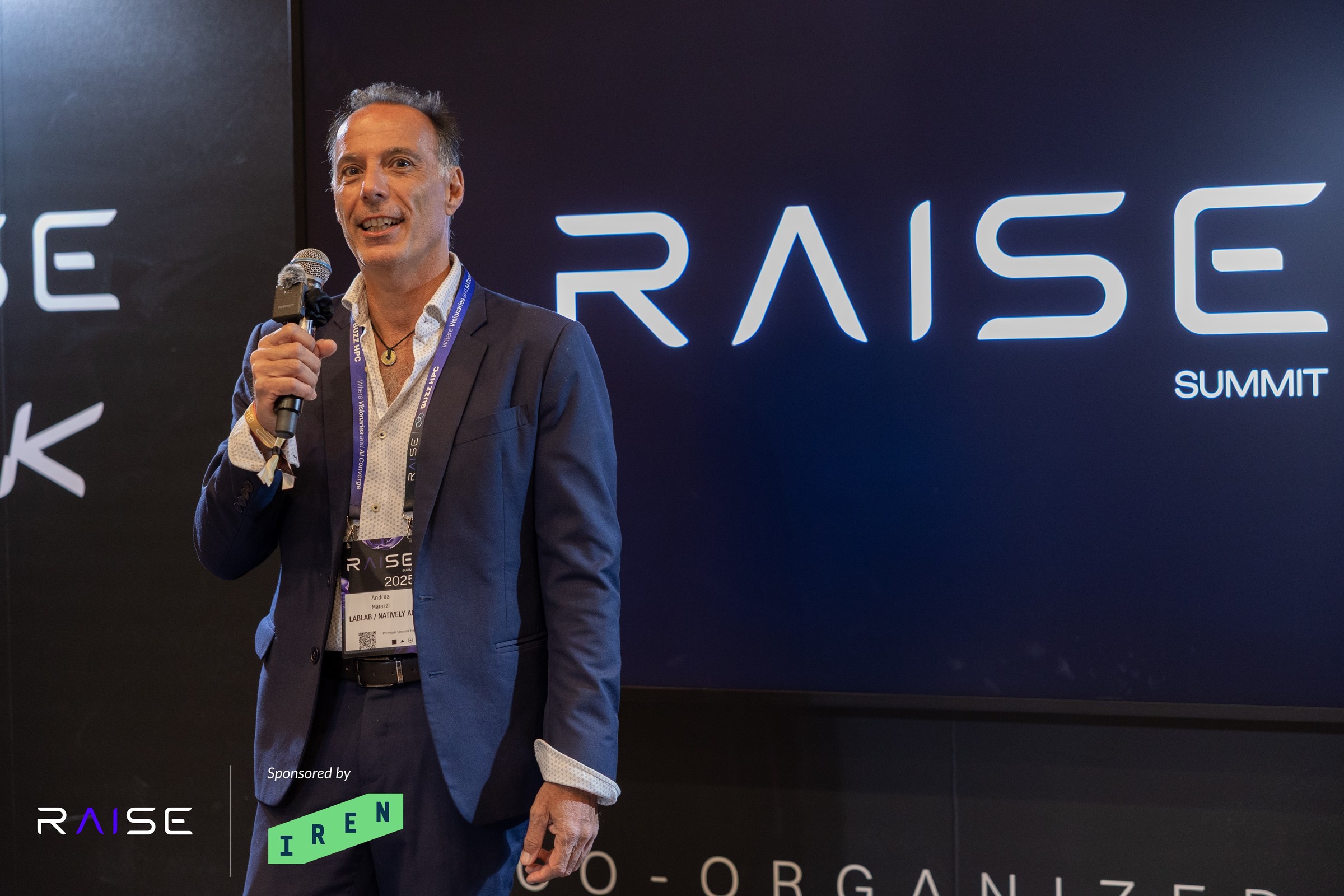
The on-site experience in Paris featured engaging presentations and expert insights. LabLab team members shared their vision and guidance with participants, creating an inspiring atmosphere for innovation.
Winning Team & Growth Story
Team Kairos won the Qubic track with QBuild, a one-click auditing tool that identifies vulnerabilities, generates reports, and creates test sets for smart contracts. Check out the project here
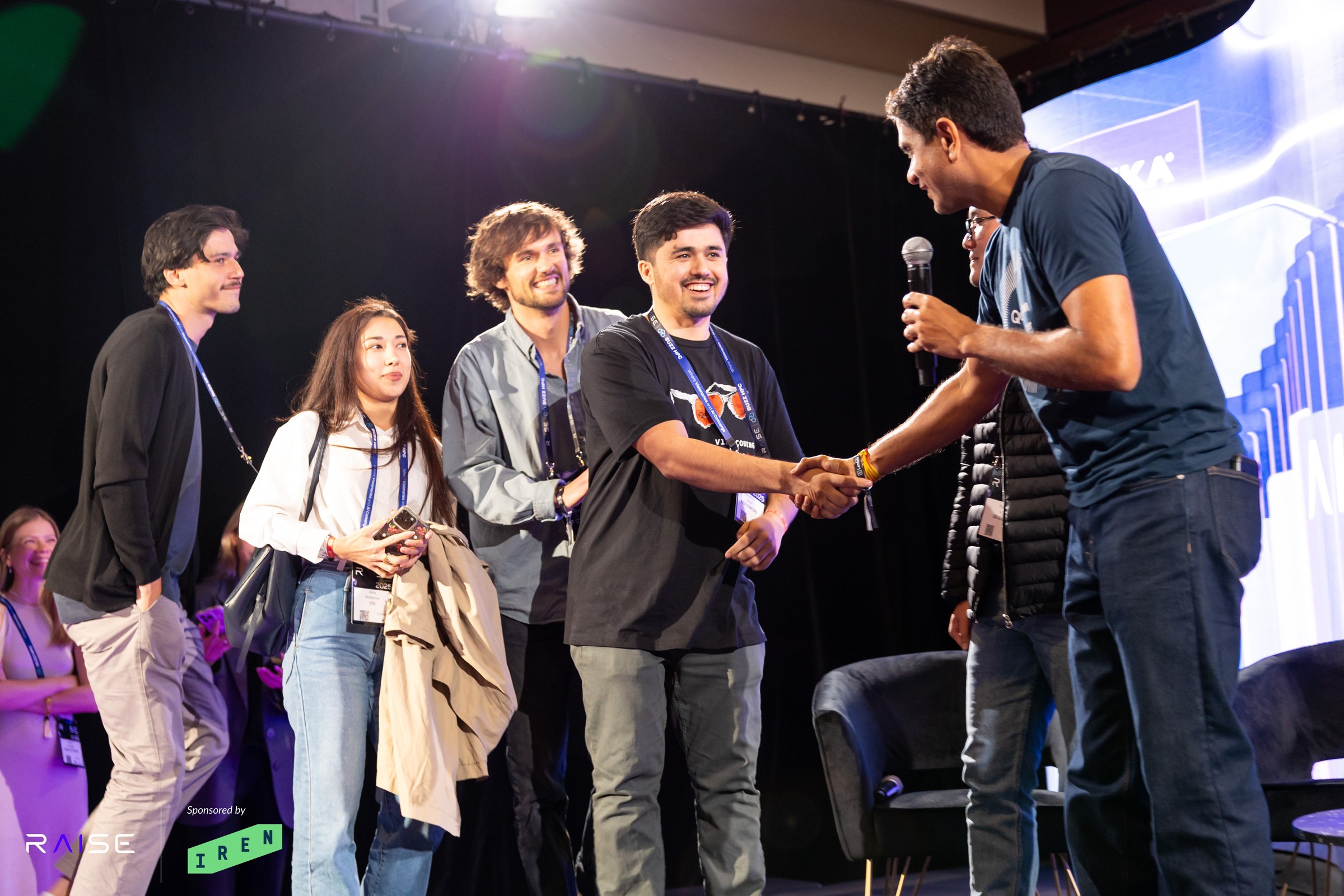
Formed from a merger of Web3 teams, Kairos started in a prior Qubic hackathon in Madrid, securing second place with EasyConnect—a no-code integration platform now in incubation.
Their Raise Your Hack victory, including first place and the X Audience Choice Award, validated their approach. Post-event, Kairos continued developing QBuild toward incubation. This growth culminated in launching their own EasyConnect track in a subsequent hackathon, enabling no-code builders to create automations and bridges for Qubic. This progression shows how LabLab hackathons foster long-term project evolution and ecosystem leadership.
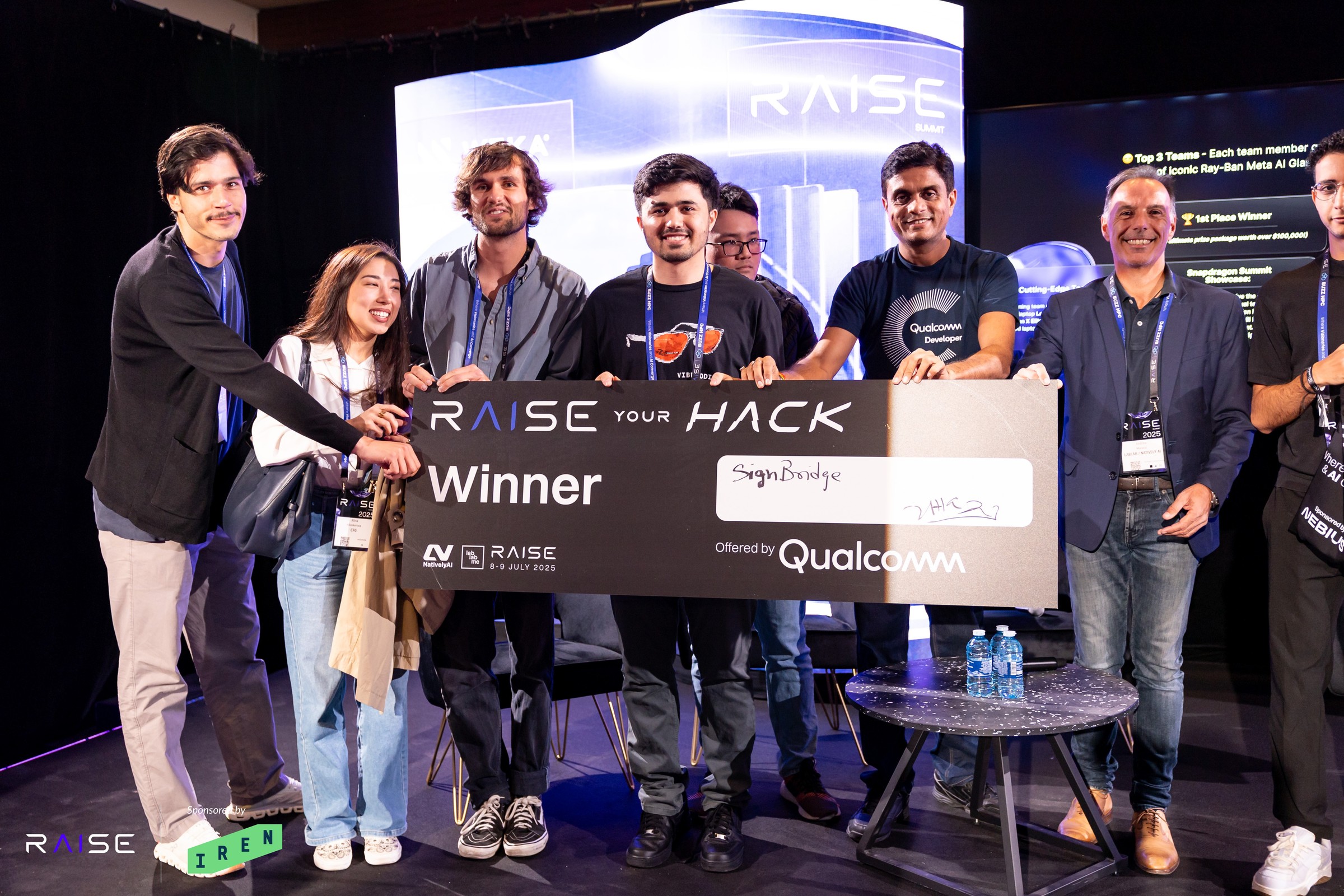
Phase 2 – Qubic Hack the Future (Fully Online, Dedicated)
Qubic Hack the Future shifted to a fully online, Qubic-exclusive format from December 5–7, 2025. This allowed global participation without travel, focusing entirely on Qubic's infrastructure.
The event featured two tracks: Nostromo for advanced DeFi and infrastructure builds, and EasyConnect for no-code automations. Challenges aligned with Qubic's roadmap and community vision, emphasizing secure, scalable applications.
Winning Teams
Winners demonstrated strong developer fit for Qubic's tech:
- 1st: PerpQ by QubicMBiz – A decentralized perpetual futures trading system enabling feeless, on-chain leveraged trading similar to GMX. Project link
- 2nd: QubicLink by SOLVENT – A no-code on-chain identity tool linking Discord users to wallets for secure roles and rewards. Project link
- 3rd: TickDeriv by BlockNexa Labs – A high-frequency binary options platform with 20-tick rounds and zero gas fees using C++ smart contracts. Project link
- QX-CONSOLE by Green-Game – A real-time dashboard monitoring Qubic events, contracts, and notifications.
- Qubic Live Whale and Token Analytics Dashboard by Brockn Code – A static dashboard tracking token prices, transfers, and whale activity.
- QSurv by Qubic Winner – A trustless survey platform using AI agents for real-time answer verification and smart contracts for instant rewards, preventing fraud. Project link
These projects highlight early potential for ongoing development within Qubic's ecosystem.
Participant Profile Overview
Participants in Qubic Hack the Future were a mix of developers, students, and AI specialists, drawing from diverse global backgrounds. Data shows 1,367 registrants (with total enrollment at 1,654), predominantly from:
- India: 421
- Pakistan: 246
- Nigeria: 96
- US: 62
- UAE: 57
This geographic distribution reflects strong interest from emerging markets.
Age demographics skewed young: 813 (18–24), 327 (25–34), with smaller groups in older brackets. Professional backgrounds included:
- IT & Software Development: 490
- Students: 396
- AI & Machine Learning: 221
- Data Science: 75
Experience levels varied: 158 advanced, 85 intermediate, 86 beginners, with many not specifying. Responses highlighted practical skills like LLM integration, agent building, and hackathon participation.
This profile—young, tech-savvy, globally distributed—aligns with Qubic's talent strategy, attracting motivated builders eager to innovate on decentralized AI, fostering a robust, diverse ecosystem.
Key Metrics – Qubic Hack the Future
The event achieved:
- 1,654 enrolled participants
- 265 teams formed
- 96 AI applications built
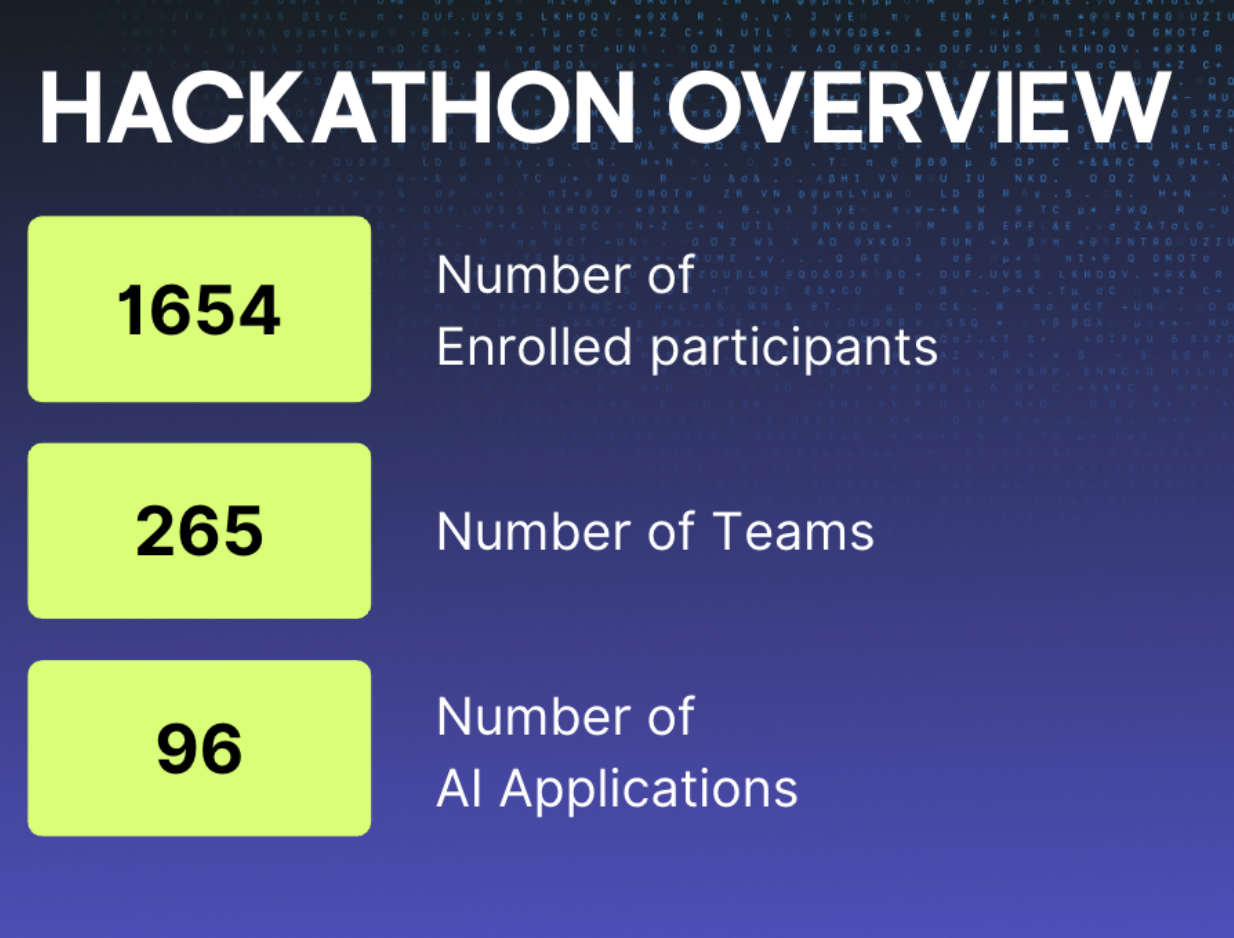
These numbers demonstrate rapid innovation, with builders quickly prototyping on Qubic's infrastructure. High team formation shows deep engagement, while the volume of submissions highlights the model's scalability for ecosystem growth.
Community & Social Impact
The hackathon drove significant visibility for Qubic, reclaiming a spot in the top 10 AI projects by social activity. Source
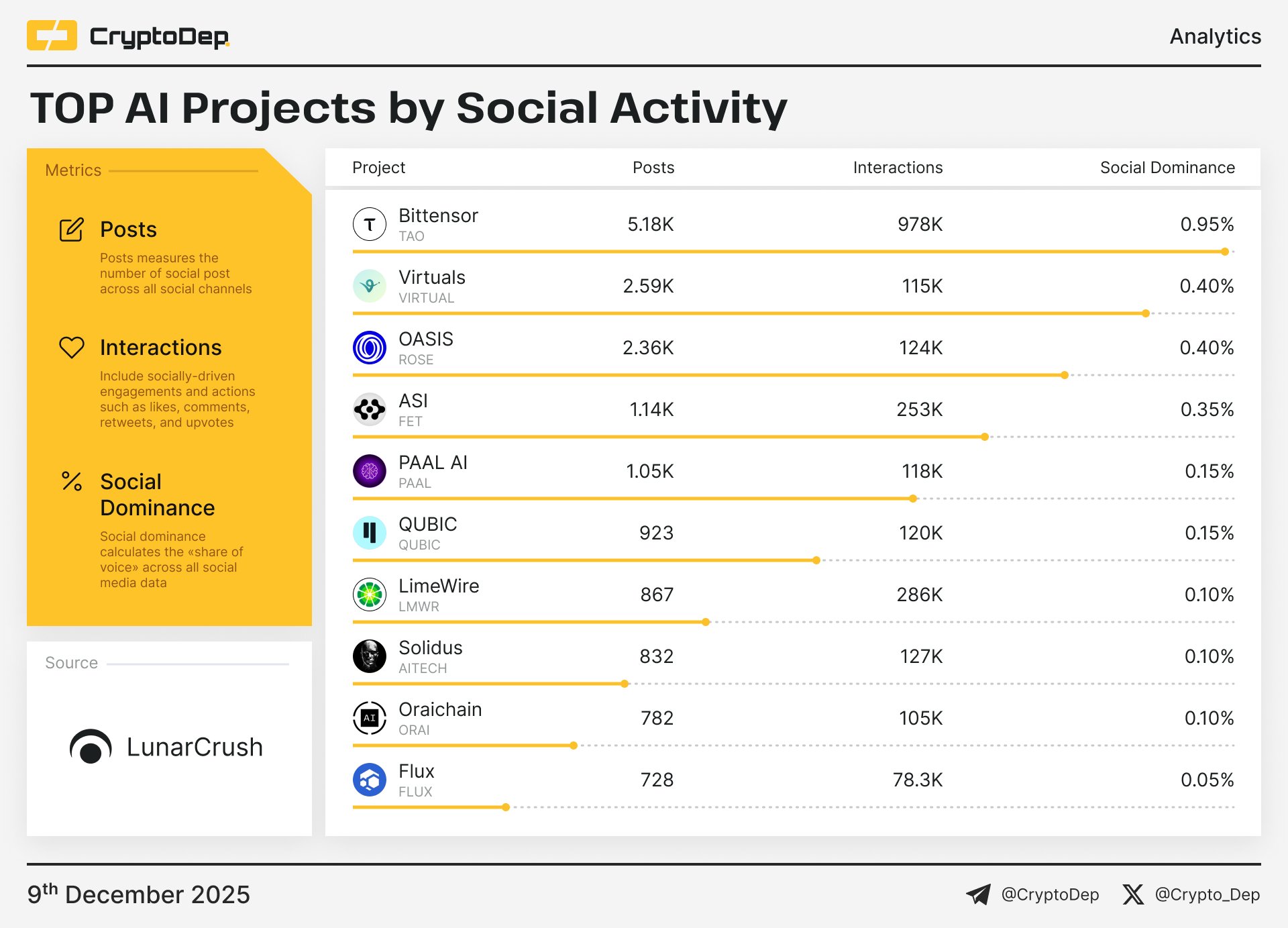
Growth stemmed from participant sharing, team discussions, and event livestreams, translating hackathon momentum into broader market awareness and sustained community interest.
Livestreams & Engagement
Livestreams served as key touchpoints that increased transparency, built trust with builders, and extended engagement beyond the build phase:
- AMA sessions clarified tech queries and built rapport, with one session post garnering over 7,000 views. These real-time Q&A sessions provided direct access to Qubic's technical team, addressing concerns and clarifying implementation details transparently.
- The kick-off stream oriented builders on Qubic's tools, achieving 602 likes and over 20,000 views. By demonstrating tools and answering questions live, the stream established trust through open communication and technical clarity.
- The winners stream celebrated outcomes with over 8,000 views, fostering transparency by publicly recognizing achievements and showcasing project diversity.
These streams extended engagement well beyond the event timeline, strengthening trust through consistent communication and encouraging ongoing participation in Qubic's ecosystem long after the hackathon concluded.
Testimonials & Social Proof
Builders and organizers expressed high satisfaction across multiple dimensions. Qubic's wrap-up post highlighted the "unreal" energy and innovation from participants, thanking the community for proving its strength. Jorge Ordovás noted the hackathon's role in reclaiming Qubic's top 10 social ranking, congratulating the team and ambassadors. A follow-up success post emphasized collaborative efforts and builder passion, while the winners announcement praised fierce competition and next-level innovation.
Builder satisfaction was evident in the quality and diversity of submissions, with participants expressing enthusiasm for Qubic's technical capabilities and the supportive environment. Technical support received consistent praise, with builders appreciating the accessibility of Qubic's team during AMAs and the comprehensive documentation provided. Motivation to continue building was strong, as evidenced by content creator Milly describing it as a "game-changer" and showcasing winners in a video, while many participants indicated plans to continue developing their projects post-hackathon.
Overall, feedback consistently highlighted strong technical support, community collaboration, and sustained motivation to keep building on Qubic.
Long-Term Value & Takeaways
The partnership demonstrates a clear evolution path: from hybrid → fully online → fully dedicated. Starting with a track in Raise Your Hack validated initial interest and market fit. Scaling to Qubic Hack the Future as a fully online, dedicated event enabled global participation and significantly increased outputs—from initial submissions to 96 AI applications built by 265 teams.
From track participant → ecosystem leader: Kairos's journey exemplifies this transformation. Beginning as winners in Raise Your Hack, they evolved into track leaders, launching their own EasyConnect track in Qubic Hack the Future. This progression from participant to ecosystem contributor shows how LabLab hackathons create pathways for sustained growth and leadership development.
From experimentation → repeatable growth engine: The partnership has transformed hackathons from one-off experiments into a repeatable infrastructure for talent acquisition, tech adoption, and ecosystem expansion. The measurable outcomes—1,654 participants, 265 teams, 96 applications, top 10 social ranking—demonstrate scalability and impact.
This progression positions hackathons as long-term infrastructure for:
- Talent acquisition: Attracting motivated builders from emerging markets and diverse technical backgrounds
- Tech adoption: Validating use cases and driving real-world implementations on Qubic's infrastructure
- Ecosystem expansion: Fostering projects that continue beyond the event, with winners like Kairos becoming ecosystem leaders
By turning experiments into repeatable drivers of innovation and visibility, the partnership has established a sustainable model for ecosystem growth that extends far beyond individual events.


