
🤝 Top Collaborators
.png&w=640&q=75)

.png&w=640&q=75)
🤓 Latest Submissions
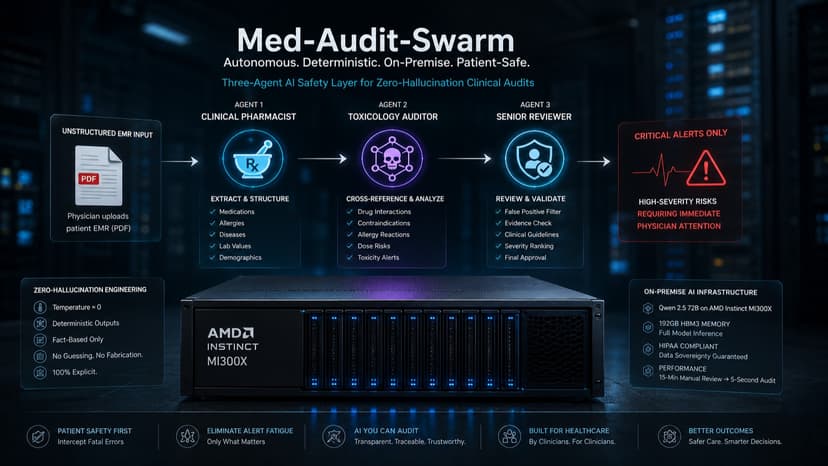
Med Audit Swarm
Med-Audit-Swarm is an autonomous, multi-agent AI safety layer designed to intercept fatal prescription errors and eliminate clinical "alert fatigue." In modern hospitals, legacy Electronic Medical Record (EMR) systems overwhelm physicians with minor, rule-based warnings, causing doctors to instinctively ignore alerts—even the life-threatening ones. Furthermore, relying on standard Generative AI to solve this creates a massive liability, as single-model LLMs frequently "hallucinate" or guess clinical data to fulfill a prompt. To solve this, I built a deterministic digital assembly line using the CrewAI framework. When a physician uploads an unstructured patient EMR PDF, the system deploys a specialized three-agent swarm: The Clinical Pharmacist: Ingests the messy text and extracts structured data (current medications, allergies, disease history) with 100% precision. The Toxicology Auditor: Cross-references this extracted data against actual pharmacological science to flag lethal cross-reactivities and contraindications. The Senior Reviewer: Acts as a strict quality-control gate, scrubbing the findings for false positives to ensure the physician only sees critical, highly accurate warnings. Under the hood, this system relies on strict "Zero-Hallucination" engineering, locking model temperatures near zero to guarantee fact-based, explicit outputs without AI guessing. Crucially, clinical AI cannot compromise patient privacy. Med-Audit-Swarm is architected specifically for the AMD Instinct MI300X pipeline. By utilizing its massive 192GB HBM3 memory alongside the vLLM engine, I am able to run the massive Qwen 2.5 72-Billion parameter model entirely on-premise. This ensures strict HIPAA compliance and data sovereignty while reducing a 15-minute manual chart review into an autonomous, 5-second audit.
10 May 2026
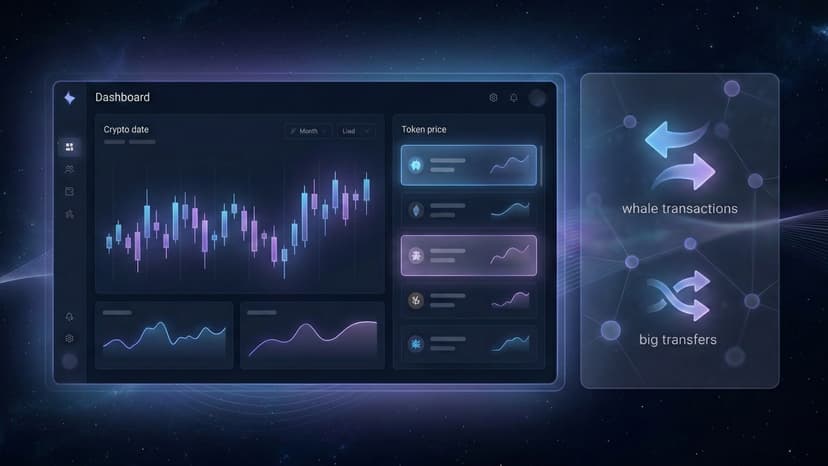
Qubic Live Whale and Token Analytics Dashboard
Qubic Live Analytics is a dark theme dashboard that focuses on three things live token prices, recent network activity and very large whale transfers. Instead of building a heavy backend during the hackathon it uses a public Google Sheet as the data layer. Google Sheets acts as a simple database where each tab represents a view token prices, normal transactions and whale transfers. The front end is a single HTML file with CSS and JavaScript that calls the Google Sheets JSON view endpoint and turns rows into tables. This makes the project very easy to run, share and extend while still showing a realistic pattern for how Qubic data and EasyConnect style automation can be turned into a tool for traders, project teams and community members.`
7 Dec 2025
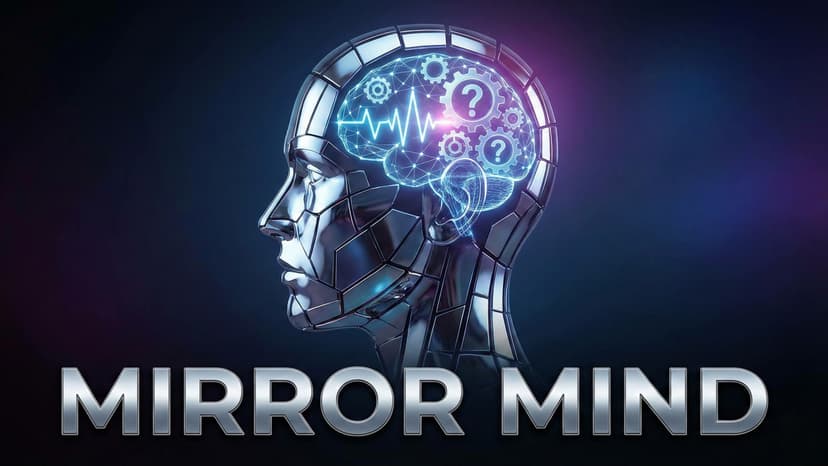
MirrorMind
MirrorMind is an advanced AI powered cognitive agent that focuses on creating a natural and intelligent interaction experience for users. The idea behind this project is to build a digital assistant that can understand user questions, analyze the meaning behind them, and provide accurate and helpful responses. MirrorMind uses the powerful foundation models provided by IBM Watsonx to understand language, process information, and deliver responses that feel clear, relevant, and human like. The project aims to go beyond simple rule based chat systems by introducing cognitive intelligence that can understand context, learn patterns, and adapt to different situations. MirrorMind can support decision making, offer guidance, and assist users in real time across many platforms such as web applications, mobile apps, and backend systems. The system is designed with an easy to use interface that connects with a Python backend which communicates with the Watsonx API. This smooth flow makes the experience fast, reliable, and intelligent. MirrorMind demonstrates how modern AI can improve digital communication by offering a smart, adaptive, and meaningful assistance experience for everyday users.
23 Nov 2025


