🤓 Latest Submissions
Drishpex
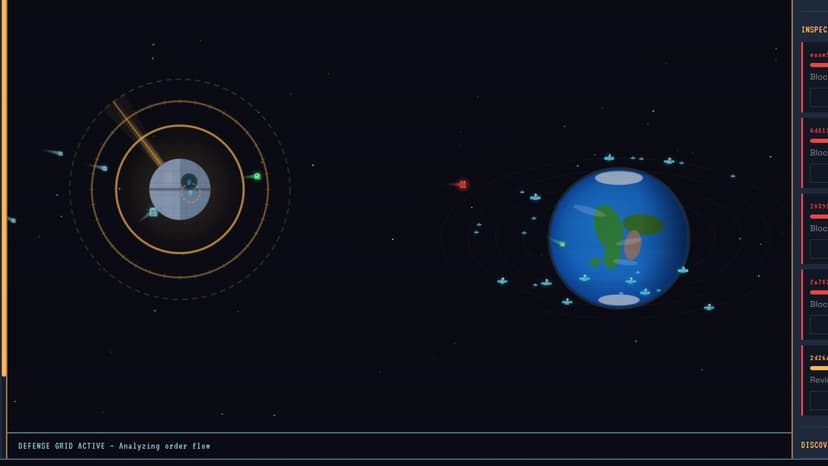
Fraud detection today is broken. Rule-based systems generate 90-95% false positive rates, analysts waste hours investigating noise, and by the time someone writes a new rule, fraudsters have already moved on. Interpol estimates we catch just 2% of global financial crime. We built a fraud detection agent that actually closes the loop. Transactions stream in and get scored in under 100ms by an XGBoost model trained on 35 behavioral features. High-risk transactions automatically become cases. An LLM powered by Llama 3.1 investigates each case and produces a structured report — turning a 20-minute manual investigation into a 5-second read. When an analyst confirms a label, the model retrains itself in the background. No data scientist needed. Meanwhile, a graph mining engine runs autonomously on the transaction network using Tarjan's SCC, HITS, and sliding-window algorithms to discover wash trading rings, hub accounts, and velocity clusters. Those patterns flow back into the scorer as new features — the system literally gets smarter on its own. The results speak for themselves: false positive rate dropped from 95% to 4.3%, model F1 improved from 0.57 to 0.967, and detection latency went from hours to milliseconds. The analyst does two things — read and label. Everything else is the agent. Built with FastAPI, XGBoost, NetworkX, Ollama, and Streamlit. Fully dockerized, deployed on AWS, and running live right now.
7 Feb 2026