.png&w=256&q=75)
🤝 Top Collaborators
.png&w=640&q=75)

.png&w=640&q=75)
.png&w=640&q=75)
🤓 Latest Submissions
Nzeru Core Health
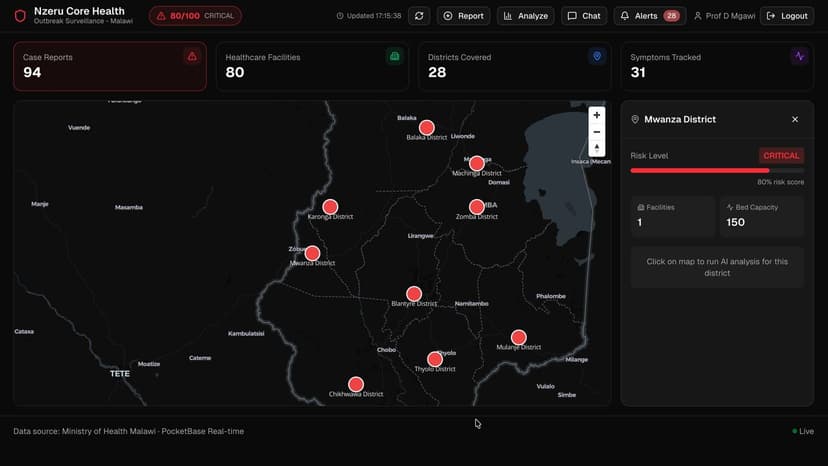
The system collects health-related data from multiple sources such as community reports, clinic records, surveys, and historical outbreak information. This data is structured and stored using a well-designed database schema to ensure consistency and scalability. Core Technologies The system is built using a modern backend and deployment stack: Python – core logic and tool building FastAPI – API layer for exposing services and AI tools Docker – containerization and deployment consistency Database Schema (SQL-based design) – structured storage of health and geographic data LLaMA – AI reasoning, explanation, and prediction support Core System Functionality 1. Data Ingestion Layer The system receives structured and unstructured health data from clinics, surveys, and reporting tools through API endpoints built with FastAPI. 2. Data Storage Layer A well-defined database schema organizes: patient/village reports vaccination data case histories geographic information This ensures consistent access and scalability. 3. AI Analysis Layer The LLaMA model processes incoming data to: identify patterns in disease spread generate risk levels for regions explain contributing factors support reasoning behind predictions 4. API & Tool Layer FastAPI exposes system functionality as services: risk prediction endpoints data retrieval tools AI inference interfaces health reporting services This allows integration with dashboards, external systems, and SMS gateways. 5. Deployment Layer Docker is used to: containerize the entire system ensure consistent deployment across environments simplify scaling and maintenance System Output This system enables health authorities to shift from reactive response to proactive disease prevention by: detecting outbreaks early improving response time optimizing resource allocation supporting data-driven public health decisions
10 May 2026
