.png&w=256&q=75)
🤓 Latest Submissions
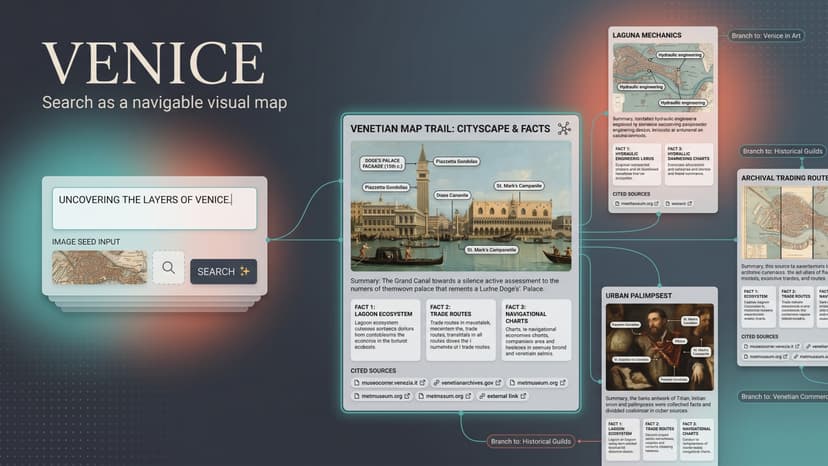
Venice
Venice reimagines research as a branching canvas: each node captures a focused question, offers suggested follow-up branches, and keeps an evidence trail. Links: https://huggingface.co/spaces/lablab-ai-amd-developer-hackathon/venice https://venice.indexd.app/ Retrieval is web-grounded via SerpAPI (Google results) so summaries and “visual fact” chips map to real URLs, while the heavy generative workload runs on AMD Instinct MI300X using ROCm, PyTorch, and Hugging Face diffusers, pulling Qwen from the Hub as Qwen-Image-2512 for high-quality per-node PNG “visual pages”. The UI is a Next.js (App Router) client; the orchestration layer is FastAPI with CORS, health checks, and deterministic output paths for demos. Originality is the hybrid: search-grounded knowledge graph + diffusion-native visuals, not a generic chat wrapper. Business value: faster, more auditable desk research for product, finance, and technical comparisons where sources matter as much as the image.",
10 May 2026


