
Rafael Varela@_VarelaRC
1
Events attended
1
Submissions made
Brazil
1 year of experience
About me
Estudante de Engenharia de Computação (SENAI CIMATEC) e Engenharia de Controle e Automação (UFBA). Desenvol- vedor Backend com sólida experiência em PHP/Laravel e infraestrutura de nuvem. Atualmente focado na convergência entre software robusto e hardware para soluções de Indústria 4.0, IoT e sistemas embarcados. Possuo experiência em liderança técnica de equipes de desenvolvimento e atuação em projetos de impacto social e automação urbana.
🤓 Latest Submissions
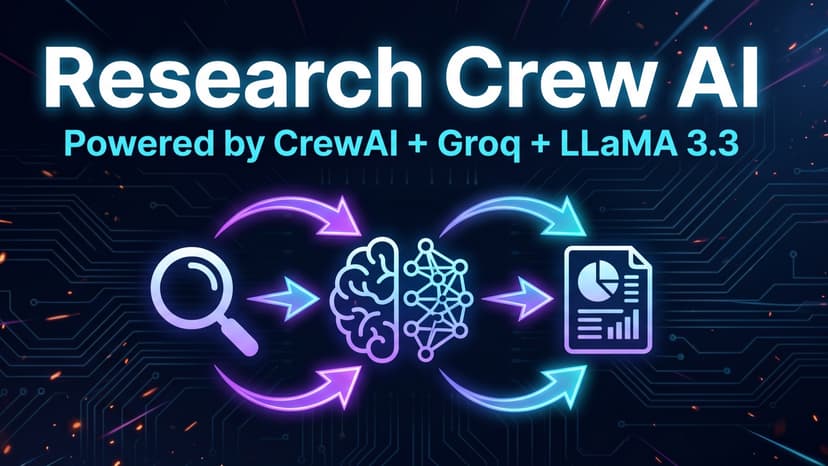
Research Crew
Research Crew V2 is a multi-agent AI system built with CrewAI that autonomously researches any technical topic and produces a comprehensive, structured report without any human intervention during execution. This project was developed as a hands-on learning experience during the AMD Developer Hackathon, with the goal of understanding how to architect, configure and run collaborative AI agent pipelines from scratch. The system is composed of two specialized AI agents that work sequentially. The first is a Researcher Agent, a senior research specialist that uses real-time web search powered by Serper to gather information from scientific articles, news, journals and reports about the given topic. The second is a Reporting Analyst Agent, which receives the researcher's findings and produces a polished, professional report including an executive summary, main sections with analysis and insights, and future recommendations. Both agents are powered by LLaMA 3.3 70B running on Groq, making inference extremely fast. For this hackathon submission, the crew was tasked with researching edge computing applied to embedded systems and IoT with ESP32, integrated with cloud platforms such as AWS, Google Cloud Platform and Microsoft Azure. The topic was chosen to reflect a real-world architecture vision of using low-cost microcontrollers at the edge with AI agents in the cloud handling reasoning, analysis and decision-making. This project was my first contact with AI agents. Starting from zero, not even knowing what an AI agent was, I went through the full journey of understanding the difference between a static LLM and an autonomous agent, configuring agents and tasks via YAML, connecting a real LLM provider to a multi-agent framework, debugging dependency conflicts and environment setup on Windows, and running a fully functional multi-agent pipeline end-to-end. The journey itself, from confusion to a working crew, is the real deliverable of this submission.
10 May 2026

