
🤝 Top Collaborators


🤓 Latest Submissions
AI Climate and Farming Assistant App
AI Climate and Farming Assistant is a dynamic Streamlit-based web application that utilizes the power of LLaMA 3 (via Groq API) to deliver intelligent, real-time insights on climate, air quality, and agricultural trends. Designed to support farmers, environmental analysts, and researchers, the app provides natural language understanding to answer complex climate and crop-related questions instantly. By integrating Open-Meteo API, it delivers accurate, real-time weather forecasts and pollution data tailored to specific locations. Users can input queries like “What’s the air quality forecast for Lahore tomorrow?” or “How will temperature trends affect wheat yield this week?”, and receive precise, language-based responses enriched with interactive charts using Plotly. The app also enables users to upload CSV datasets, such as farm yield records, temperature logs, or rainfall patterns, which the AI can analyze, summarize, and visualize. Whether it’s identifying weather trends, planning irrigation schedules, or detecting anomalies in crop performance, the app converts complex data into clear and actionable insights. It’s built for usability and speed, making it an essential AI-powered companion for sustainable agriculture and environmental decision-making.
15 Jun 2025
AI Requirements Engineer Assistant
The AI Requirements Engineer Assistant addresses a critical pain point in software development: poorly defined and analyzed requirements that lead to project delays, cost overruns, and failed implementations. Requirements engineering is often manual, error-prone, and lacks standardization across teams and organizations. Our solution leverages Large Language Models through the Groq API to automatically analyze requirements documents, identify ambiguities and inconsistencies, prioritize features based on business value and dependencies, and generate visual representations like use case diagrams. The tool helps product managers, business analysts, and developers collaborate more effectively by providing a shared understanding of requirements quality and completeness. Key differentiators include multi-format document support (PDF, DOCX, TXT), interactive natural language Q&A about requirements, and a clean, intuitive interface that requires no AI expertise to use. Unlike generic AI assistants, our tool is specifically designed for requirements engineering with specialized prompts and output formatting tailored to software development needs. Target users include software development teams, business analysts, product managers, and quality assurance professionals who want to improve requirements quality early in the development lifecycle, reducing costly changes and misunderstandings later.
1 May 2025
COSMOLAB Multilingual Agent
COSMOLAB Multilingual Agent is an AI-powered platform designed to make space knowledge accessible in multiple languages. It integrates NASA data, speech-to-text processing, and AI-driven agents to provide accurate and engaging explanations of space-related topics. Users can ask questions via text or upload an audio file, and the system transcribes and processes queries in various languages, including English, Spanish, French, German, Chinese, and Arabic. The AI agents—one focused on research and the other on education—collaborate to analyze NASA’s latest data, verify facts, and explain complex space concepts in simple, easy-to-understand terms. By leveraging Hugging Face’s advanced AI models and FAISS for knowledge retrieval, COSMOLAB ensures that responses are both informative and linguistically accurate. The tool is ideal for students, educators, and space enthusiasts who want to explore the universe in their preferred language. With a user-friendly interface built on Streamlit, COSMOLAB offers seamless interaction, allowing users to switch between languages effortlessly. The speech-to-text feature enhances accessibility, making it easier for people with different learning preferences to engage with space science. Whether you are curious about black holes, Mars missions, or the latest NASA discoveries, COSMOLAB provides detailed, reliable, and multilingual insights. Powered by cutting-edge AI and real-time scientific data, it bridges the gap between space research and global audiences, fostering a deeper understanding of the universe.
9 Feb 2025
A RAG Application for Enhanced Health Diagnostics
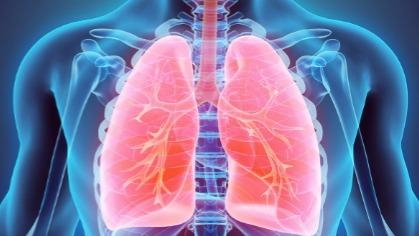
This project aims to develop a Retrieval-Augmented Generation (RAG) application designed to predict lung cancer risks using a comprehensive health dataset. The dataset includes critical features such as gender, age, smoking habits, anxiety, chronic diseases, and symptoms like coughing, wheezing, and chest pain. The RAG framework combines a robust retrieval system with generative AI to deliver precise and contextual insights. By analyzing input data, the application predicts the likelihood of lung cancer and provides evidence-based recommendations for early detection and intervention. Built on Groq and deployed via Streamlit, this solution empowers healthcare providers and individuals to make informed decisions.
26 Jan 2025


