.png&w=256&q=75)
🤓 Latest Submissions
Tiba - AI Medical Billing Assistant
Tibs is an AI medical billing Platform that streamlines medical coding, claims processing, and payments. It helps providers scan PDF medical documents, extract ICD-10 and CPT codes with AI, and create insurance claims. The platform connects to EHRs (Epic, 1upHealth) via FHIR, verifies patient eligibility with Stedi, and processes claims end-to-end. It uses Circle for instant USDC payments between providers, insurers, and patients. Three dashboards serve each role: providers manage coding and claims, insurers review and approve payments, and patients view bills and wallet balances. The platform automates coding complexity, speeds up claims submission, and enables real-time payments, reducing administrative overhead and improving cash flow in healthcare billing.
8 Nov 2025
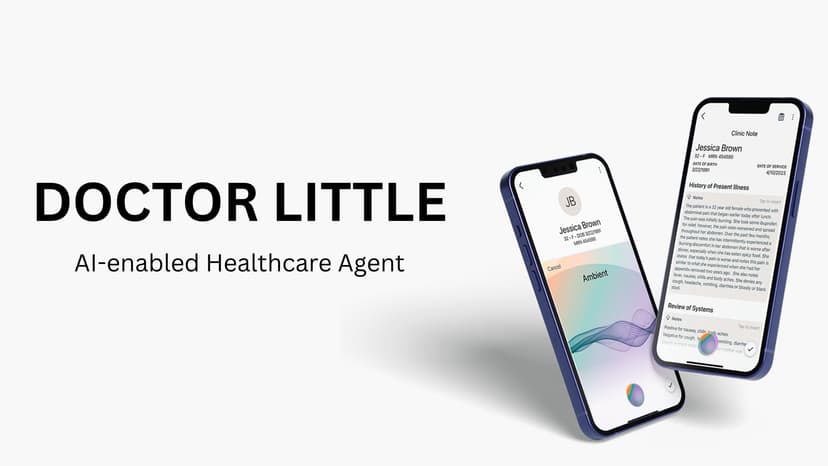
Doctor Little
Current healthcare AI perpetuates dangerous disparities by underrepresenting diseases affecting people of color and underserved populations. These systems, trained on affluent demographics, miss cultural variations in symptom presentation and genetic factors, contributing to misdiagnoses and health disparities. Healthcare providers also face crushing administrative burdens, spending 2+ hours documenting for every hour of patient care. Traditional clinical tools follow rigid pathways that don't match how clinicians reason through complex cases. Doctor Little is an AI healthcare agent designed to address these issues through culturally-aware clinical reasoning and intelligent documentation. Unlike conventional systems, this agent uses diverse training datasets including conditions common in underserved populations, ensuring equitable reasoning across demographic contexts. The agent processes multimodal data streams - voice recordings, medical images, vitals, lab results, patient history - using agentic reasoning that mirrors expert clinical thinking. Rather than linear decision trees, Doctor Little builds comprehensive clinical pictures accounting for social determinants, genetic variations, and cultural factors. Key capabilities include bias detection algorithms, multilingual processing, and adaptive reasoning that evolves with equity-focused medical literature. Local-first architecture ensures privacy while reducing reliance on centralized models that amplify bias. For providers, Doctor Little delivers efficiency through automated documentation while improving diagnostic accuracy for all patients, especially those from underserved communities. The agent democratizes advanced clinical decision support, scaling from community health centers to major systems. This represents a critical step toward eliminating healthcare disparities while reducing provider burnout through equitable, intelligent automation.
21 Sep 2025


